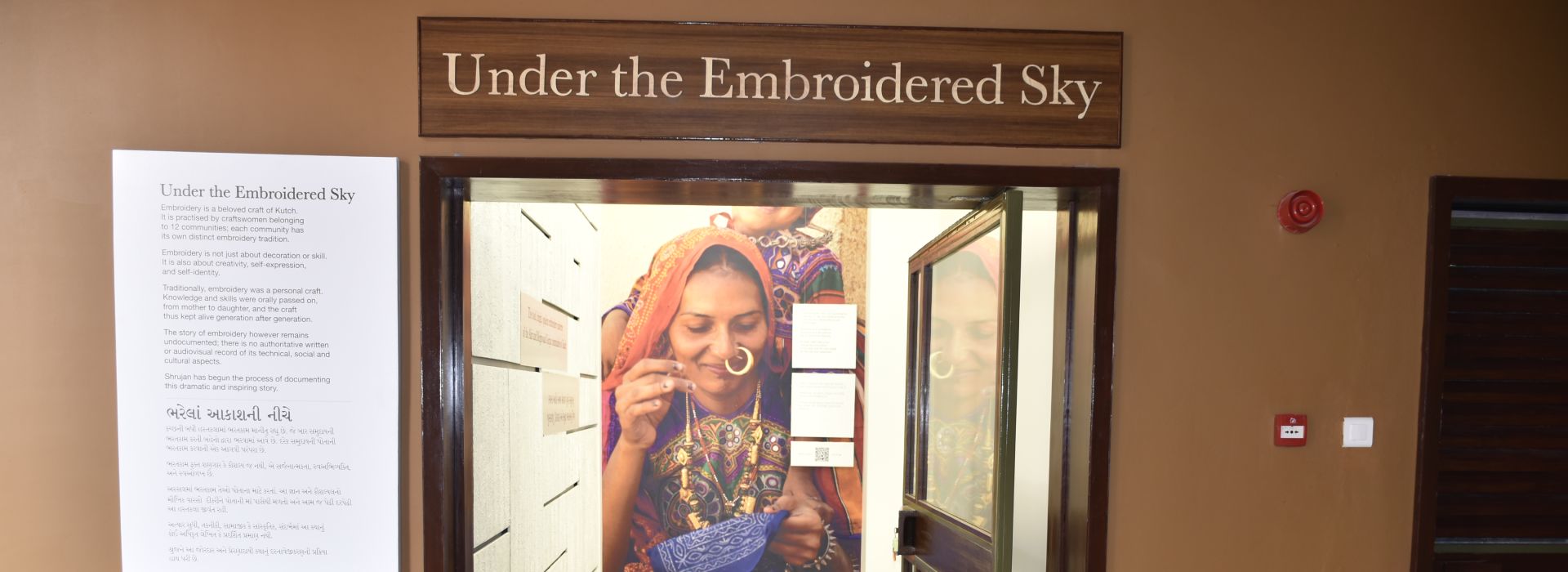
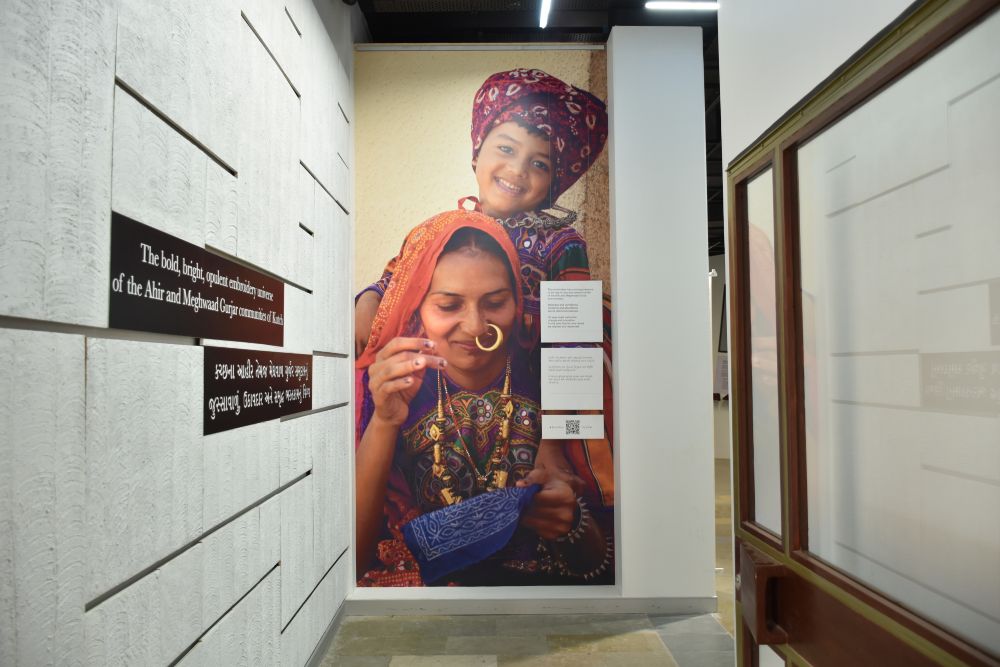
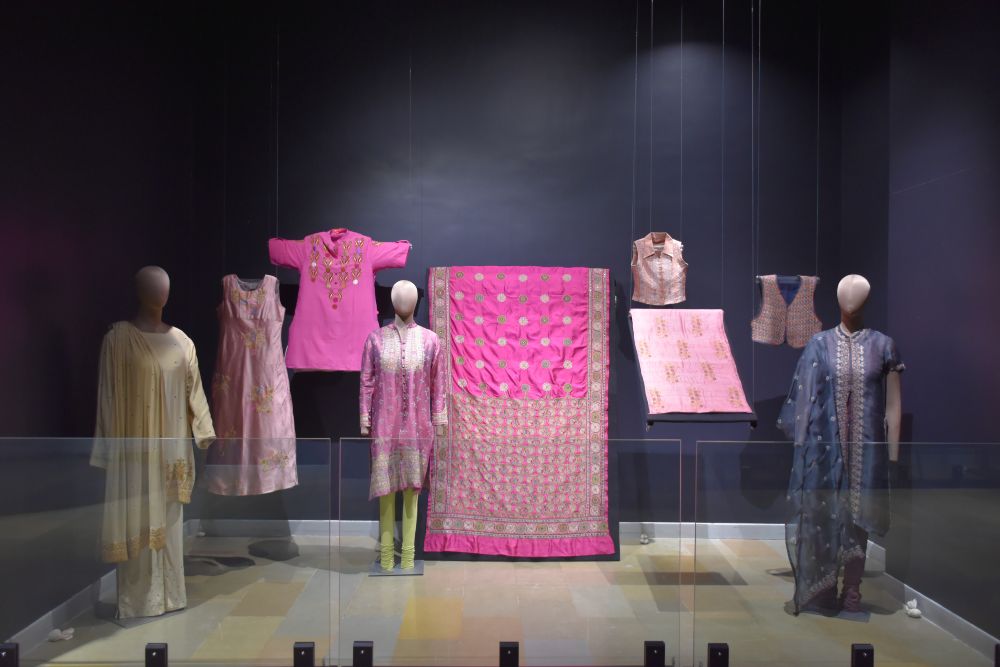
Embroidery is a beloved craft of Kutch. It is practised by craftswomen belonging to 12 communities; each community has its own distinct embroidery tradition.
Embroidery is not just about decoration or skill. It is also about creativity, self-expression, and self-identity.
Traditionally, embroidery was a personal craft. Knowledge and skills were passed on orally from mother to daughter, and the craft was thus kept alive generation after generation.
The story of embroidery, however, remains undocumented; there is no authoritative written or audiovisual record of its technical, social and cultural aspects.
Shrujan has begun the process of documenting this dramatic and inspiring story.
Introduction
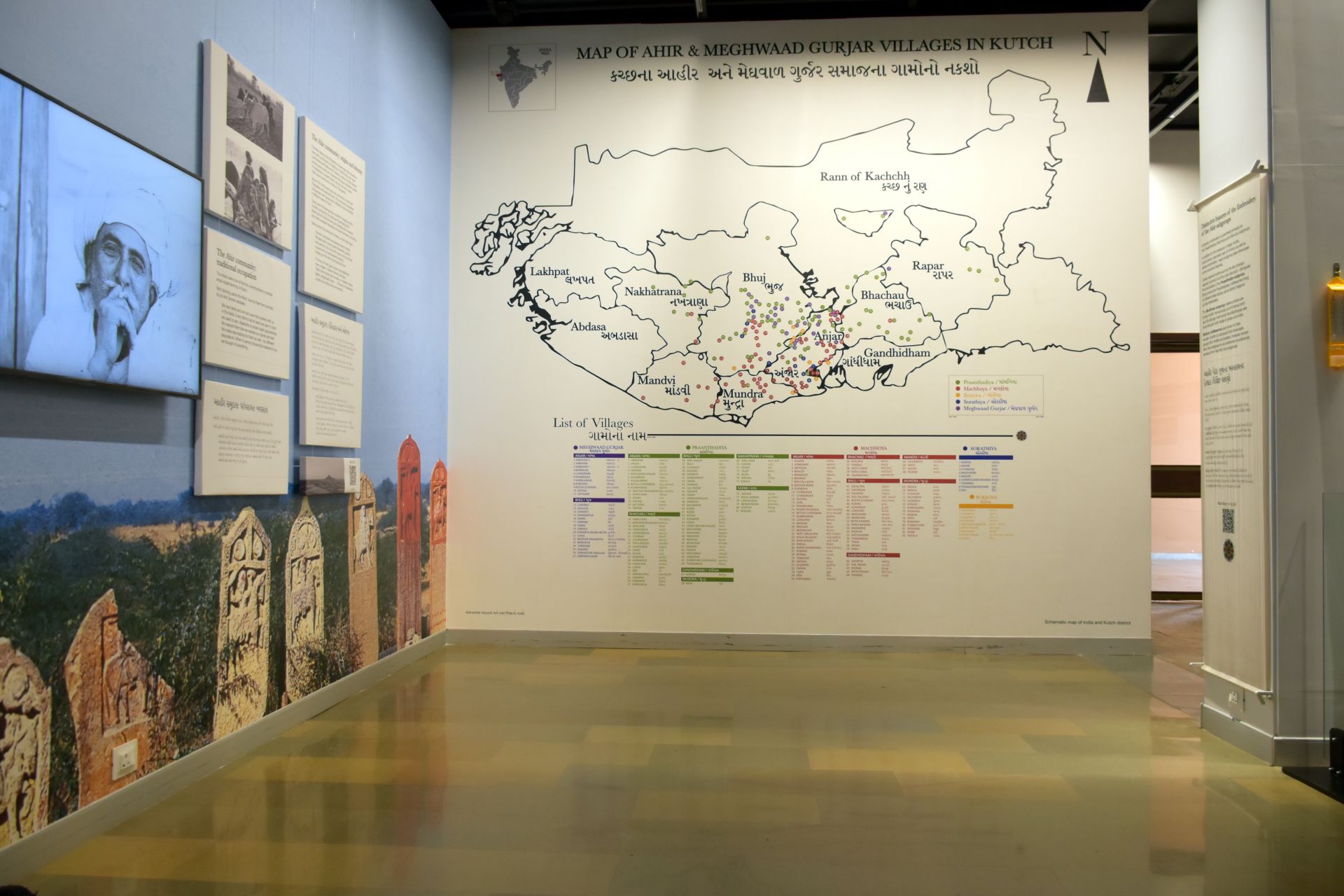
The Ahirs believe that thousands of years ago, their ancestors lived with Lord Krishna in Mathura in North India, and when Lord Krishna left Mathura for Dwarka, a group of Ahirs started on the journey with him. However, this group decided to settle in Tharparkar in ancient Sindh, where there was water and fodder for their cattle. And so, for many years, there was a community of Ahirs in Tharparkar.
Subgroups
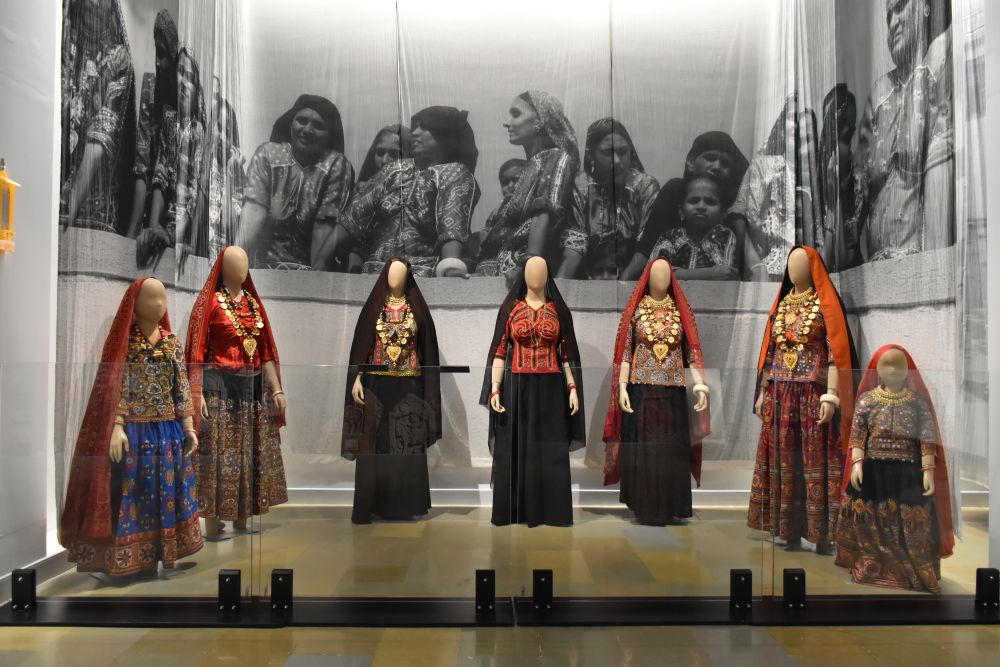
About 700 to 800 years ago, this community of Ahirs left Tharparkar and reached Kutch. The community dispersed into groups; each group settled in different areas, becoming distinct subgroups like the Praanthadiya, Machhoya, Boricha, and Sorathiya Ahirs.
Elements of Embroidery
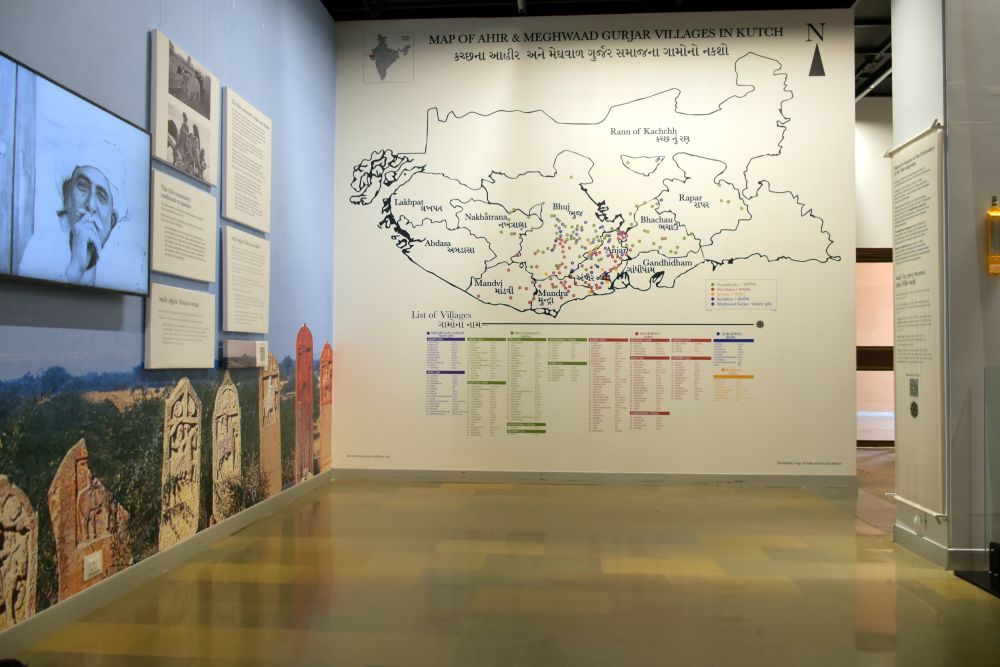
Ahir embroidery celebrates abundance and opulence. It is bright, colourful, and chock-a-block with mirrors. It has a confidence and boldness that craftswomen refer to as thassa, featuring semi-realistic depictions of nature.
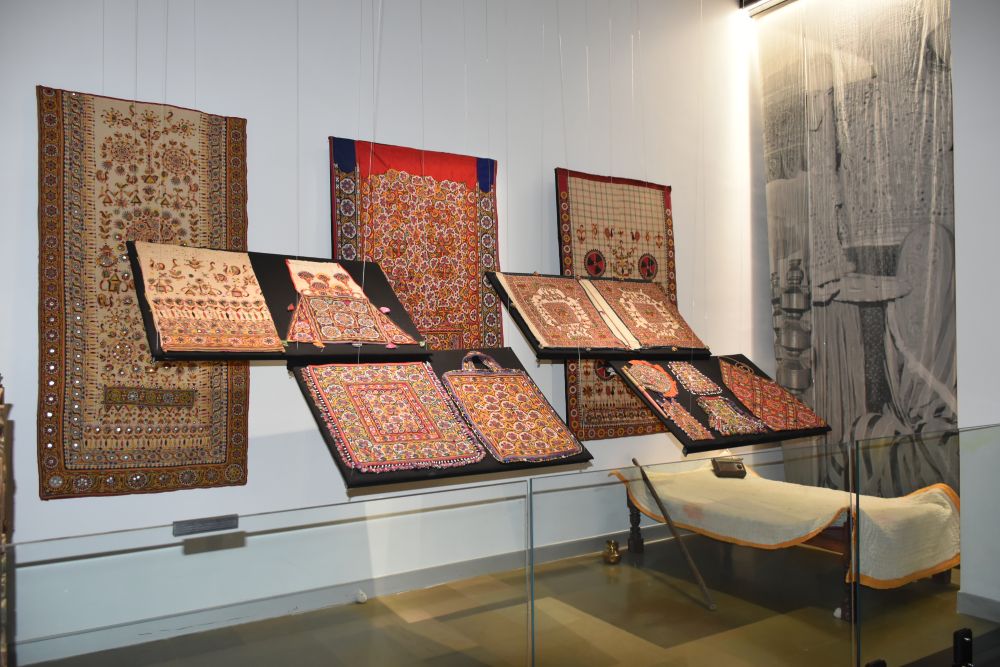
Product Diversity
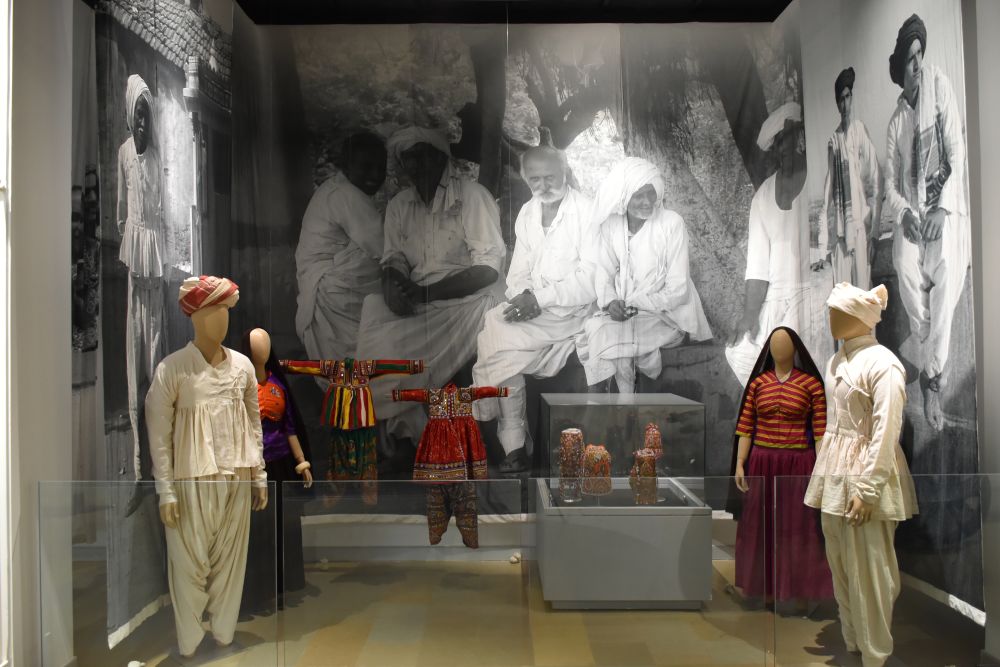
Craftswomen embroider personal garments, children's clothes, and home decorations like the toran and ochhaad. These range from tiny topi caps to large quilt covers over a meter in length.
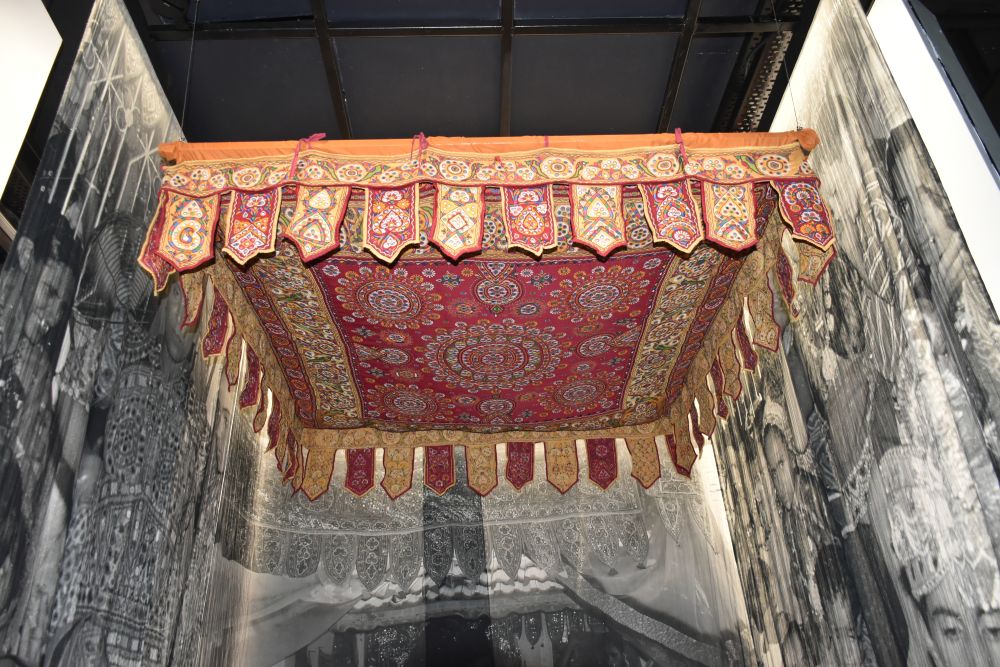
Chandarvo
Chandarvo, meaning canopy, covers the square wedding area in the Ahir community. This fully embroidered piece features traditional elements, marking the sacred space where the bride and groom stand in their wedding attire.
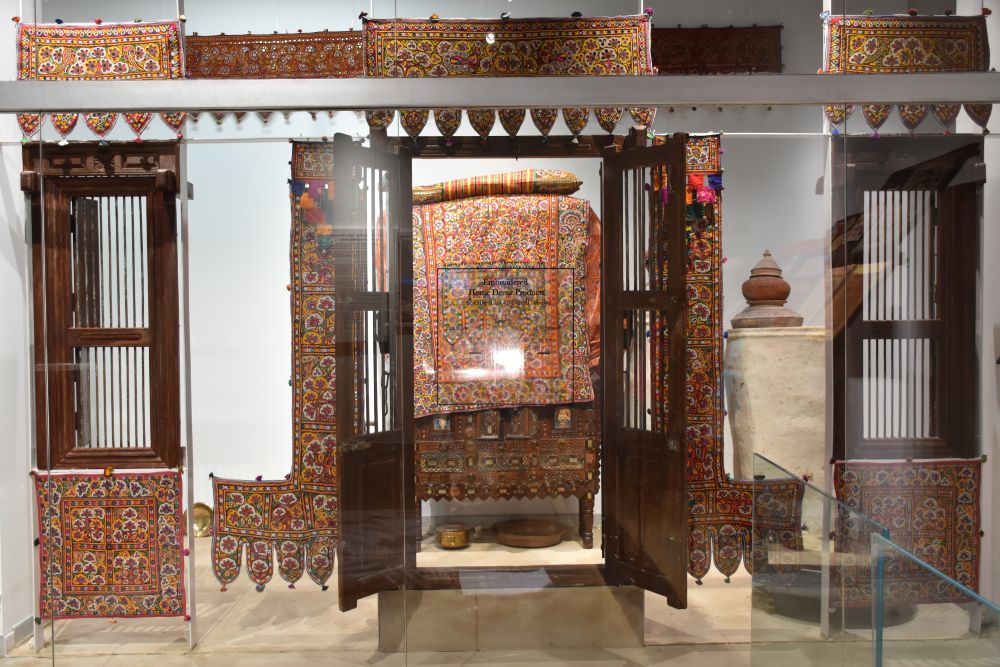
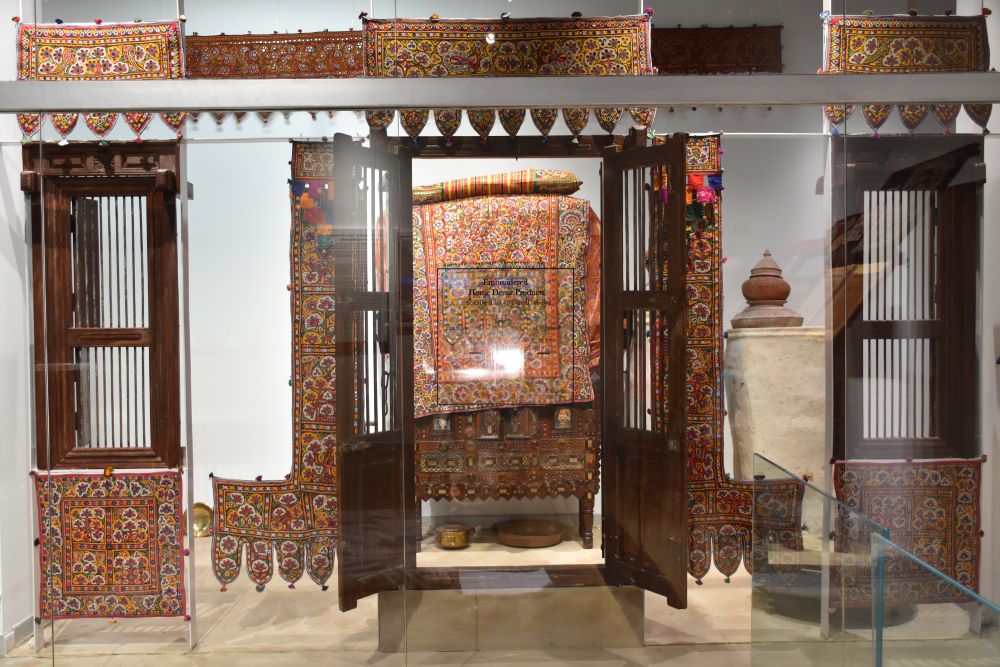
A Traditional House
While the 2001 earthquake destroyed most traditional homes, we preserve their soul here. Notice the toran (welcome sign), mohakiya (L-shaped accents), and pachhetpaati (large wall hangings) that define the interior of a traditional Ahir home.
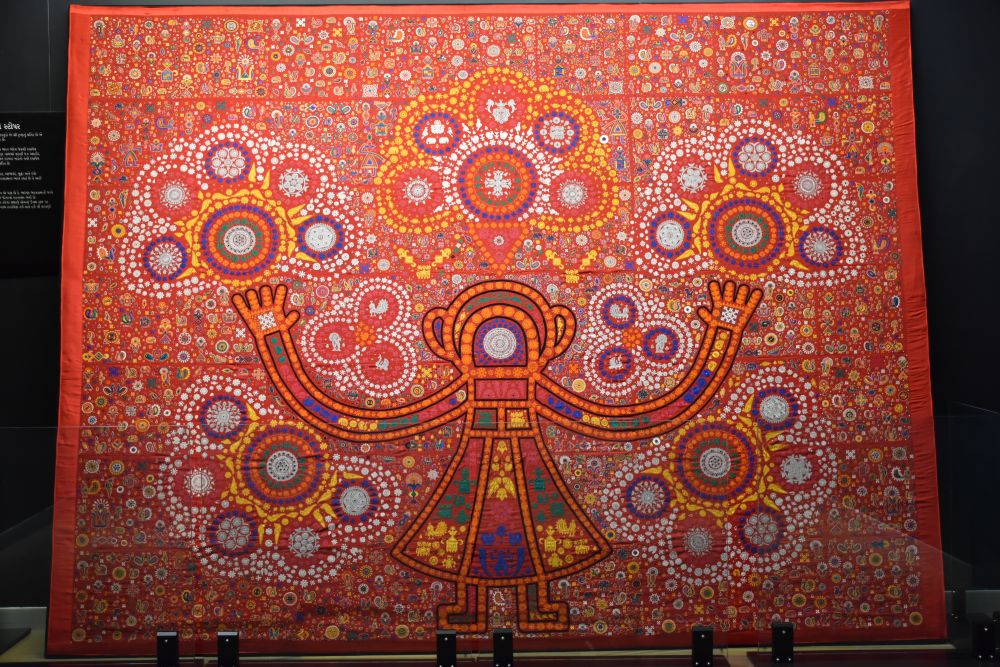
The Master Piece: Kanudo
The Kannudo, the Ahir motif that celebrates Lord Krishna, is our Show Stopper. Created by over 50 master craftswomen from 8 villages, the Kannudo stands 8 feet tall x 11 feet wide and showcases all the traditional Ahir stitches, motifs, mirrors and colours.
This labour of love was created not only by Ahir aircraftswomen, and here lies its true beauty: Meghwaad Gurjar craftswomen who live alongside the Ahirs, as well as women from the Darbar community who also practise Ahir embroidery, have also poured their hearts into creating this monumental artefact.
Each of the 63-textile pieces that make up the Kannudo has the signature of its creator: the signature is rendered in embroidery with pride and with gratitude to a craft that is so dear to them and that has given them so much.