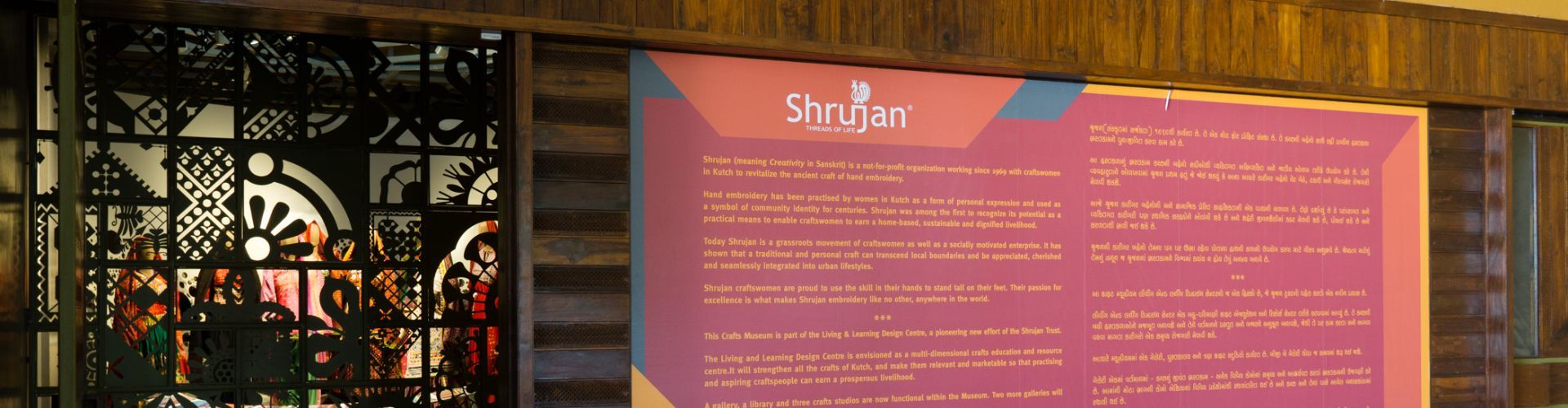
Gallery 1: Living Embroideries of Kutch
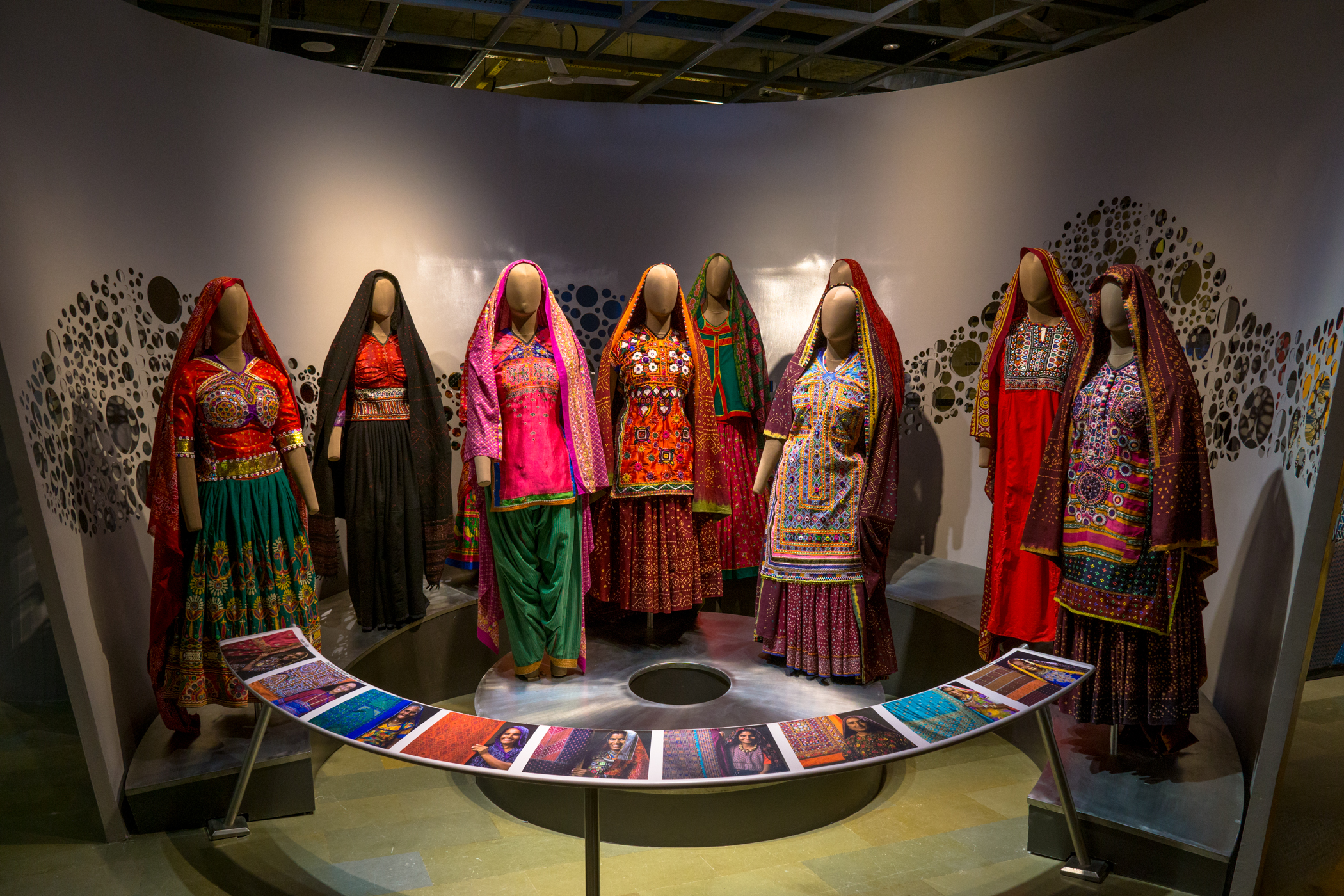
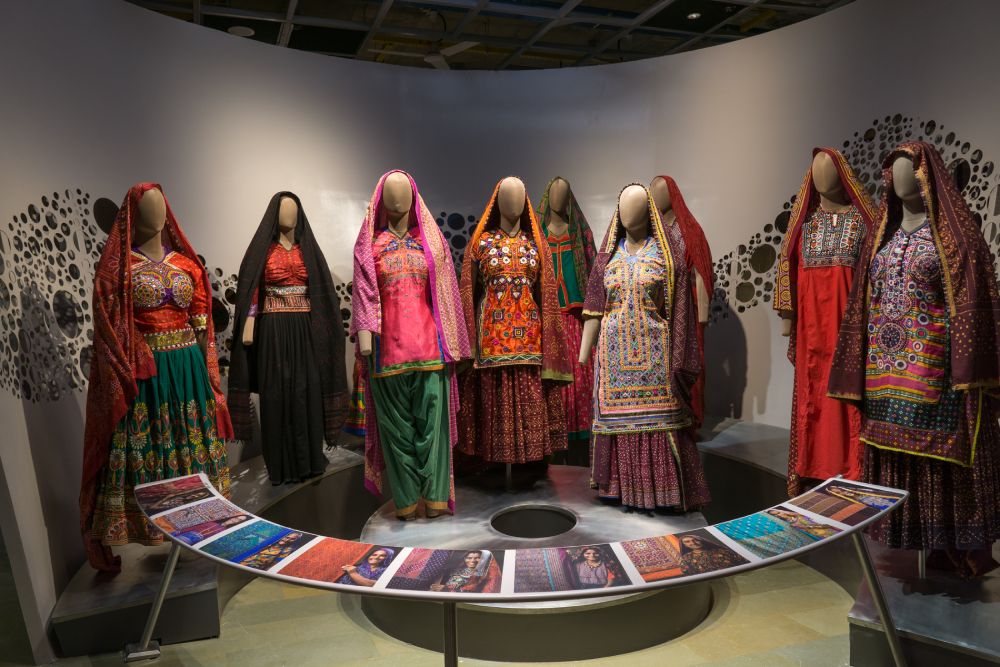
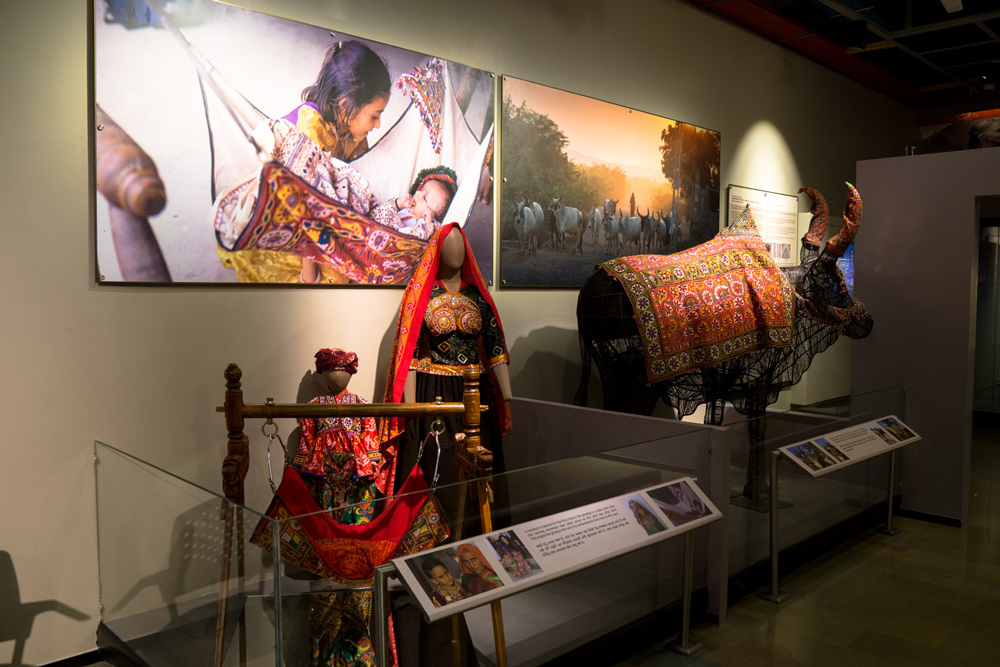
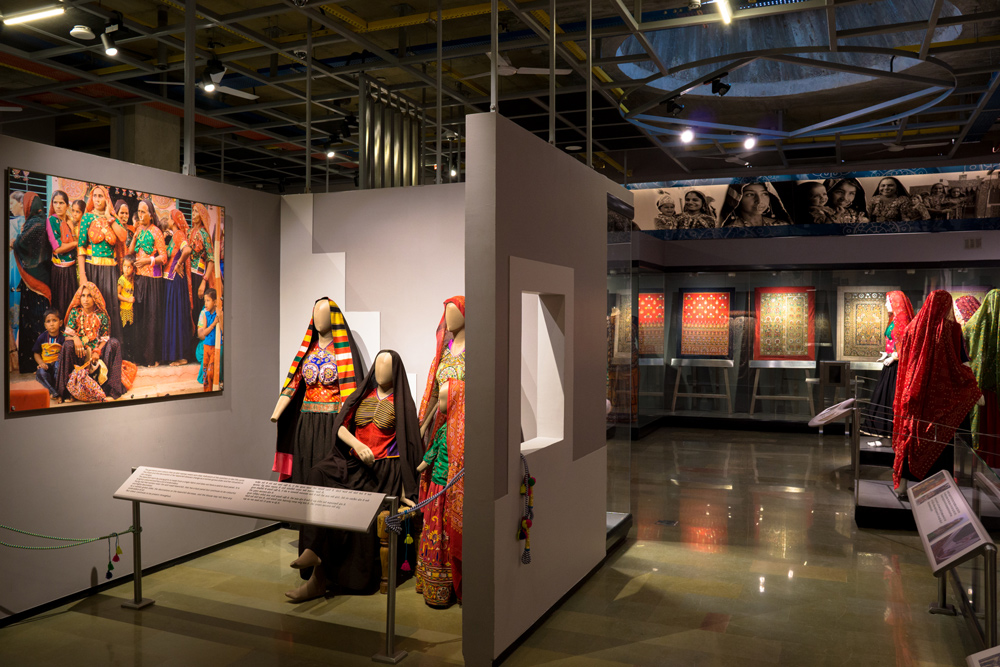
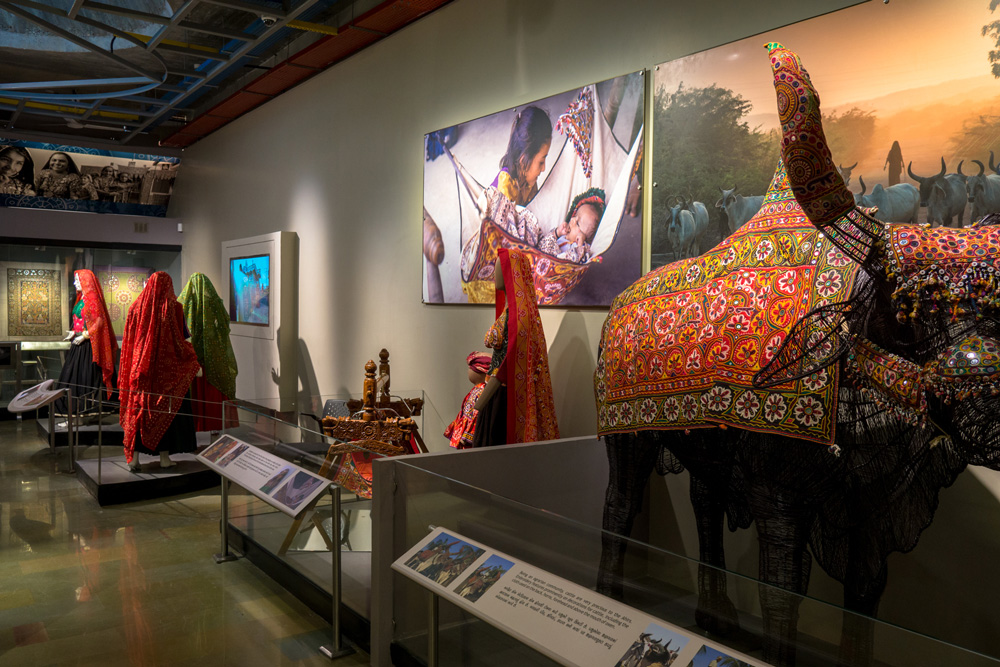
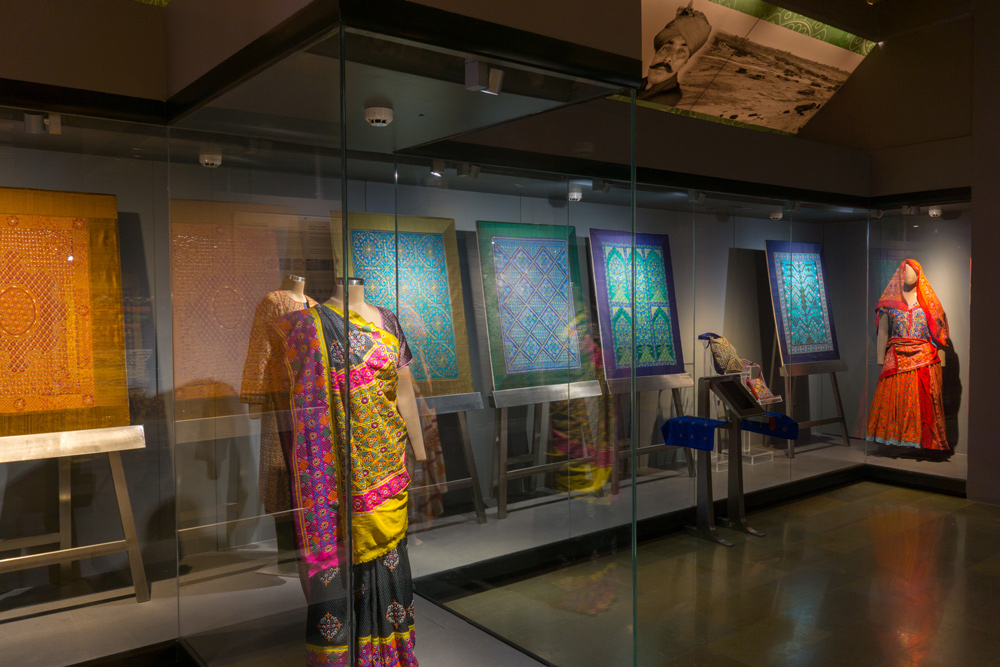
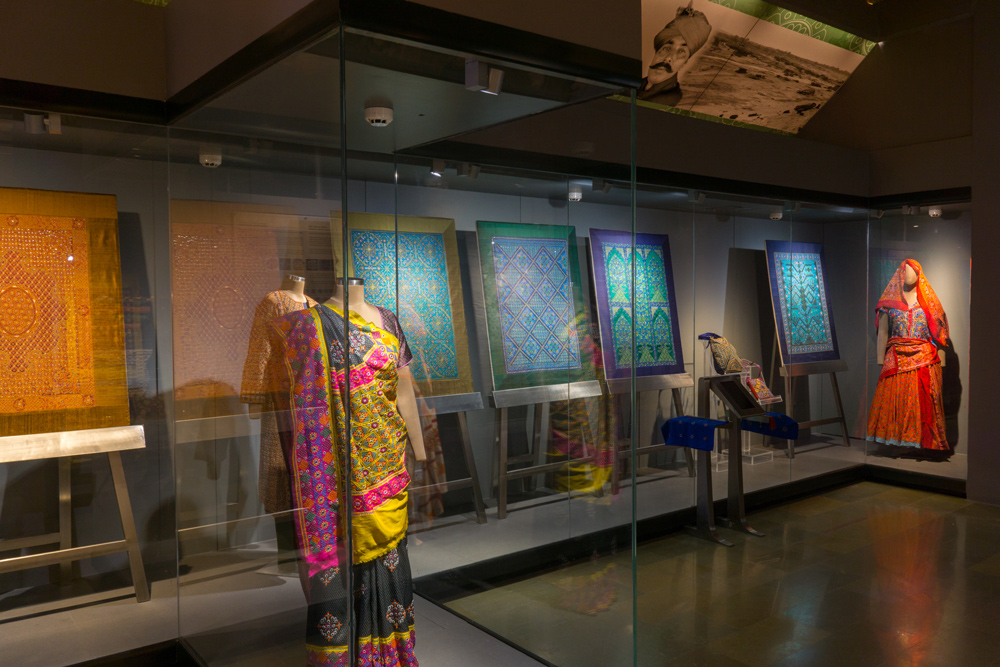
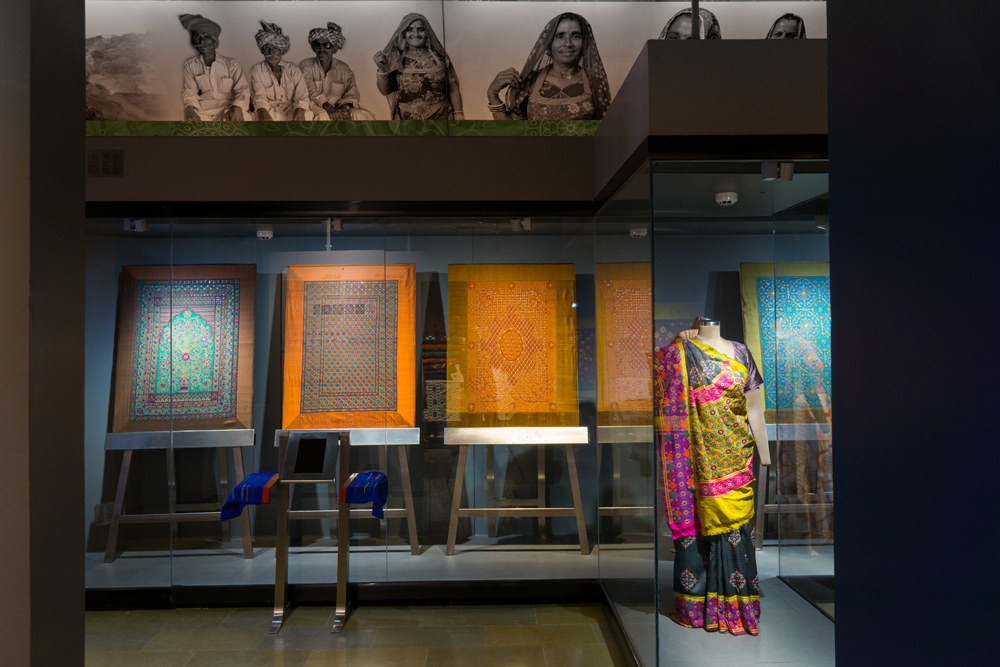
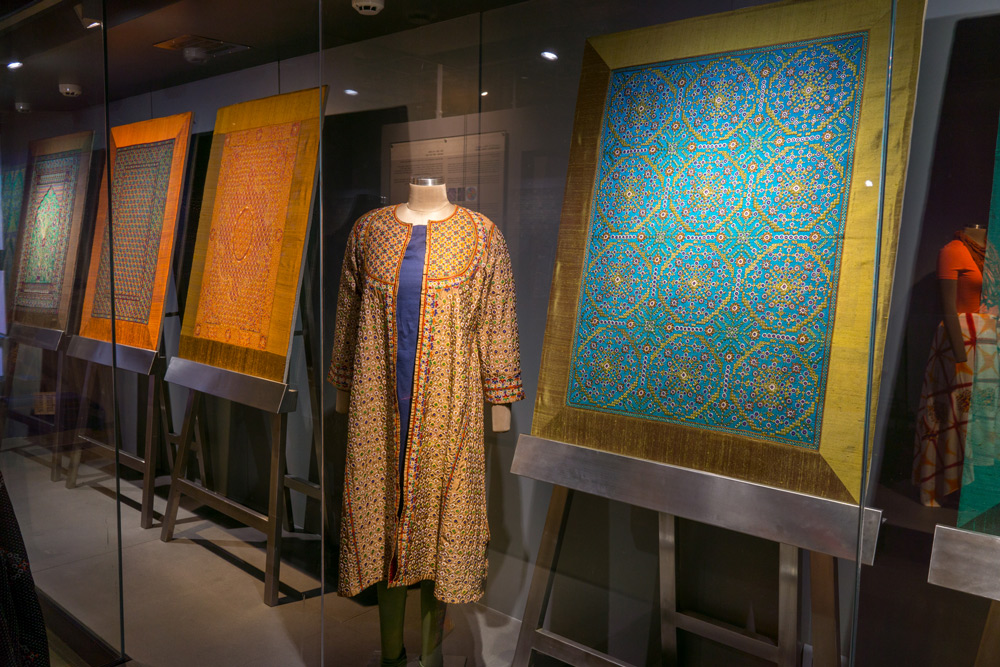
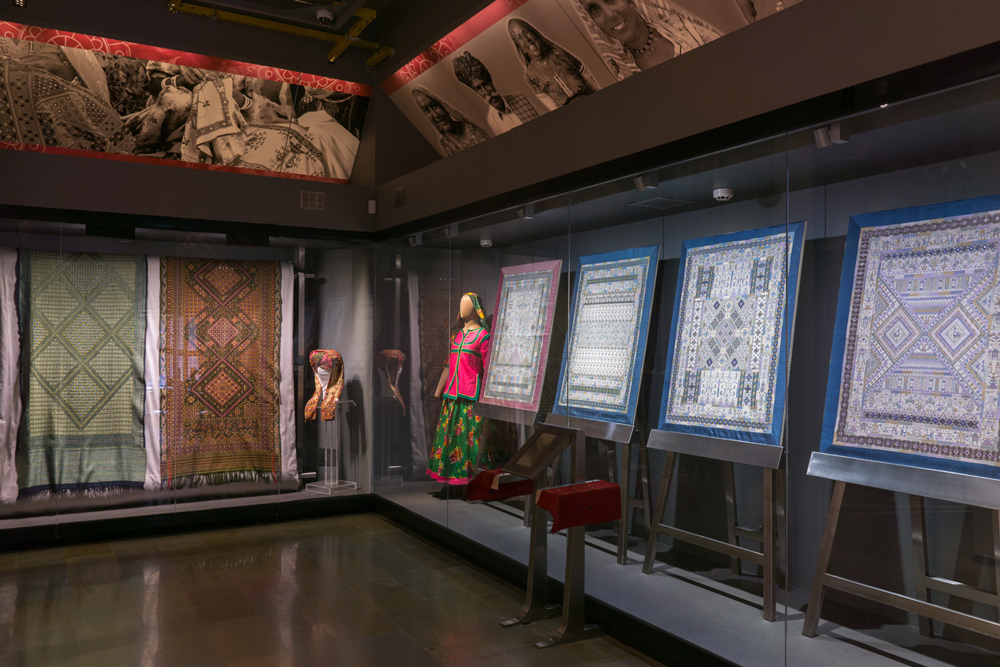
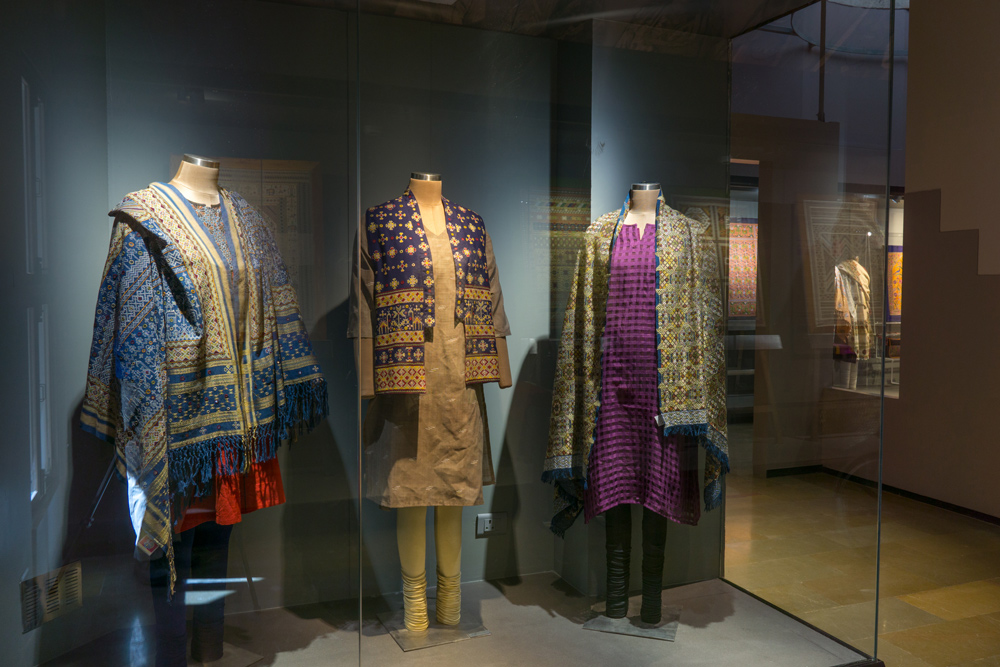
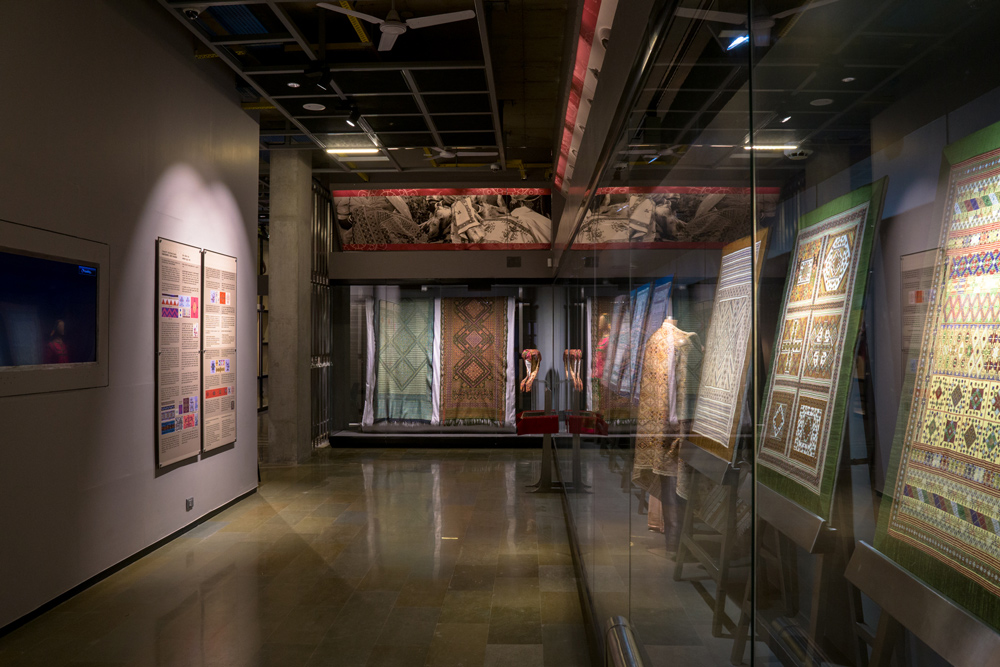
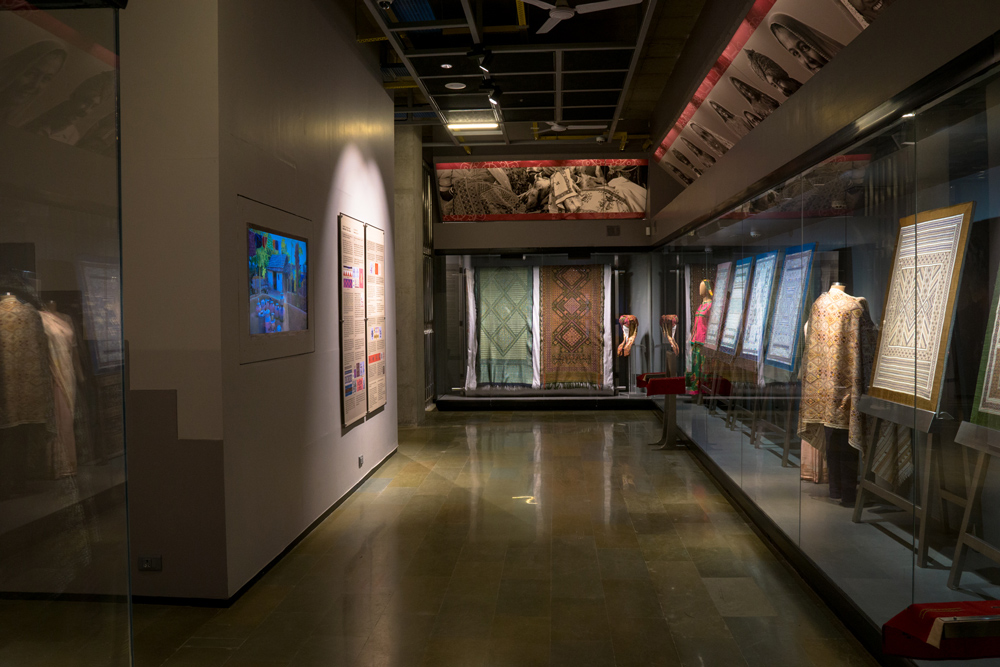
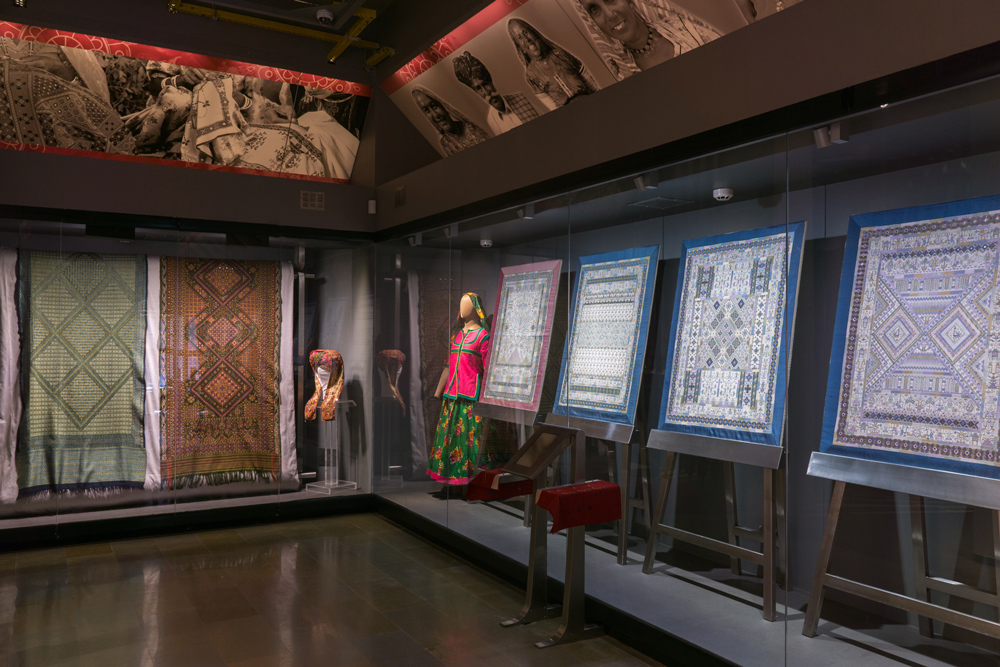
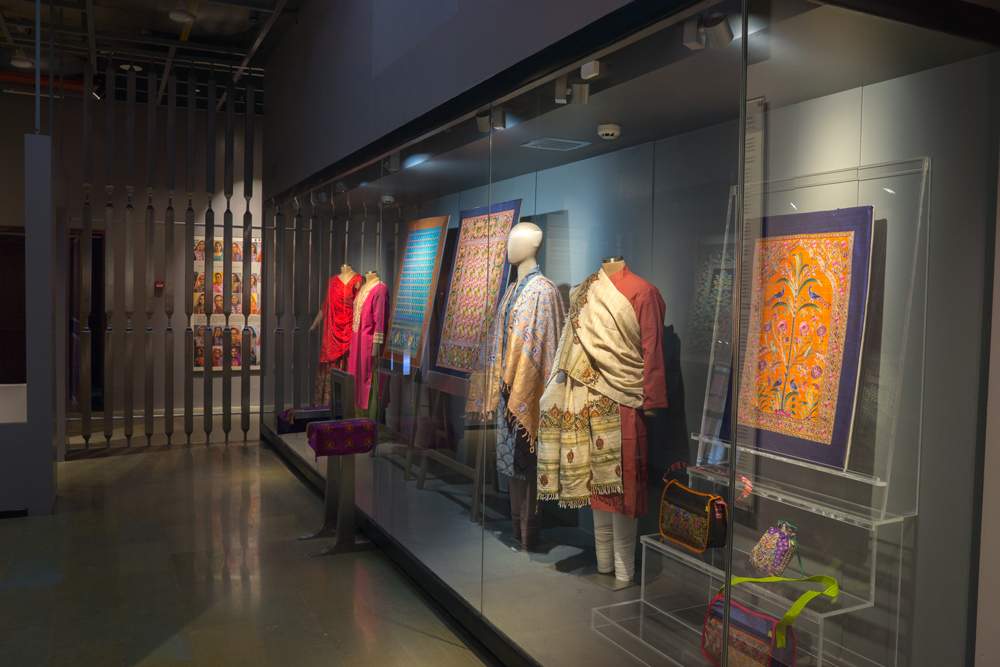
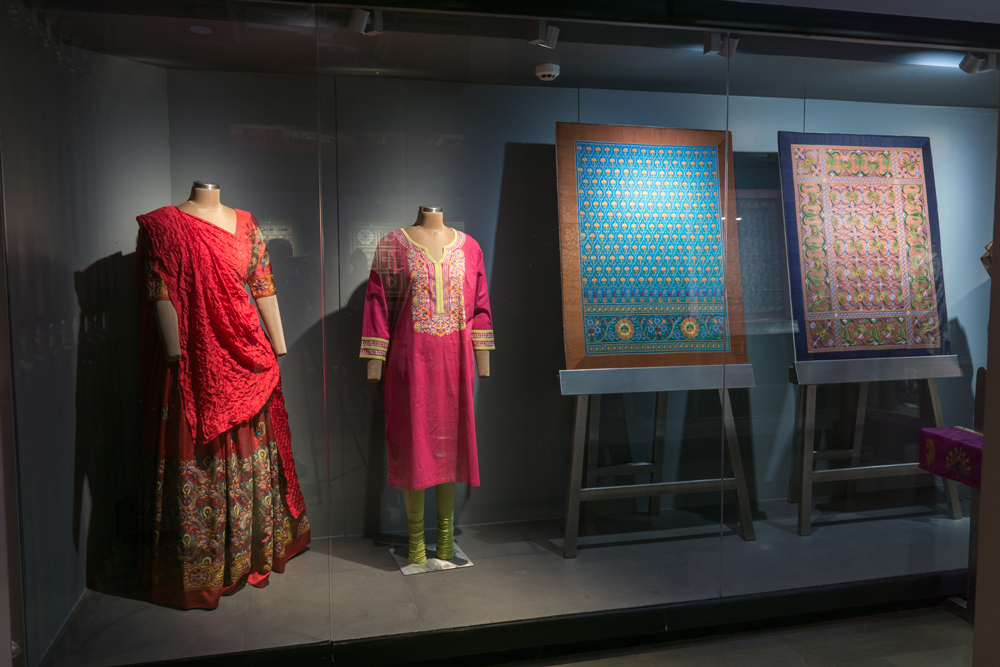
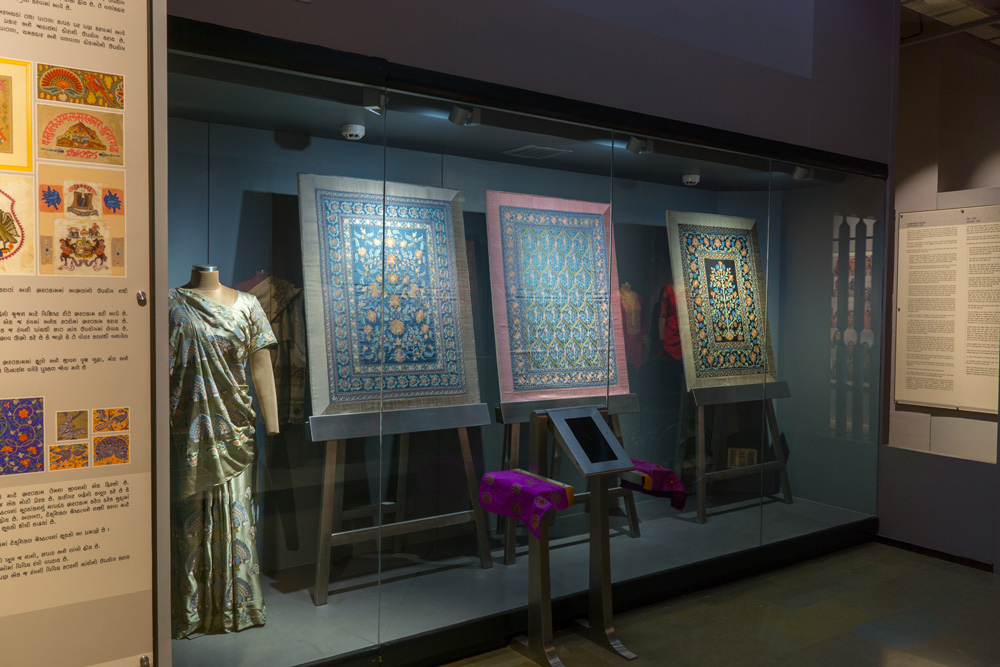
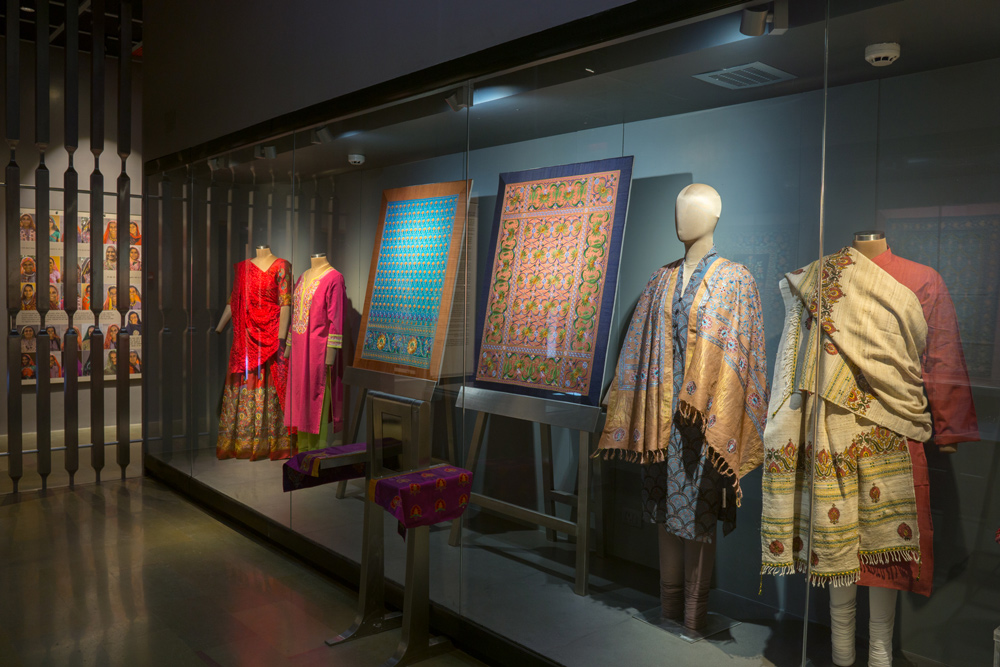
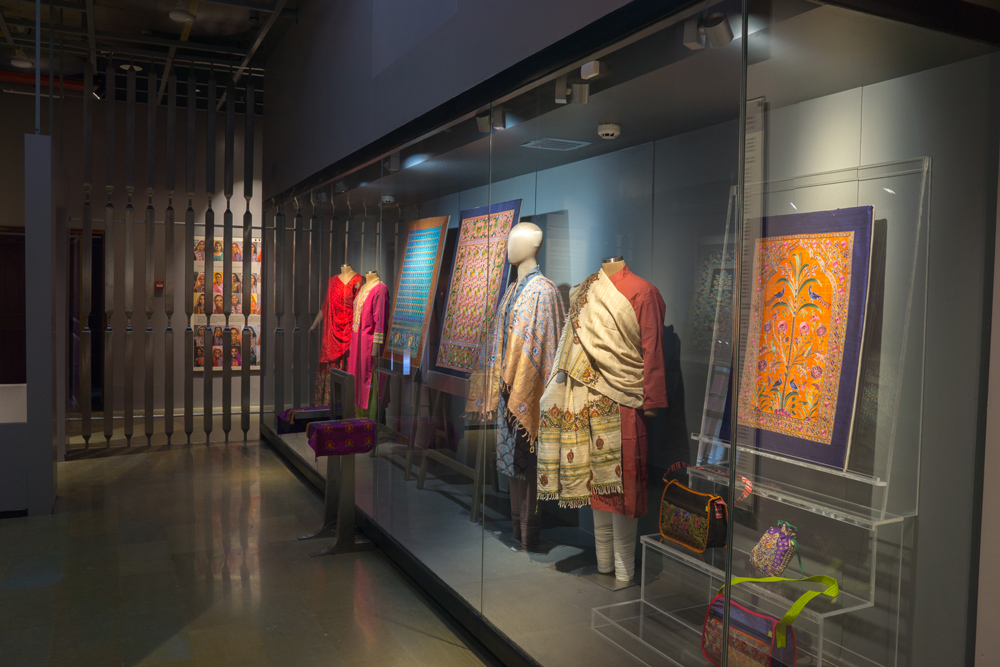
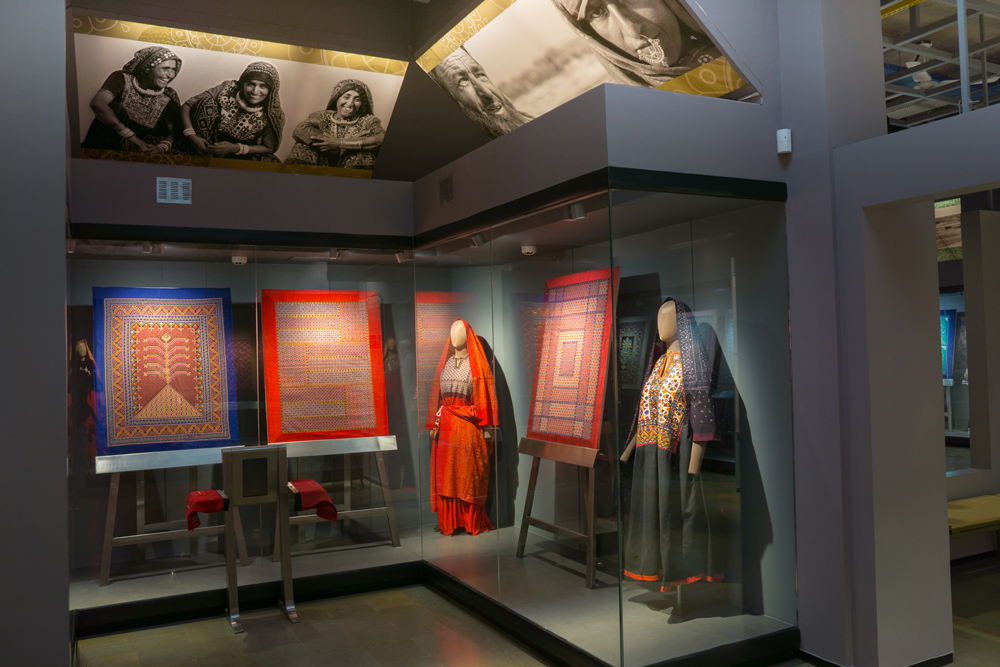
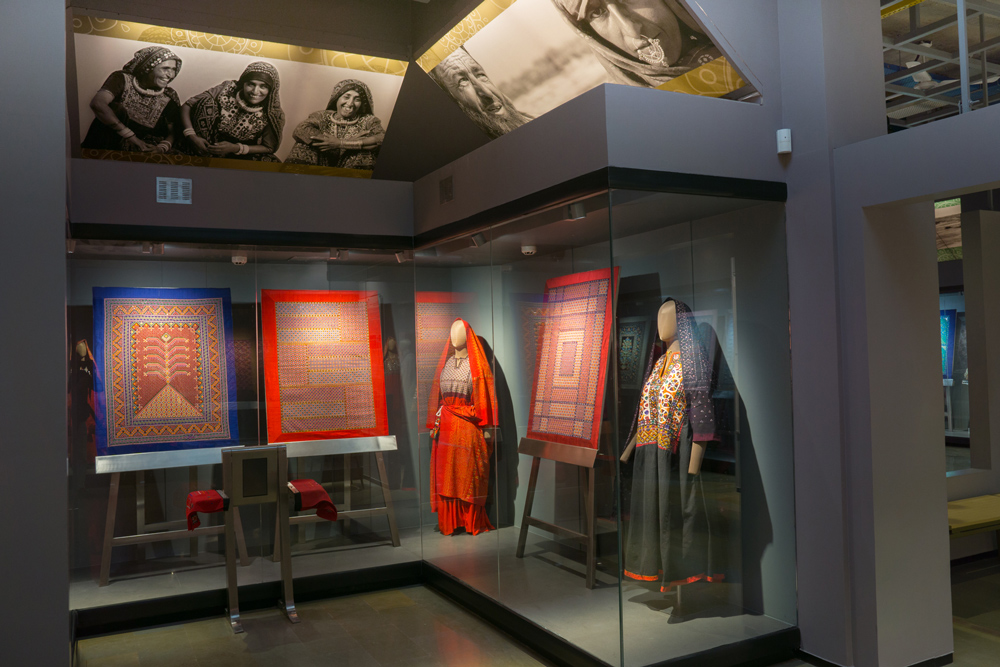
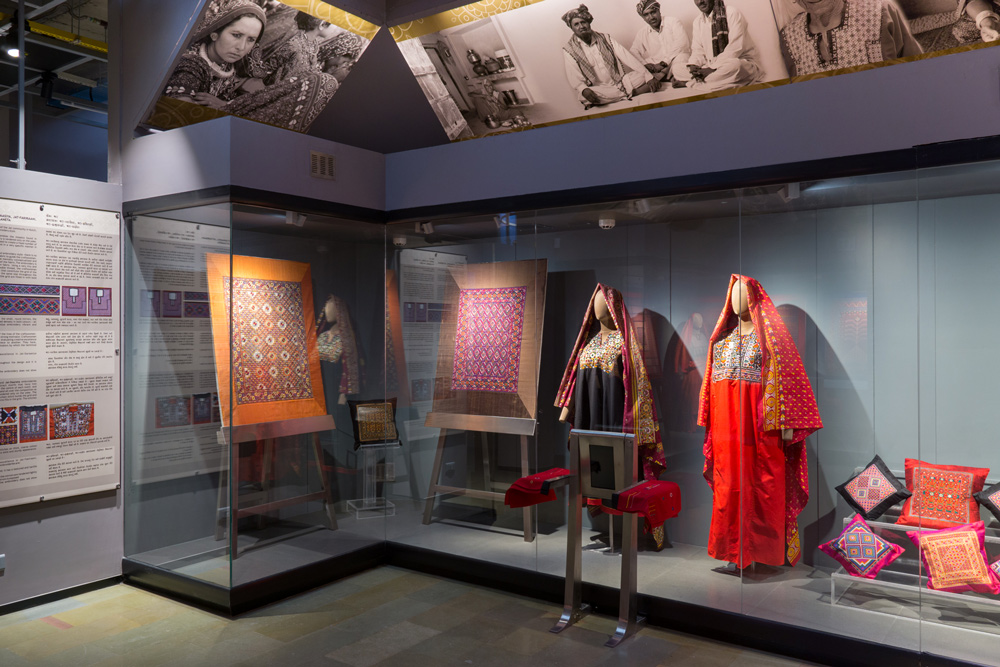
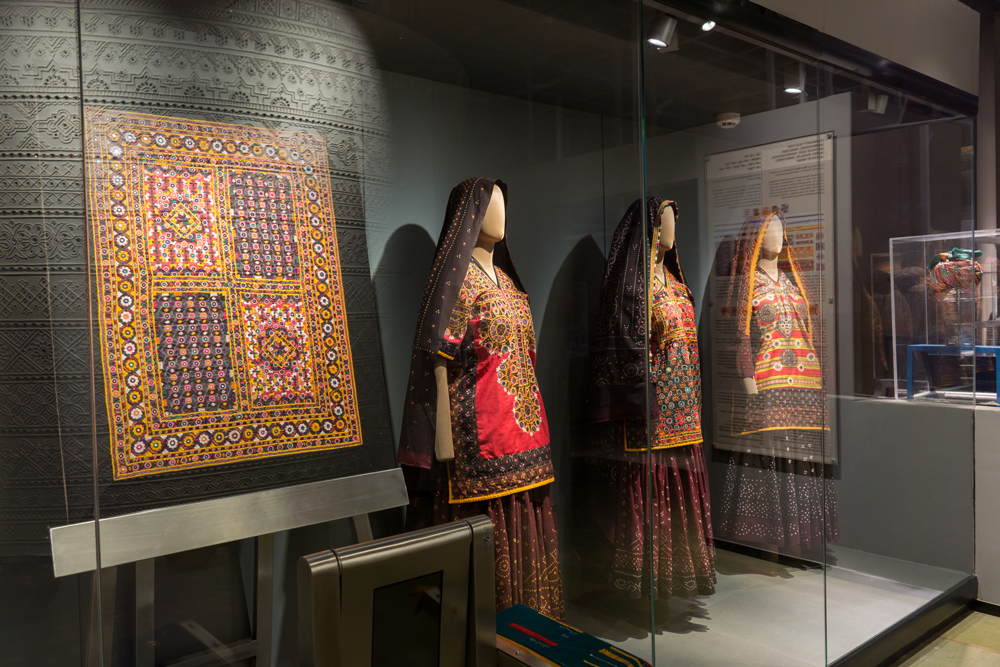
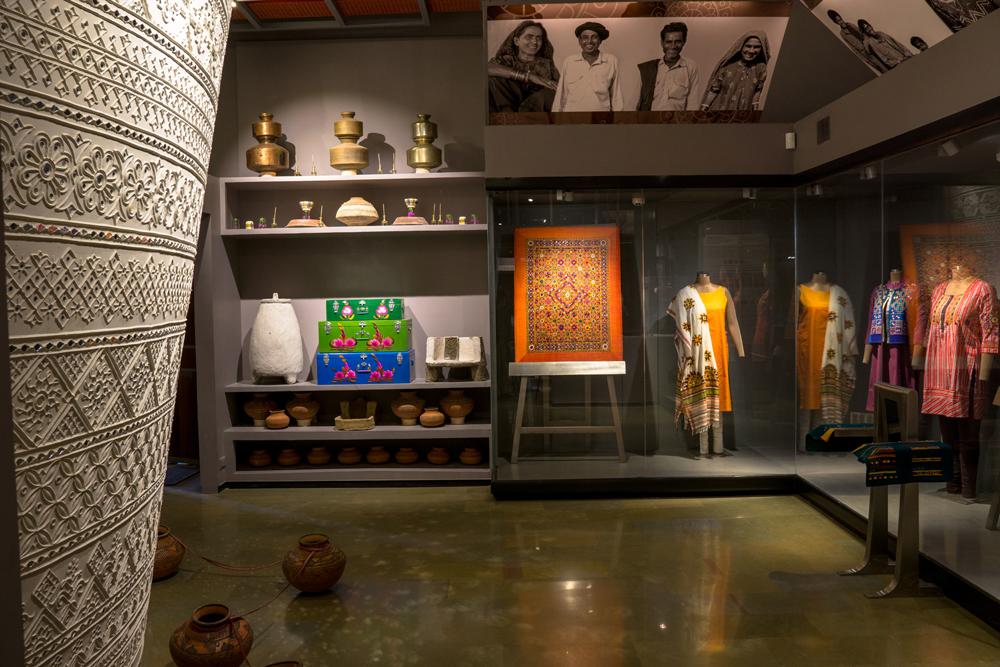
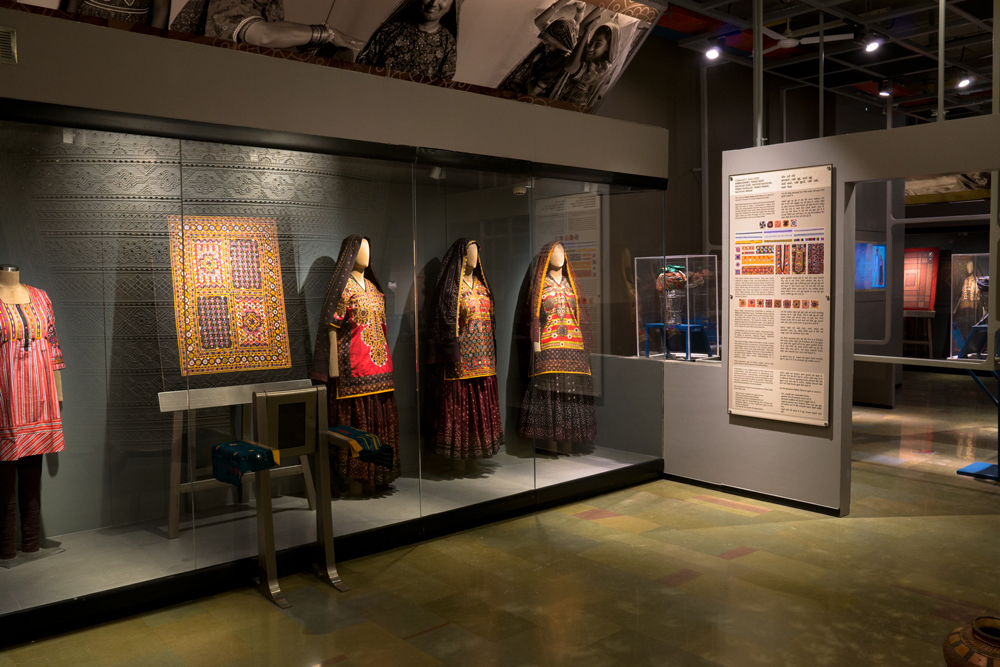
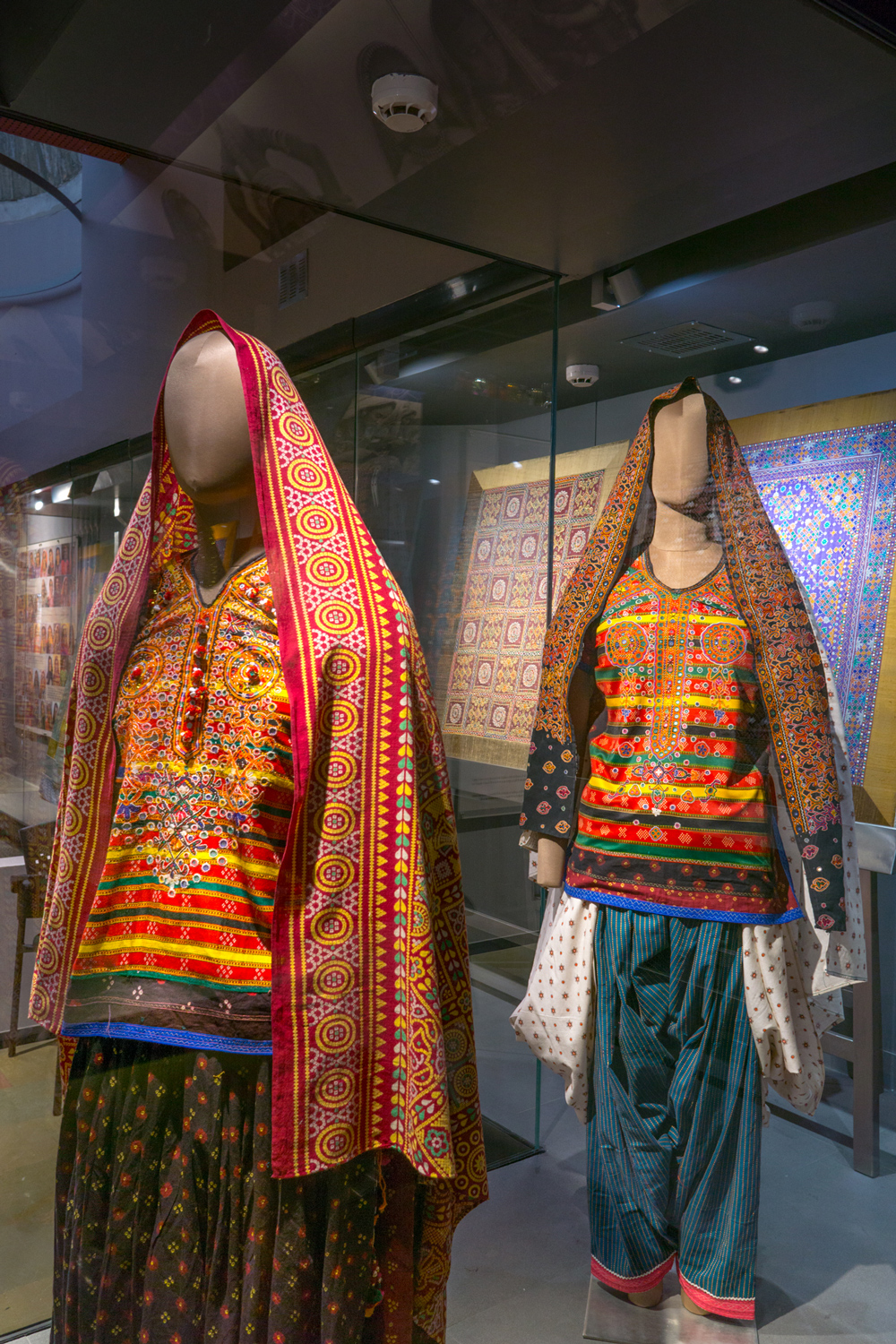
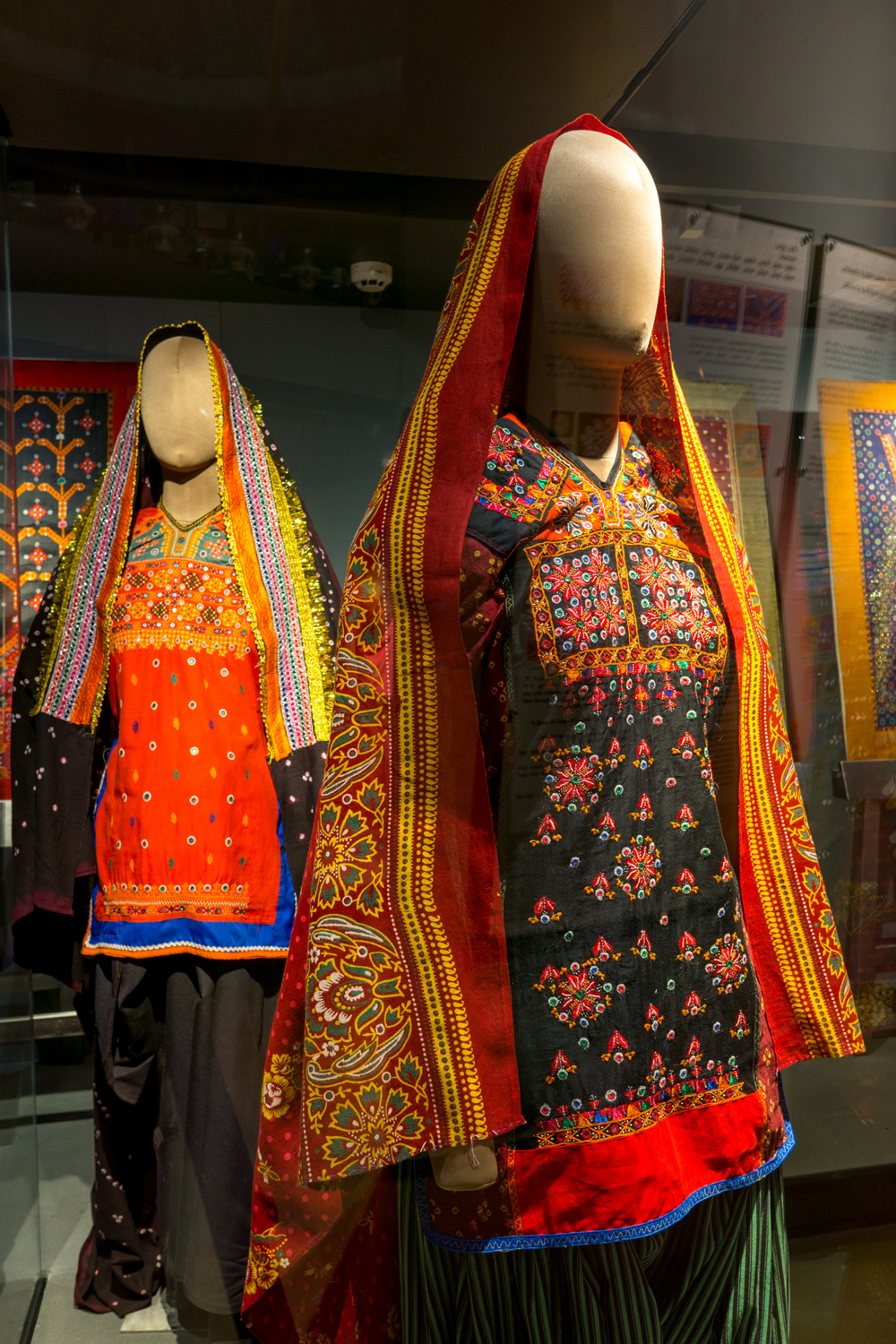
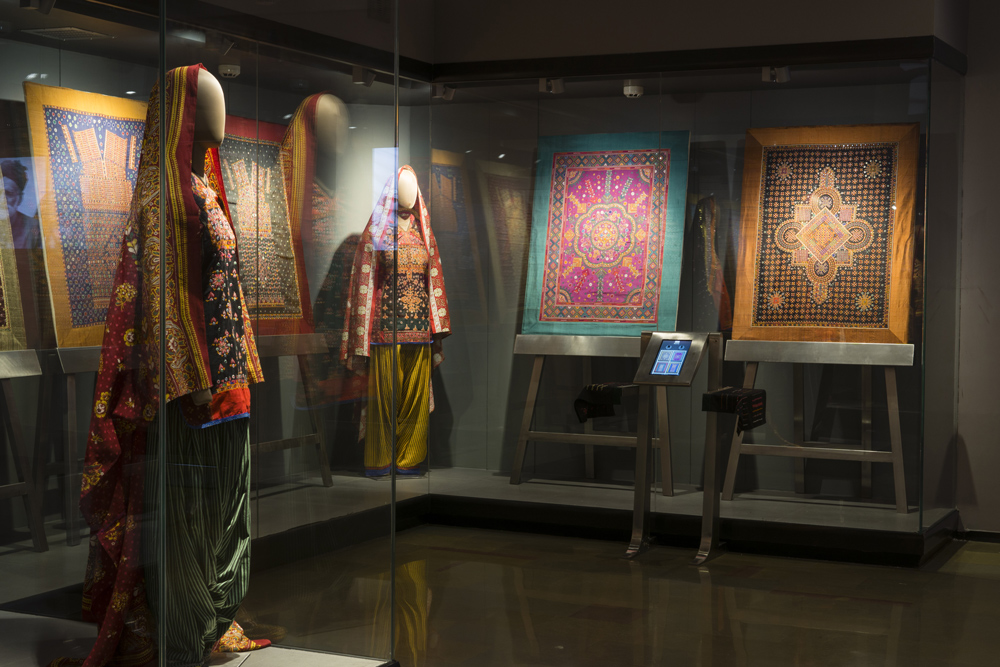
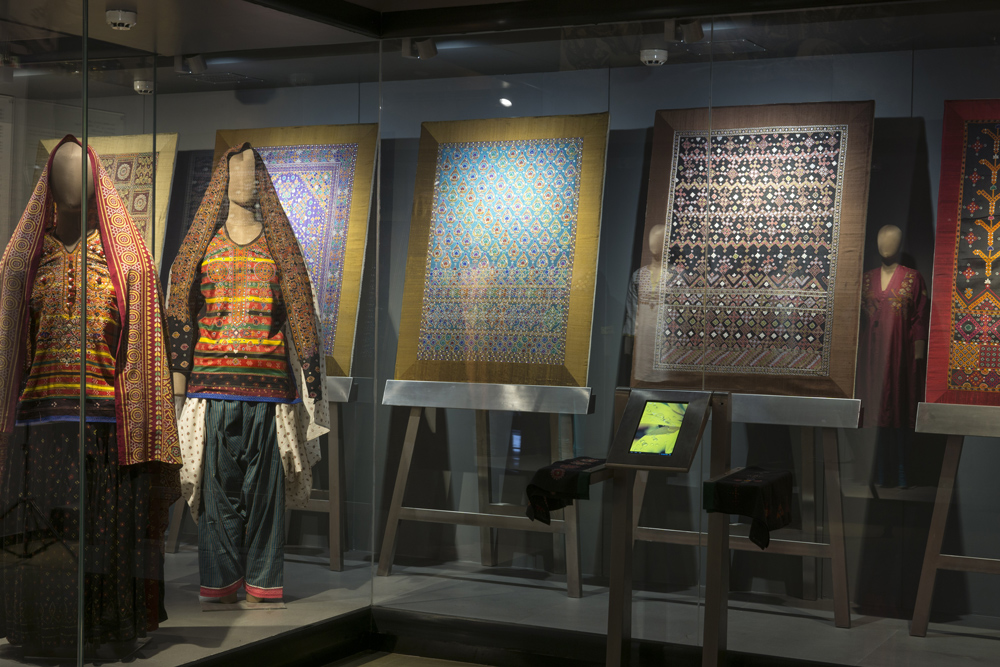
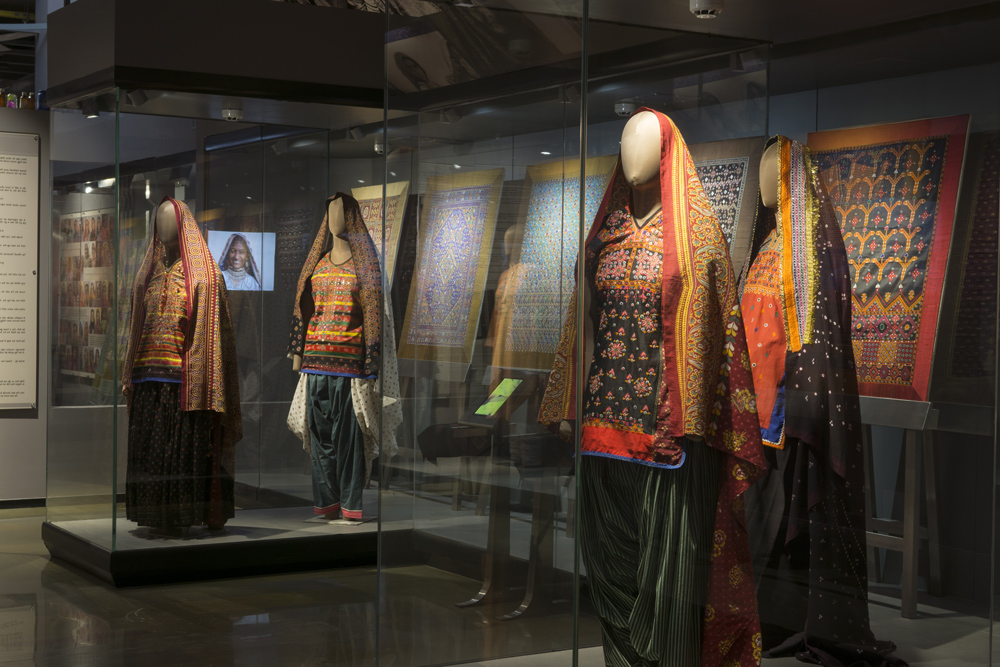
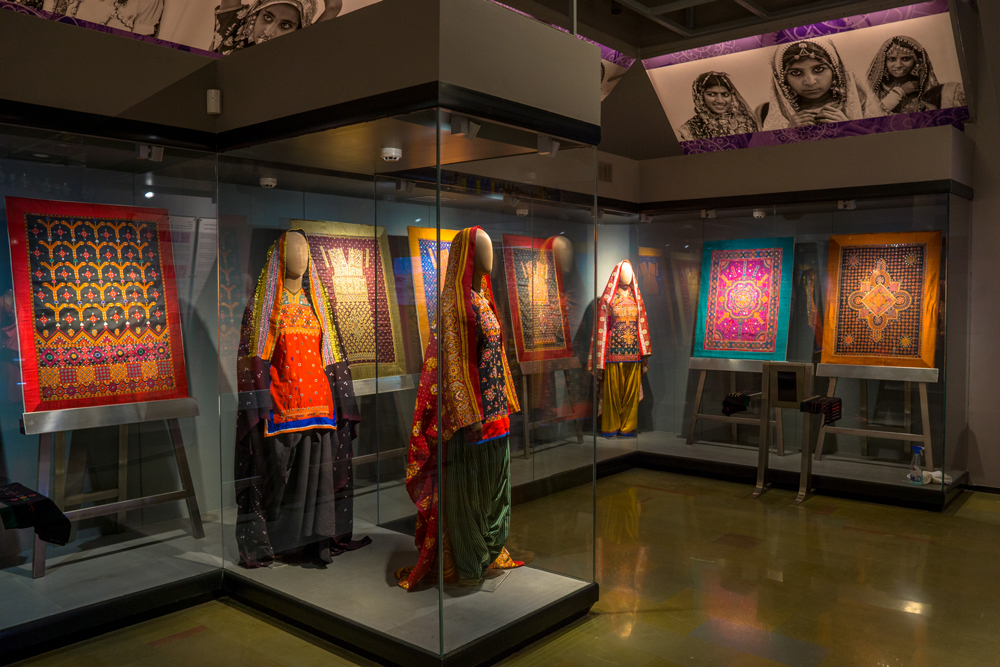
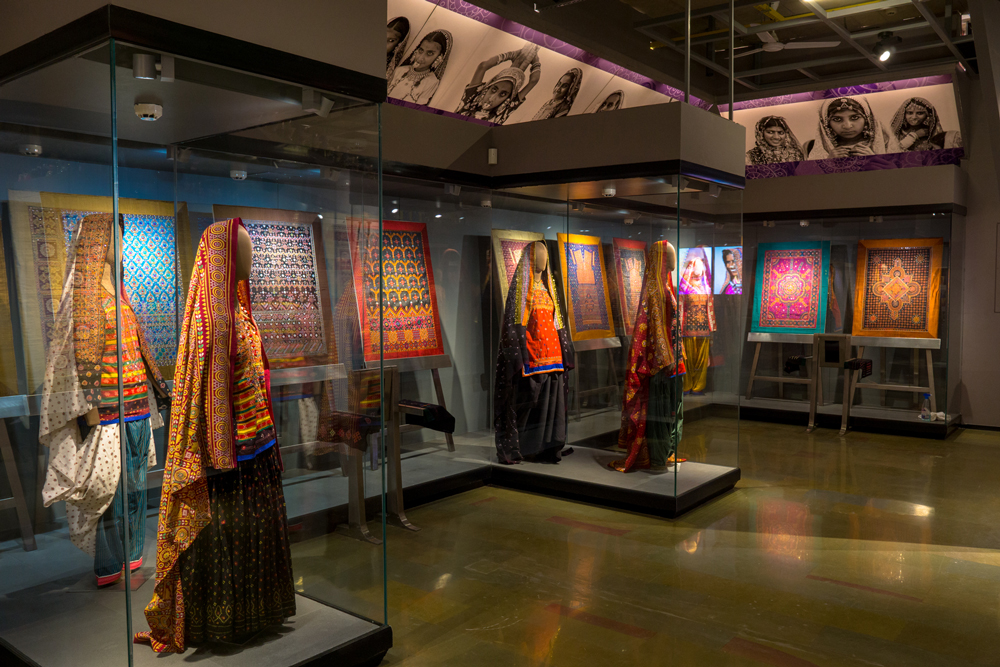
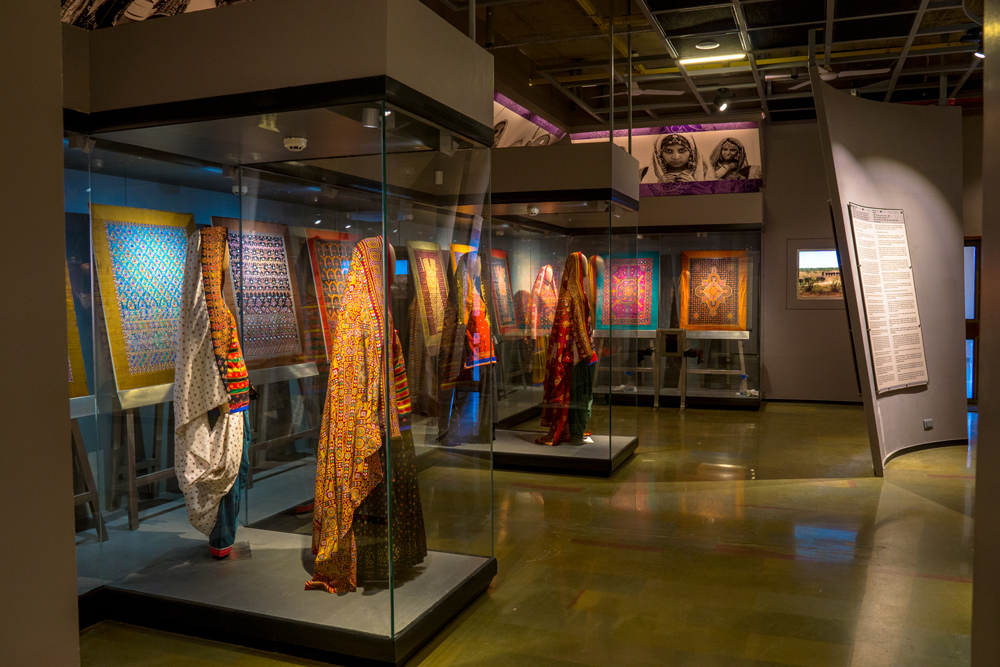
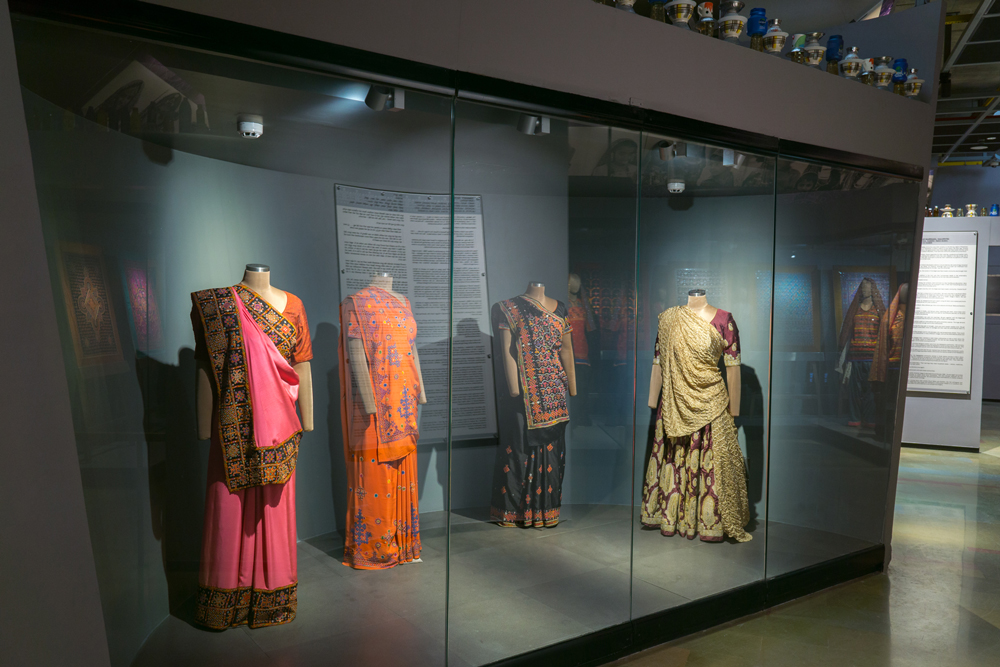
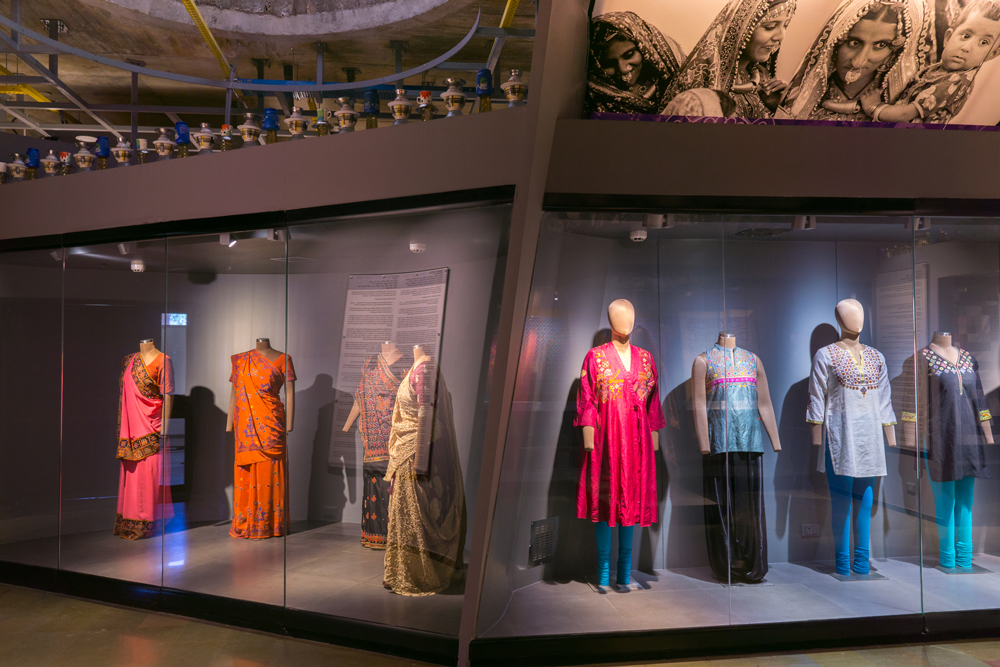
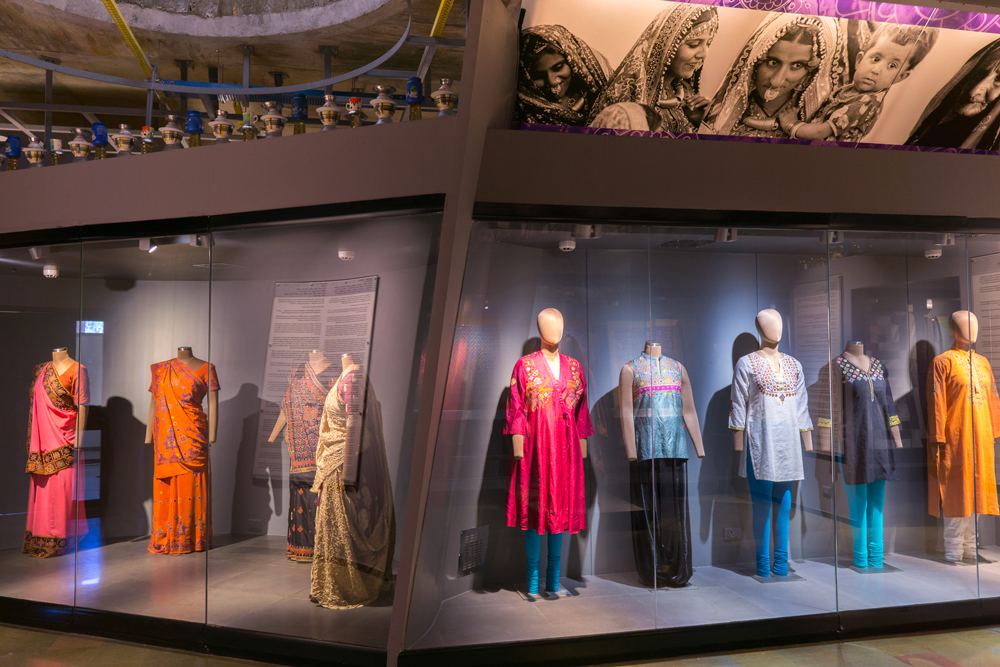
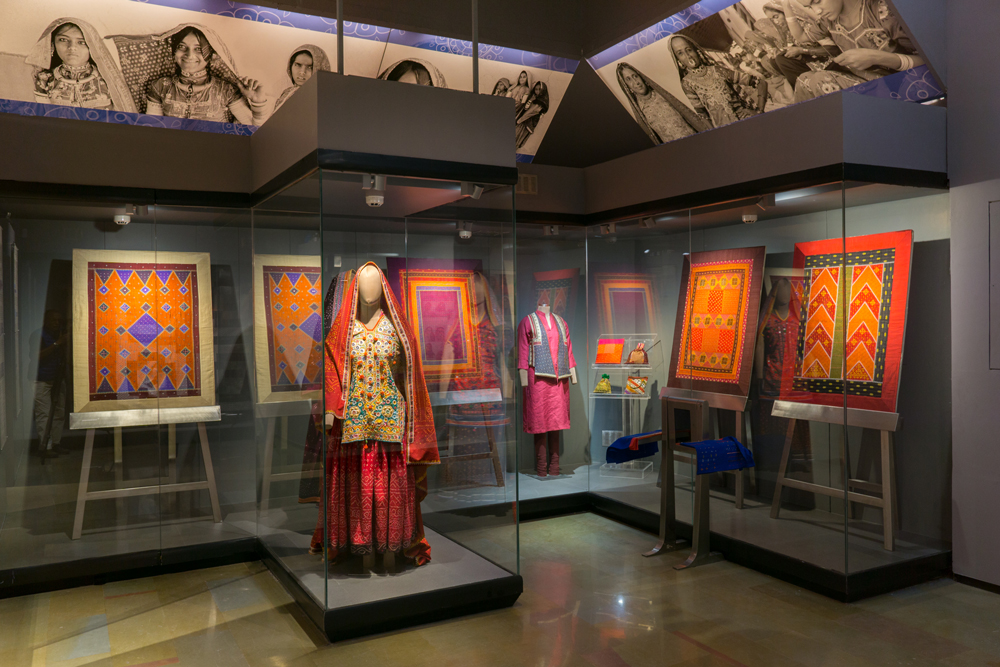
This first gallery is known as the “Living Embroidery of Kutch.” In this gallery, the embroidery of twelve different communities of Kutch, as created by Shrujan, is showcased—work that is still being practiced by women in the villages today. By observing this living embroidery, the present and future generations of these communities are inspired to develop interest and appreciation for this handicraft and to carry it forward.
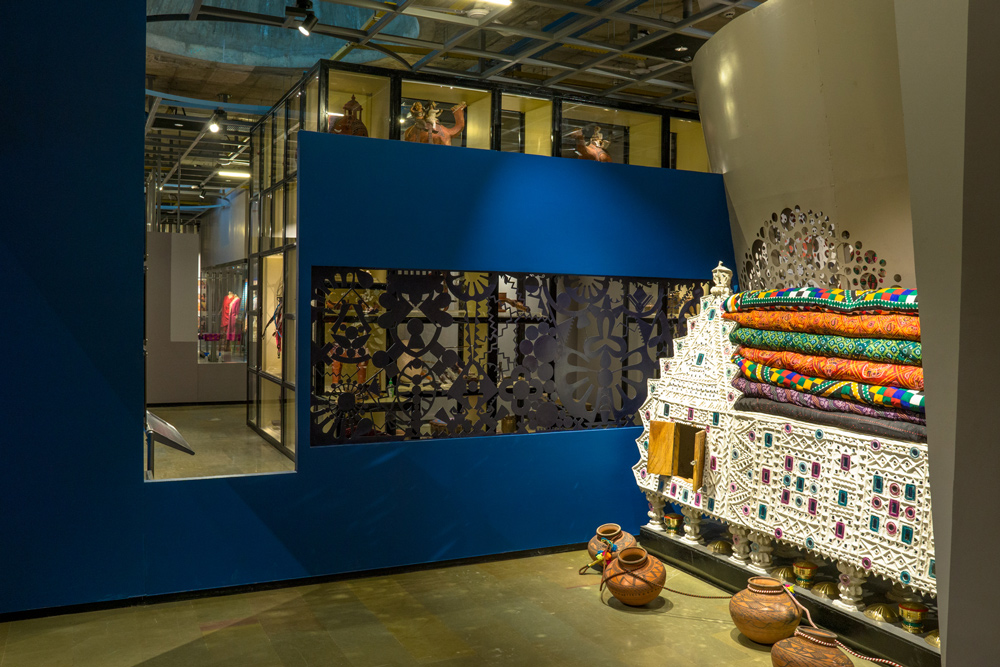
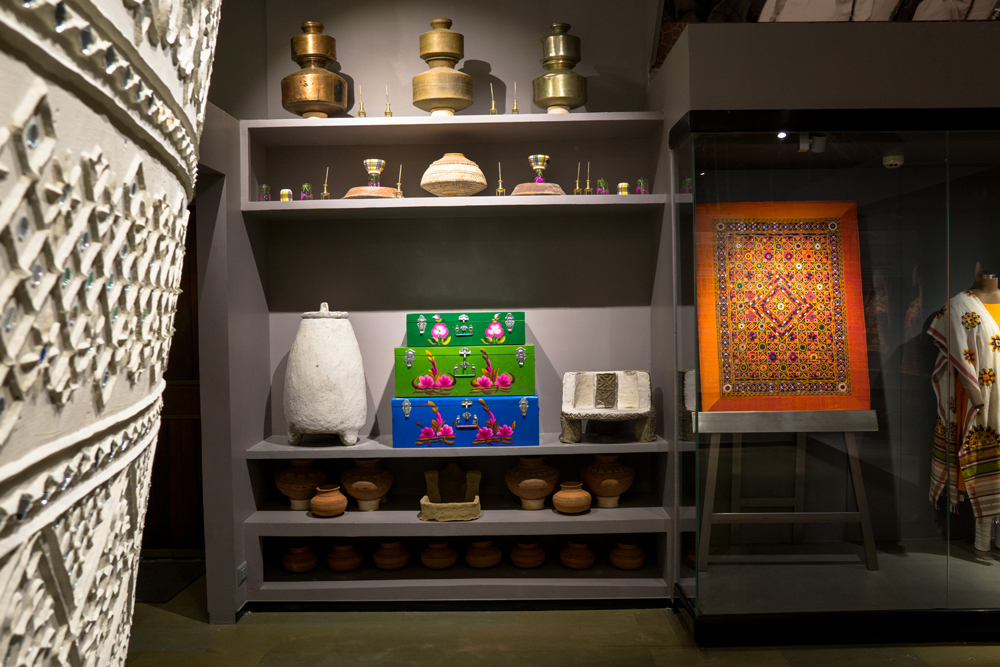
In addition, samples of other handicrafts are also displayed, including items that were traditionally used and, in some places, are still in use today.
Overall, this gallery is an effort to present the approach of the communities of Kutch towards handicrafts, along with the culture intricately woven into them, for everyone to see.
About Shrujan:
Shrujan (meaning Creativity in Sanskrit) is a not-for-profit organization working since 1969 with craftswomen in Kutch to revitalize the ancient craft of hand embroidery.
Hand embroidery has been practised by women in Kutch as a form of personal expression and used as a symbol of community identity for centuries. Shrujan was among the first to recognize its potential as a practical means to enable craftswomen to earn a home-based, sustainable and dignified livelihood.
Today Shrujan is a grassroots movement of craftswomen as well as a socially motivated enterprise. It has shown that a traditional and personal craft can transcend local boundaries and be appreciated, cherished and seamlessly integrated into urban lifestyles.
Shrujan craftswomen are proud to use the skill in their hands to stand tall on their feet. Their passion for excellence is what makes Shrujan embroidery like no other, anywhere in the world.
About Living & Learning Design Centre:
This Crafts Museum is part of the Living and Learning Design Centre, a pioneering new effort of the Shrujan Trust.
The Living and Learning Design Centre is envisioned as a multi-dimensional craft education and resource centre. It will strengthen all the crafts of Kutch, and make them relevant and marketable so that practising and aspiring craftspeople can earn a prosperous livelihood.
A gallery, a library and three crafts studios are now functional within the Museum. Two more galleries will be opening shortly.
The current Show in Gallery One - The Living Embroideries of Kutch - celebrates the rich and awe-inspiring embroideries of several different communities. Most of these communities have migrated from different parts of Asia and settled in Kutch and in nearby regions such as Banaskantha.
For Shrujan, the Crafts Museum is a vibrant and dynamic platform to conserve and showcase the diverse crafts of Kutch. Displays in the galleries will change from time to time, highlighting a variety of crafts – from textiles to pottery to metal, wood and stone craft. A Crafts School is also planned in the near future. It will have fully equipped working studios for all the crafts of Kutch. This will make the Living and Learning Design Centre the single largest living and working craft environment in Kutch and perhaps in India as well.
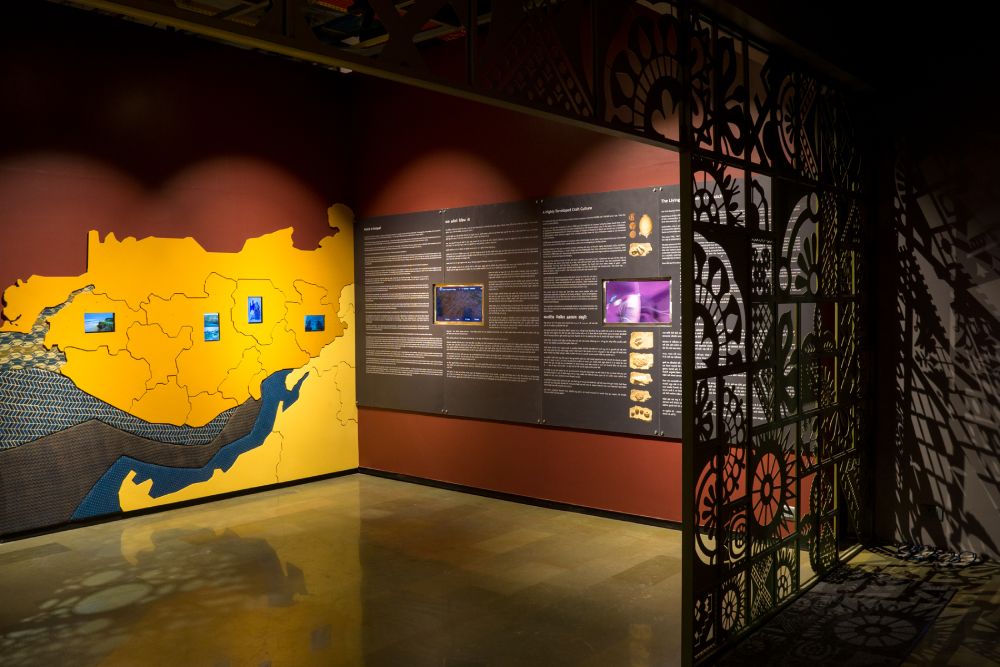
In this section, we introduce you to Kutch and its history with diverse crafts and cultures.
The claim that Kutch is unique is not just an expression of pride of a people in love with their homeland. The geography, the geology, the ecosystems, the diverse communities, the values that Kutch embodies - the synergy of all these factors makes Kutch a unique habitat.
The land that we know as Kutch was born in the sea. It existed even before the Jurassic period, when the entire East-West plate surfaced out of the sea. This elevation is called the Bhuj Ridge. It is in the shape of the shell of the tortoise or kachua - from which comes the name - Kutch.
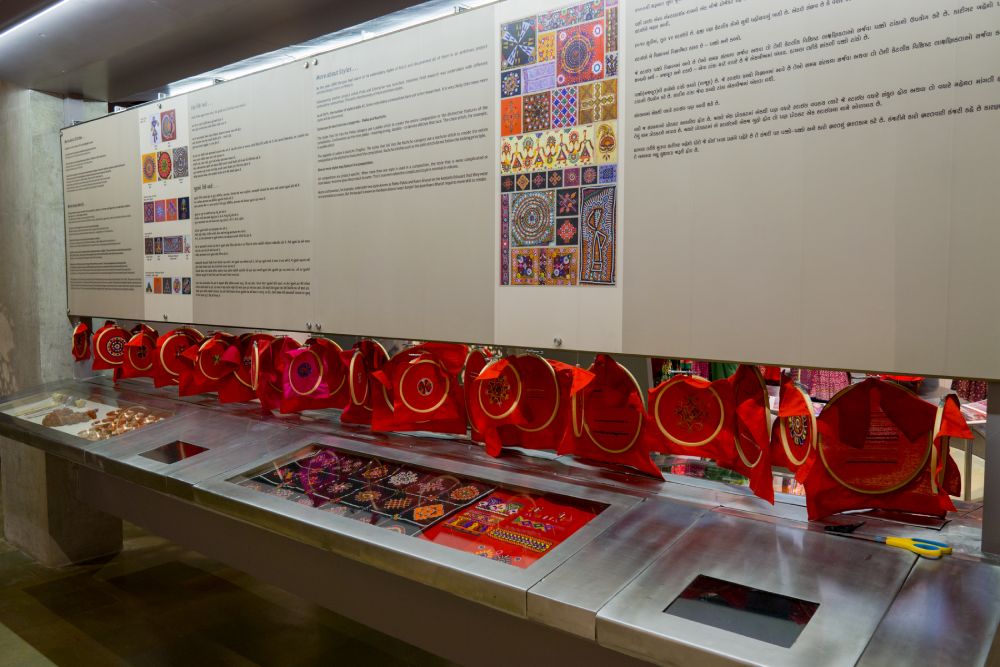
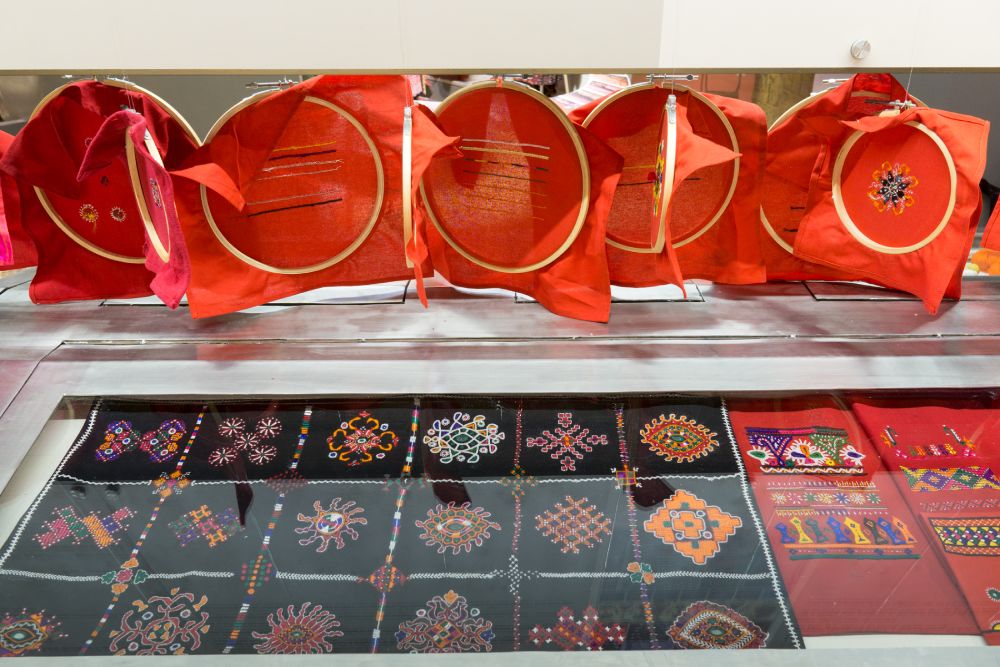
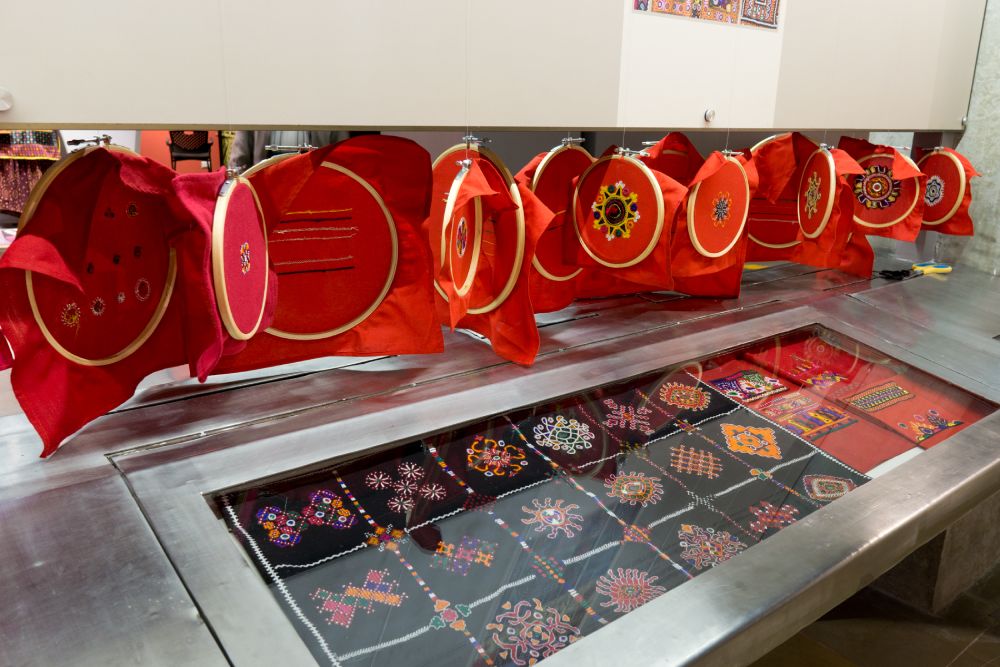
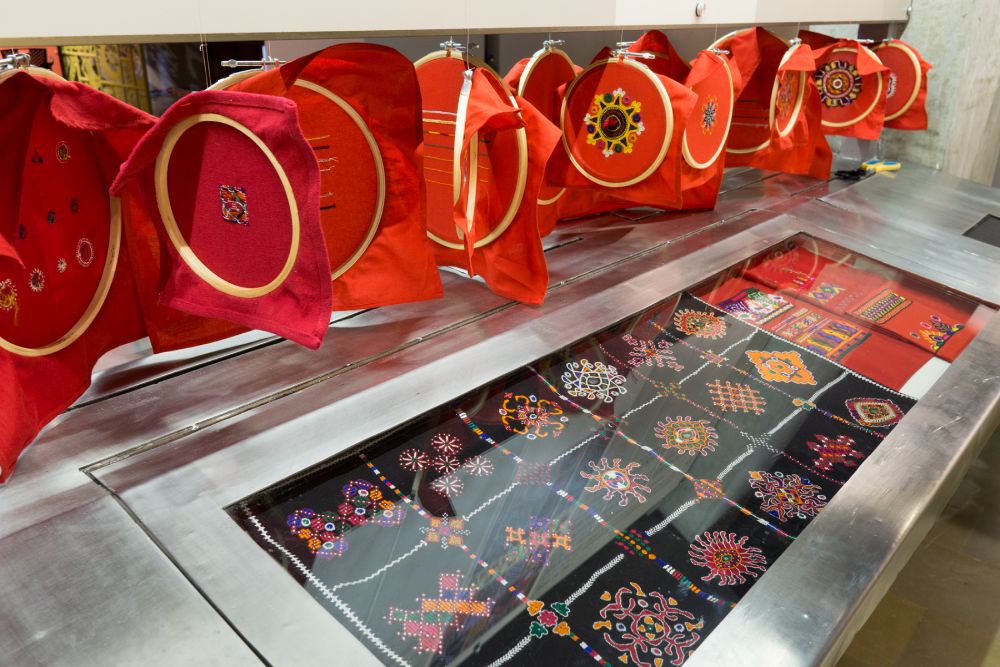
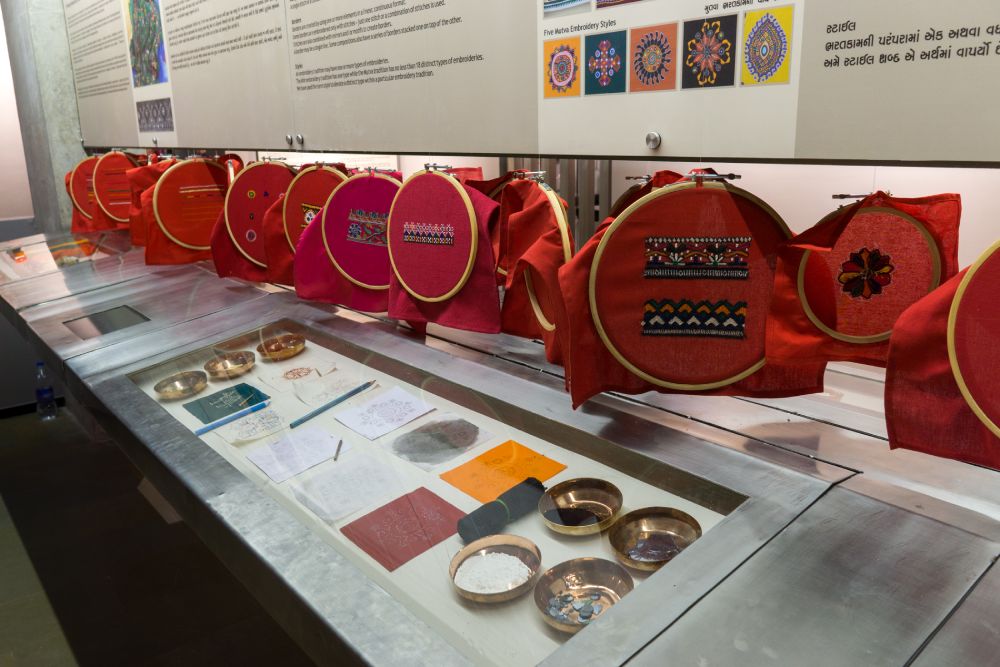
In this section, we introduce you to the various embroidery styles, elements and motifs of the embroideries of Kutch.
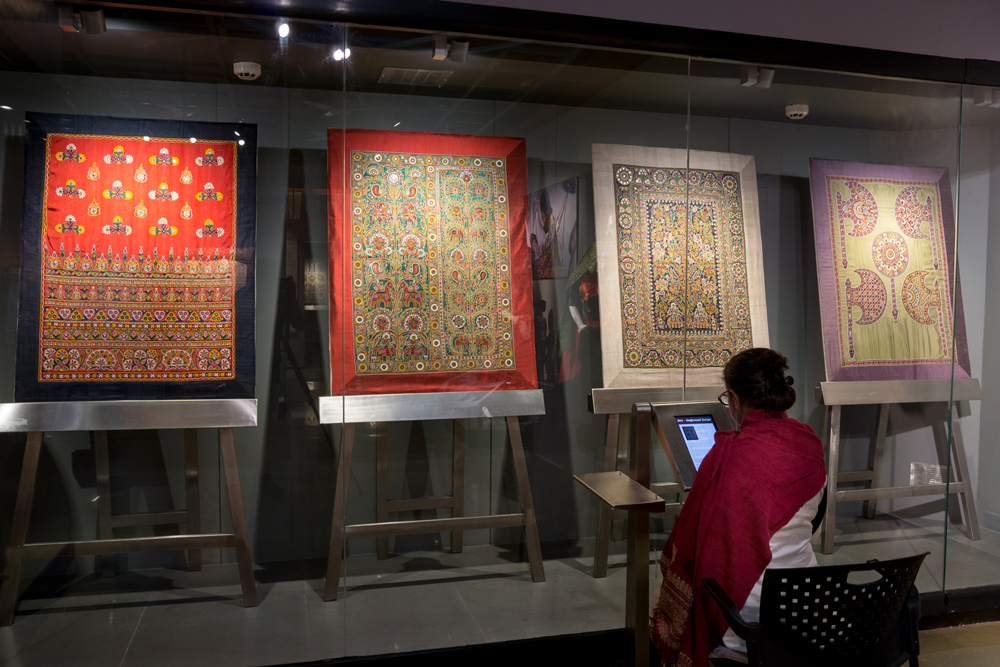
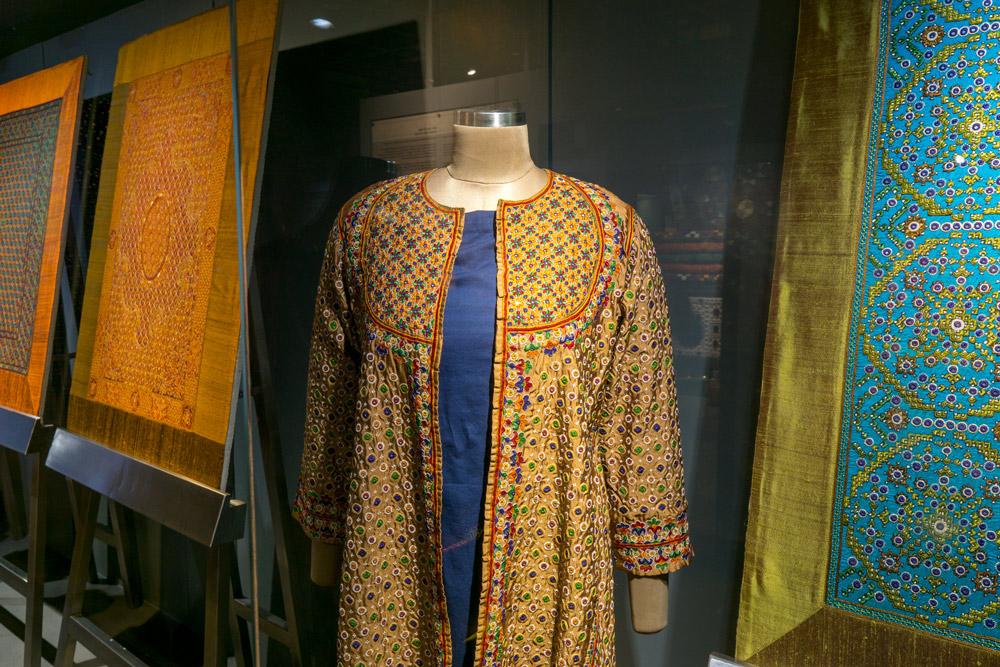
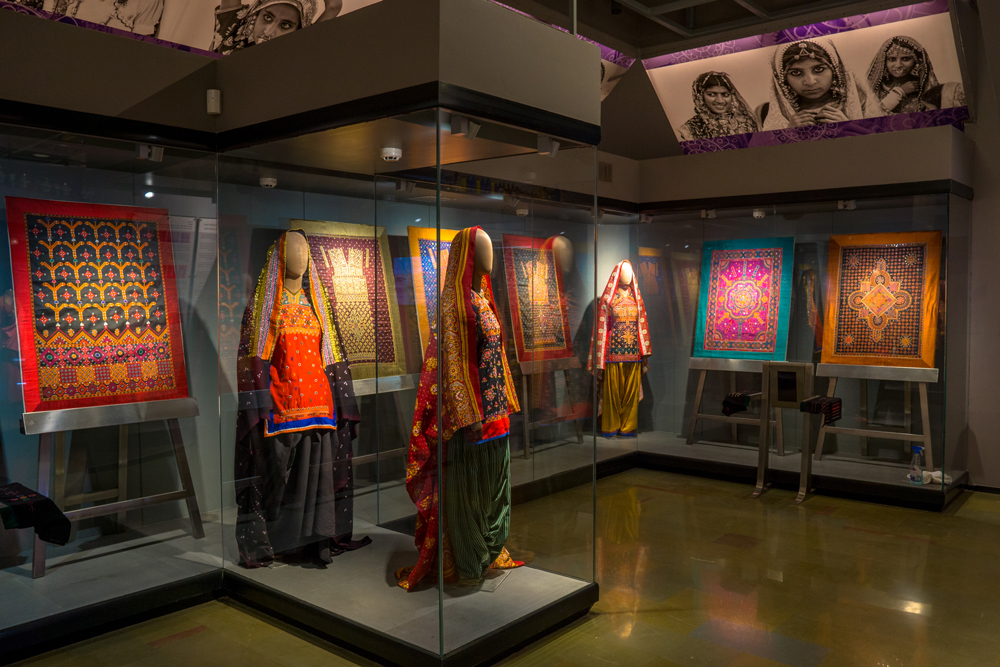
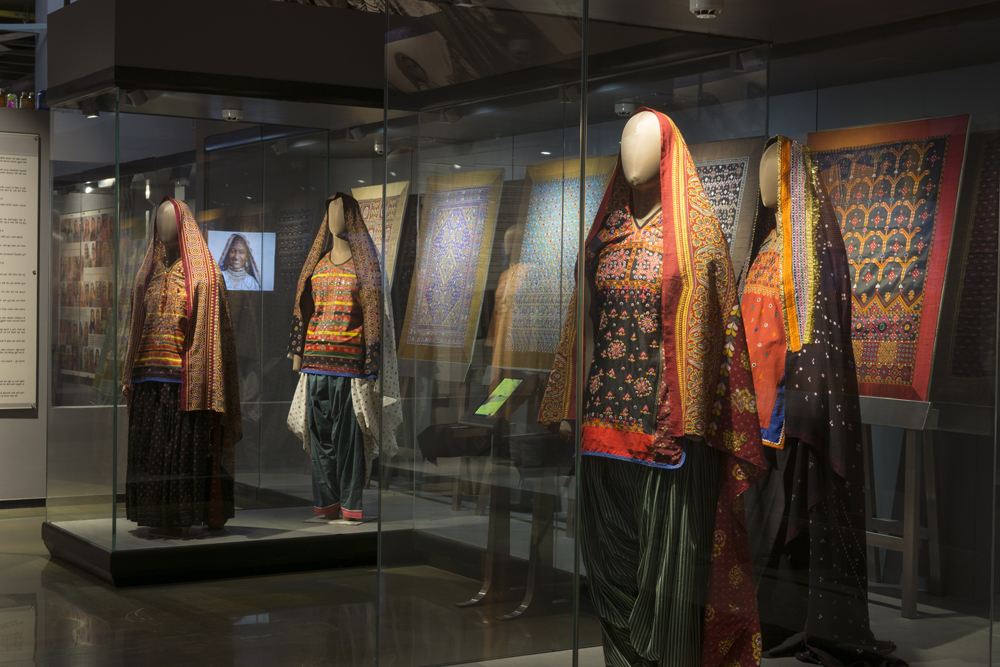
The embroidery traditions of Kutch are rich and varied. And they are alive. Working with craftswomen over the last five decades, Shrujan has been able to identify 42 distinct embroidery styles, the most popular of which you will see on display.
12 different communities practise these embroideries. These include communities that have settled in Kutch for several generations, such as the Ahirs; others, such as the Meghwaad Maaru, who came to Kutch as refugees from Sindh, Pakistan; and some, such as the Mochi, who live in nearby Banaskantha. Many communities practise more than one embroidery style; even different subgroups within a community may have different styles.
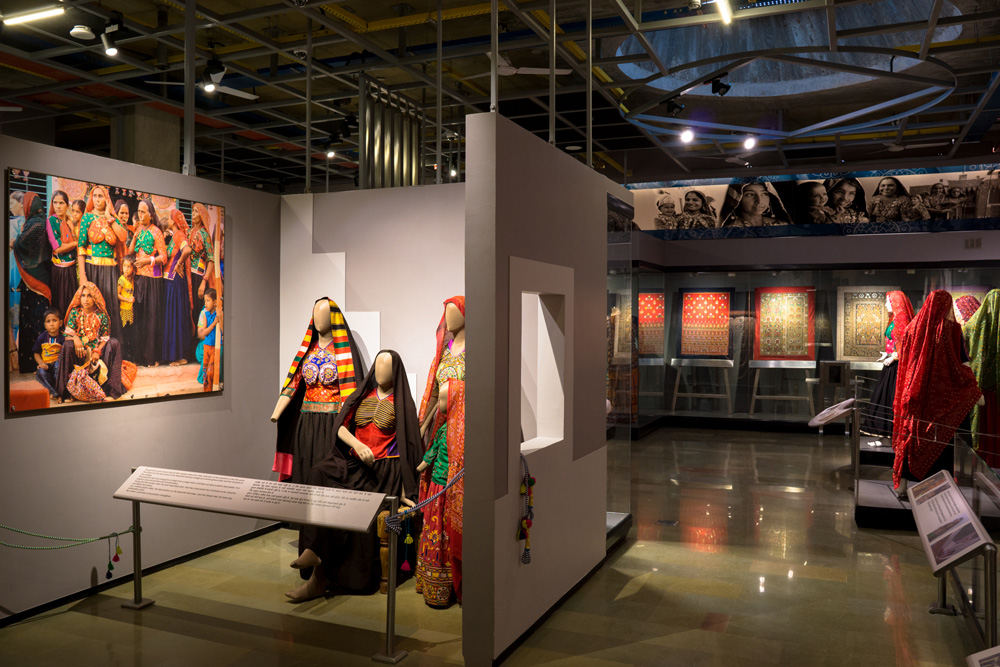
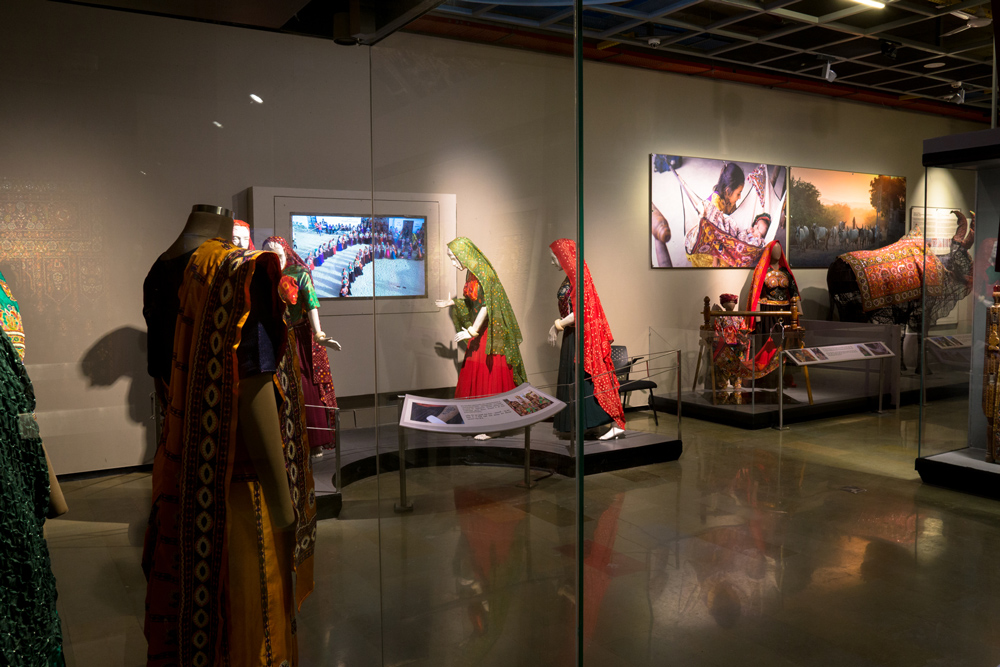
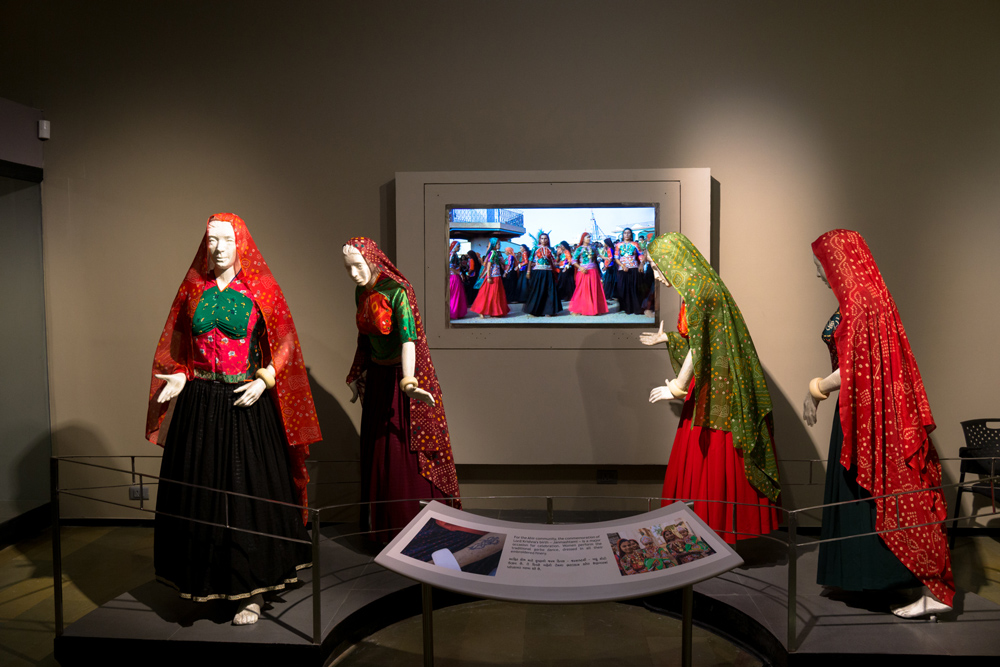
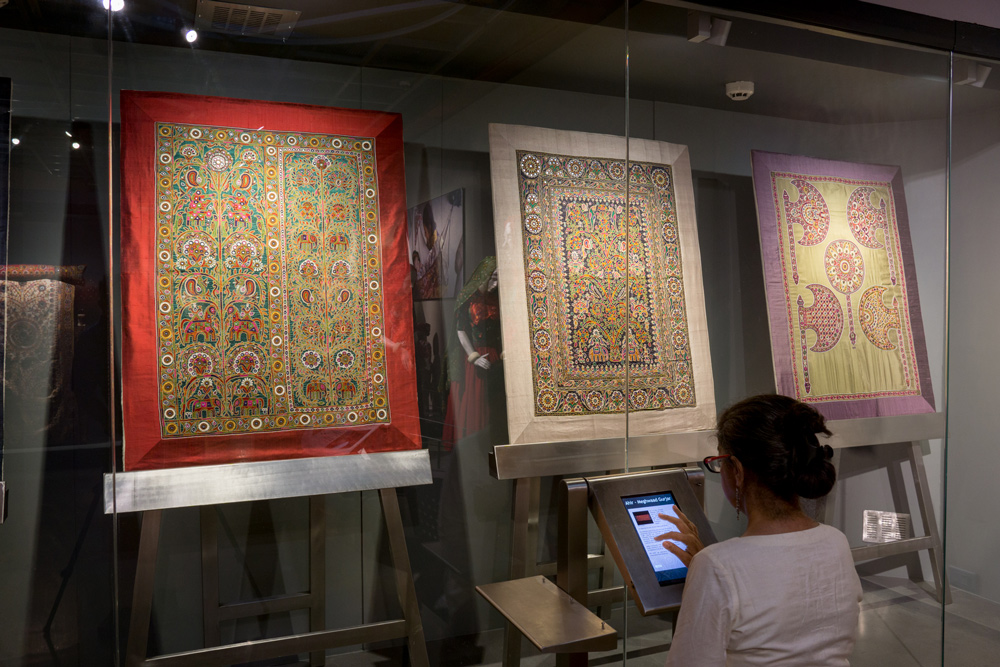
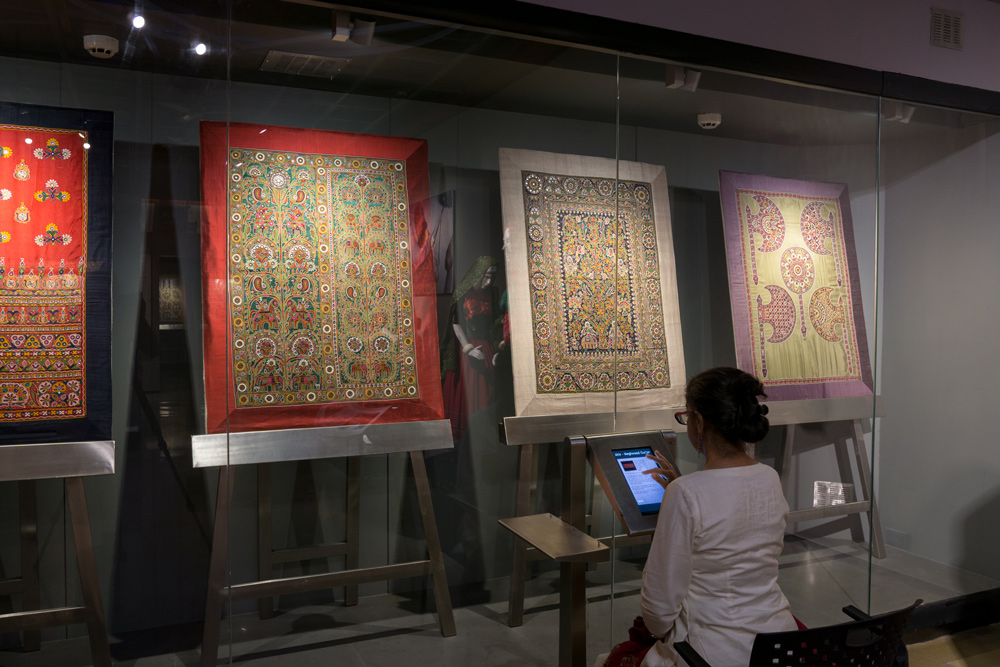
Ahir-Meghwaad Gurjar
In this section, we introduce you to the technical specifics of the embroidery of the Ahir & Meghwaad Gurjar communities.
The Ahir community is divided into several subgroups, including the Praanthadiya, Macchoya and Boricha. The Meghwaad Gurjars live alongside the Praanthadiya Ahirs in almost all the regions of Kutch.
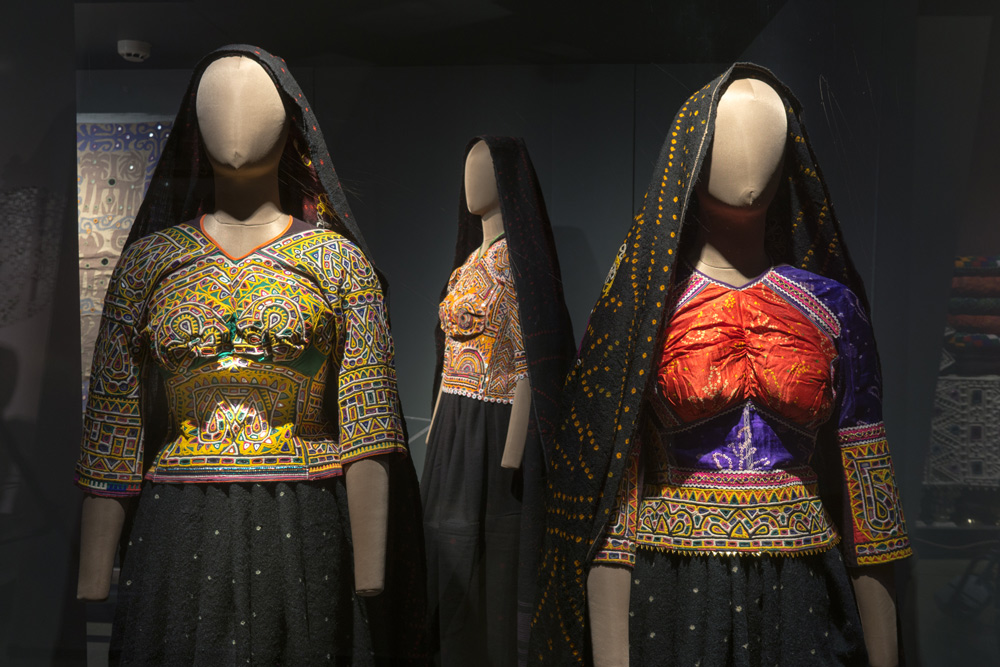
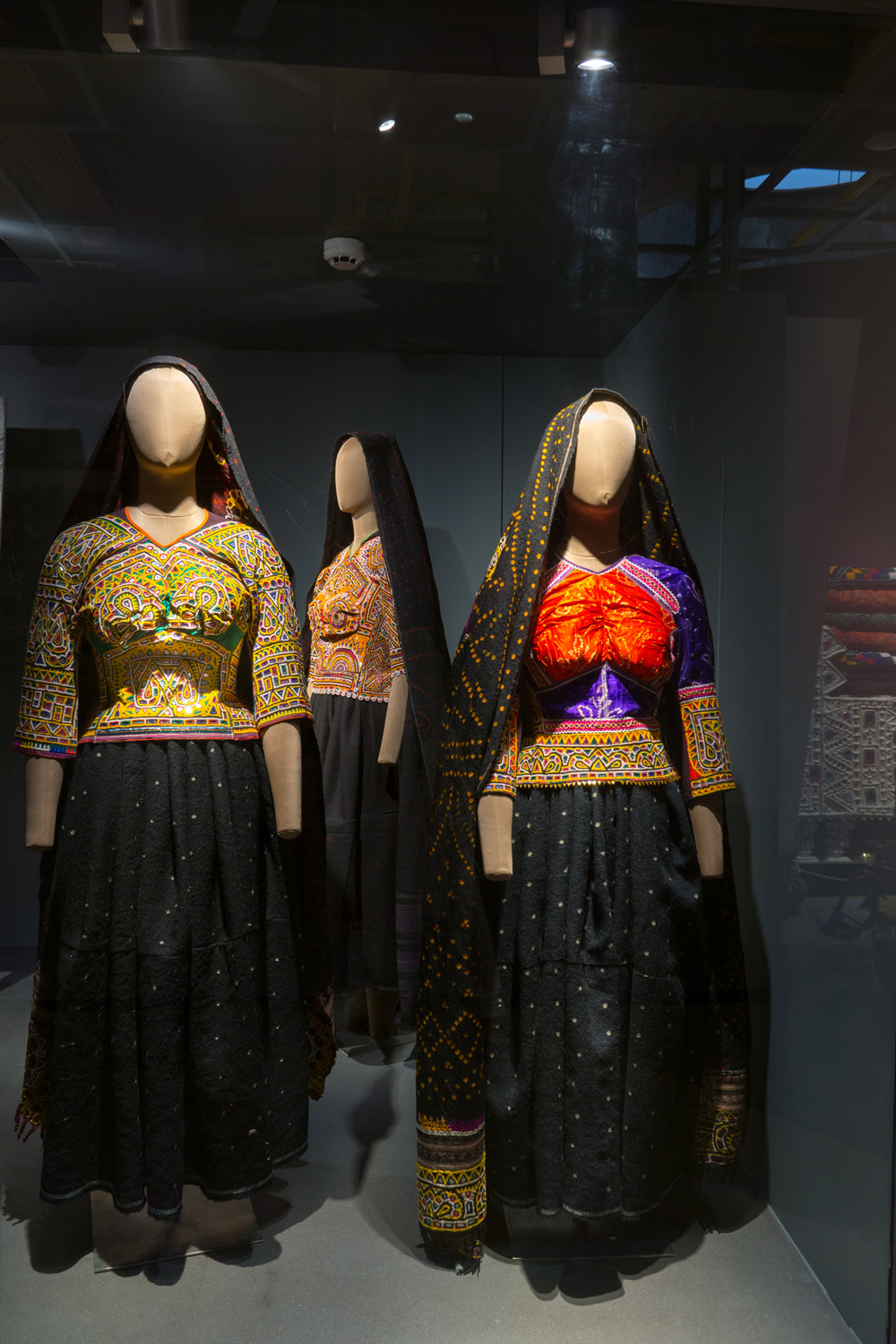
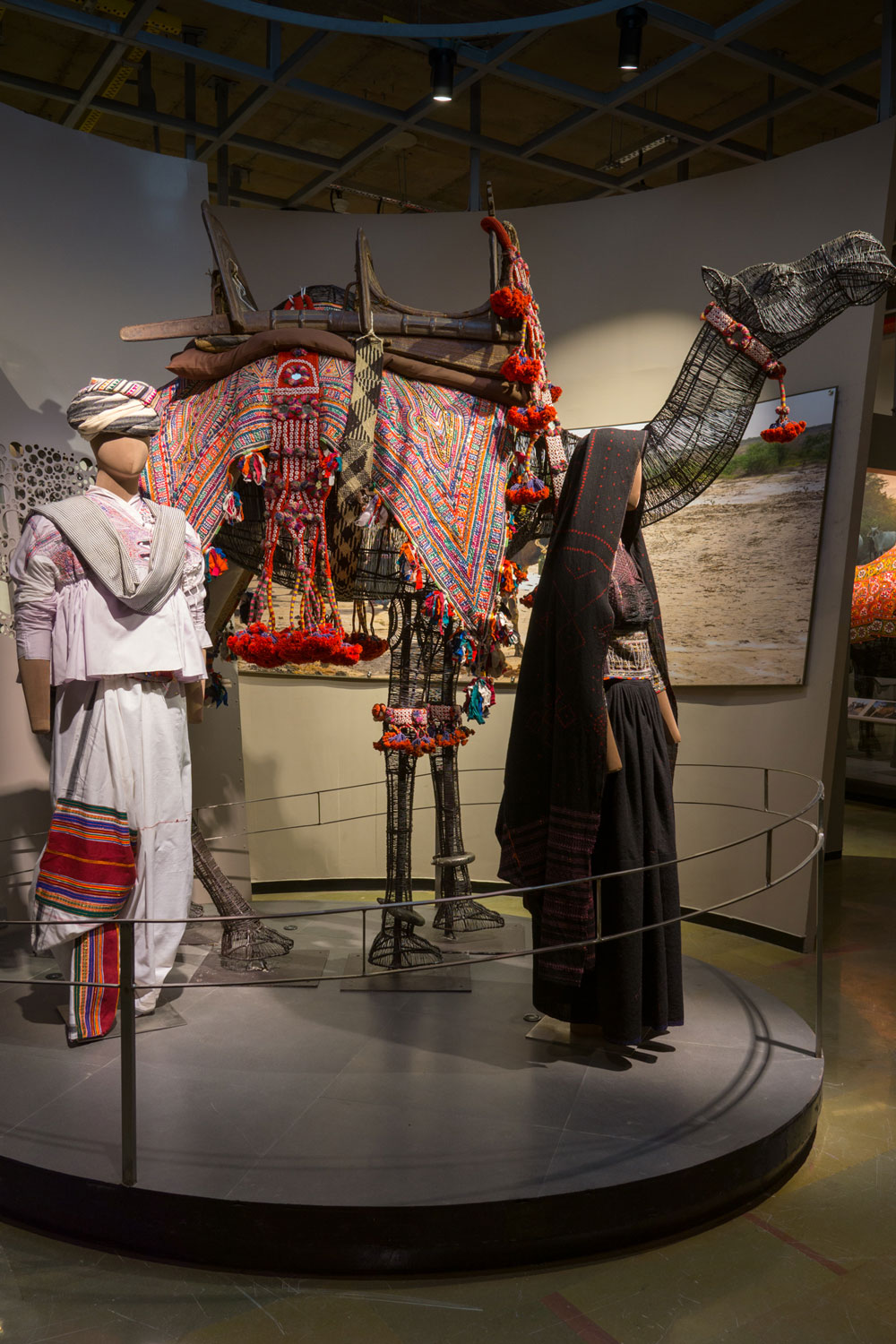
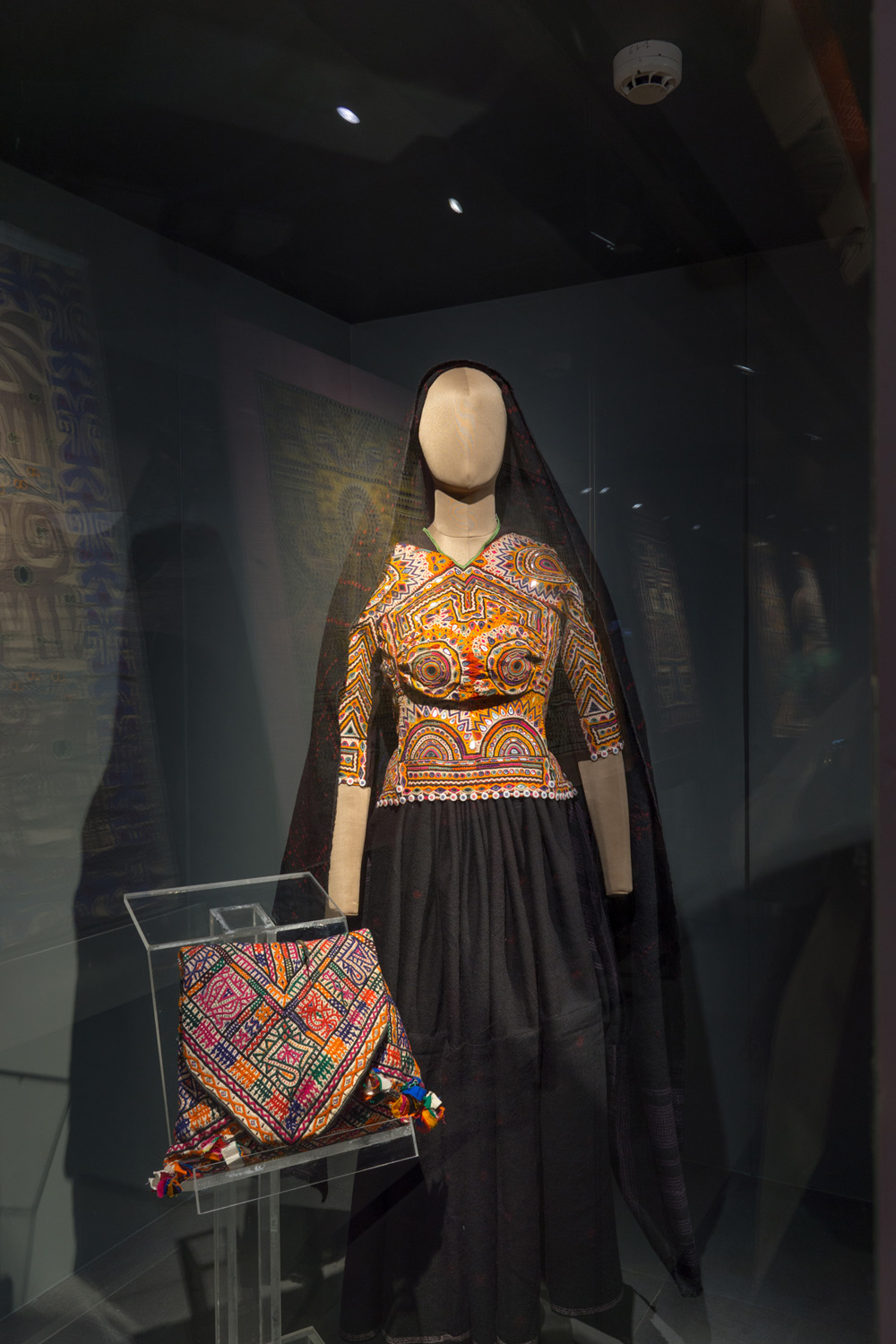
Ahir embroidery celebrates abundance and opulence. It is bright, colourful, dense and chock-a-block with mirrors. It has a confidence and a boldness that Ahir craftswomen refer to as thassa.
Rabaari
In this section, we introduce you to the technical specifics of the embroidery of the Rabaari community.
There are several subgroups of the Rabaari community in Kutch. Embroideries of two of these subgroups are displayed here and described below.
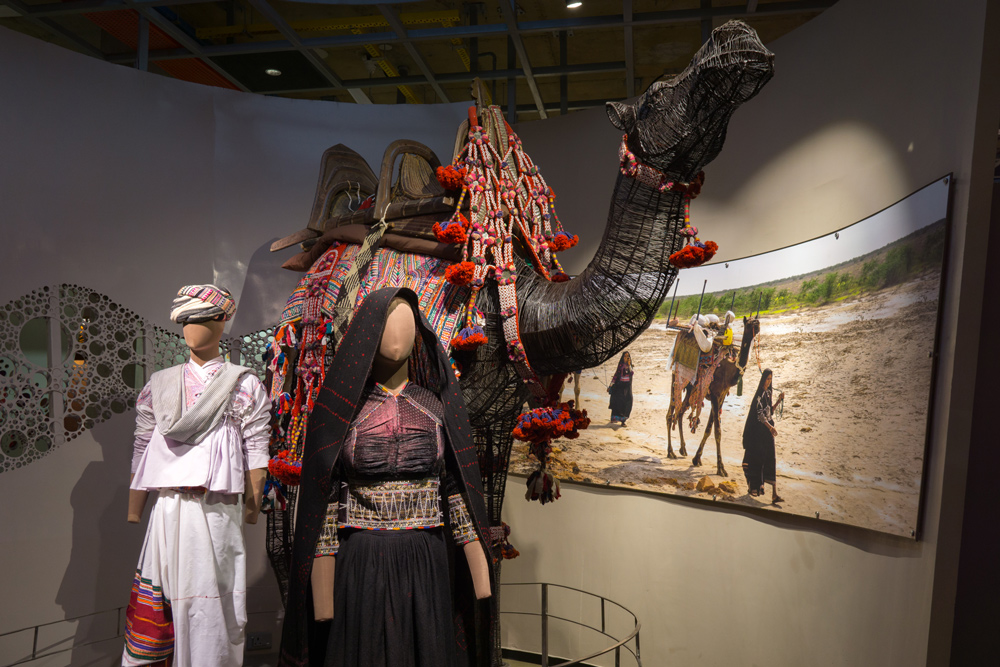
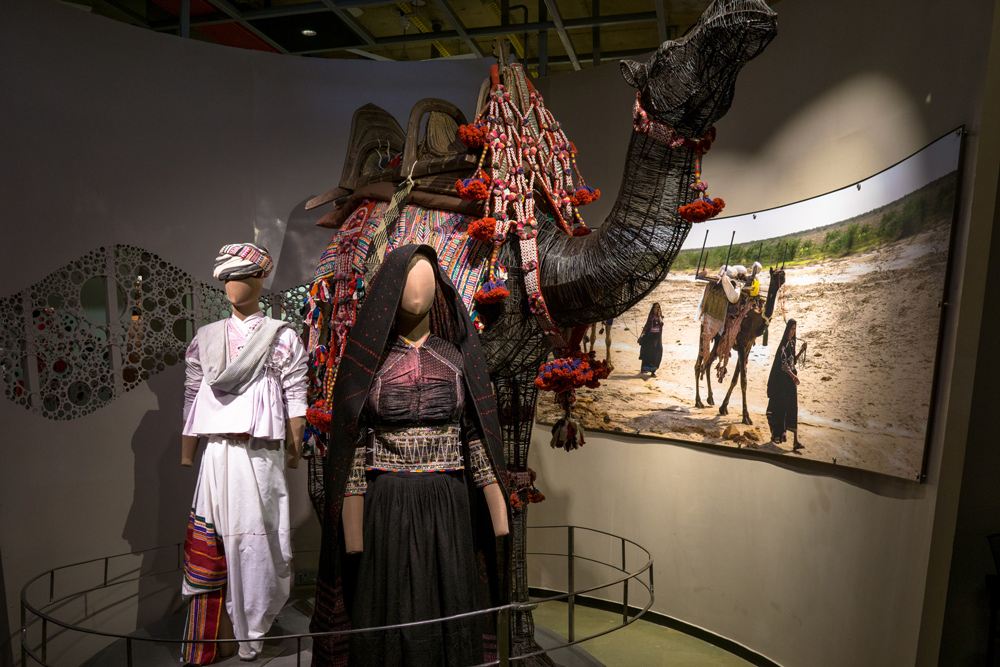
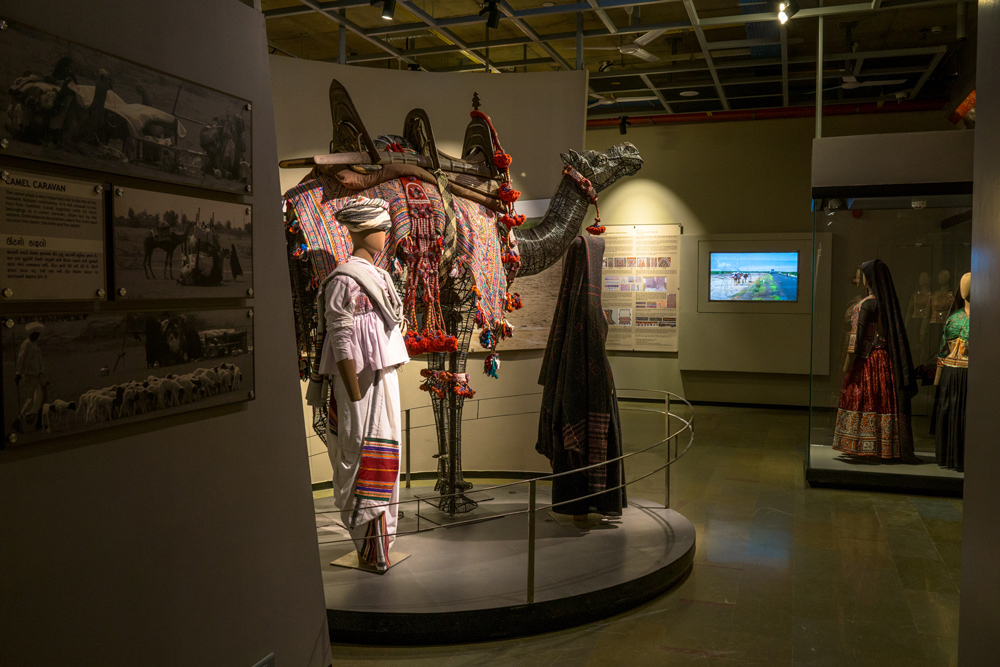
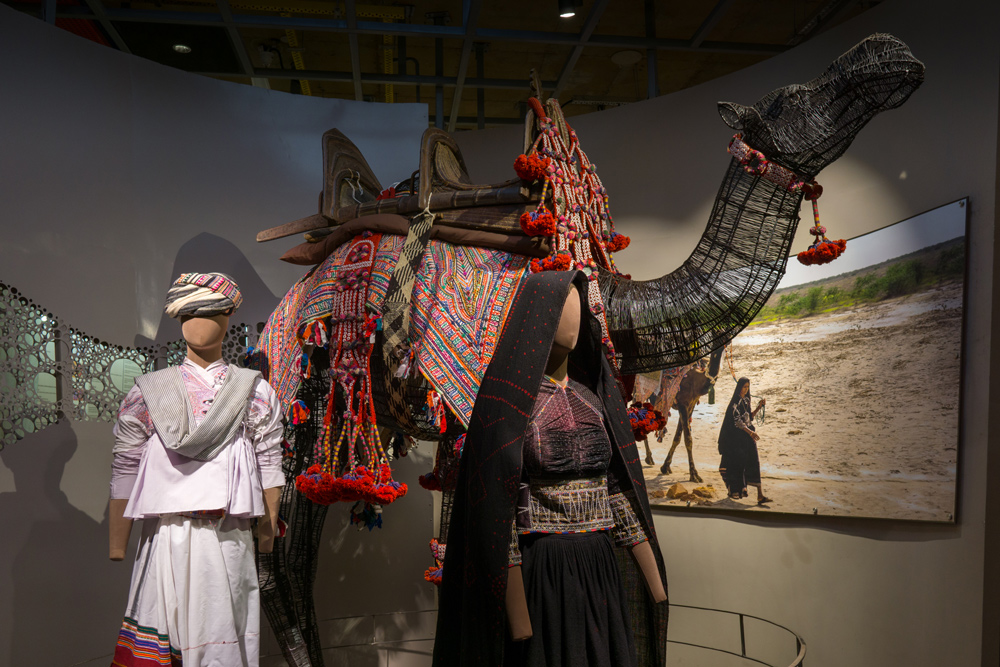
Rabaari craftswomen make profuse use of embroidery. They embroider their own clothing and their children's as well. They embroider certain garments worn by men as well as home decorations and a variety of bags. Camels are also adorned with a number of embroidered decorations.
Sodha – Jadeja
In this section, we introduce you to the technical specifics of the embroidery of the Sodha & Jadeja communities.
Pakko and Noyran are the two most popular styles practised by the Sodha and Jadeja communities.
Pakko embroidery is characterized by a sturdy denseness. That is why it is called Pakko, meaning strong, durable in Kutchi. Pakko has curvilinear, geometric, floral, bird, animal and figurative motifs.
The building block of Noyran embroidery is a tiny unit that is either square or diamond-shaped. This unit resembles the shape of the human eye, which is called noyran in Sindhi.
Meghwaad Maaru
In this section, we introduce you to the technical specifics of the embroidery of the Meghwaad Maaru community.
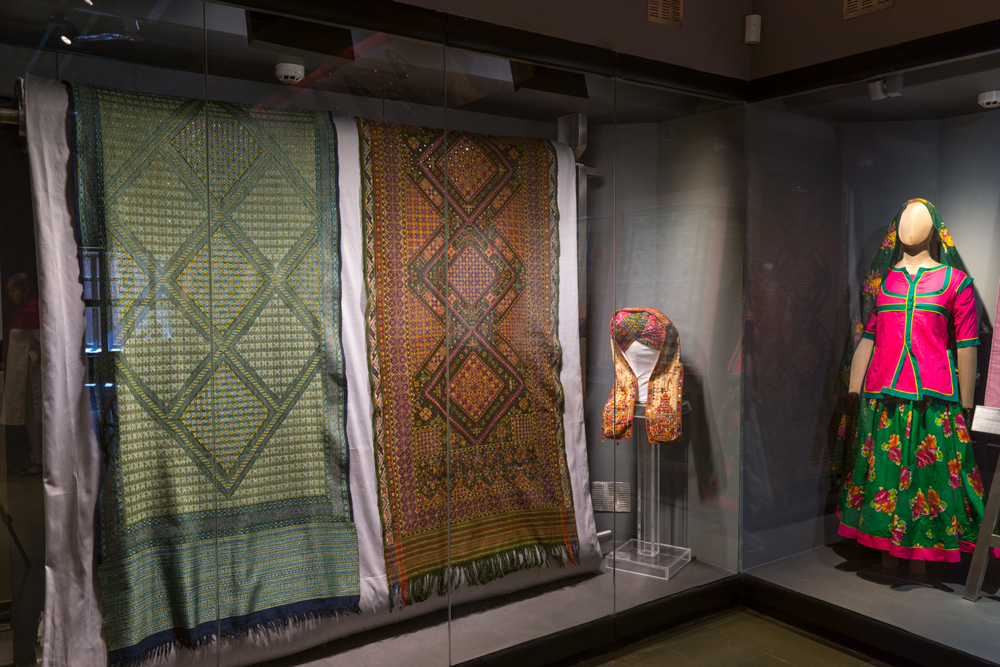
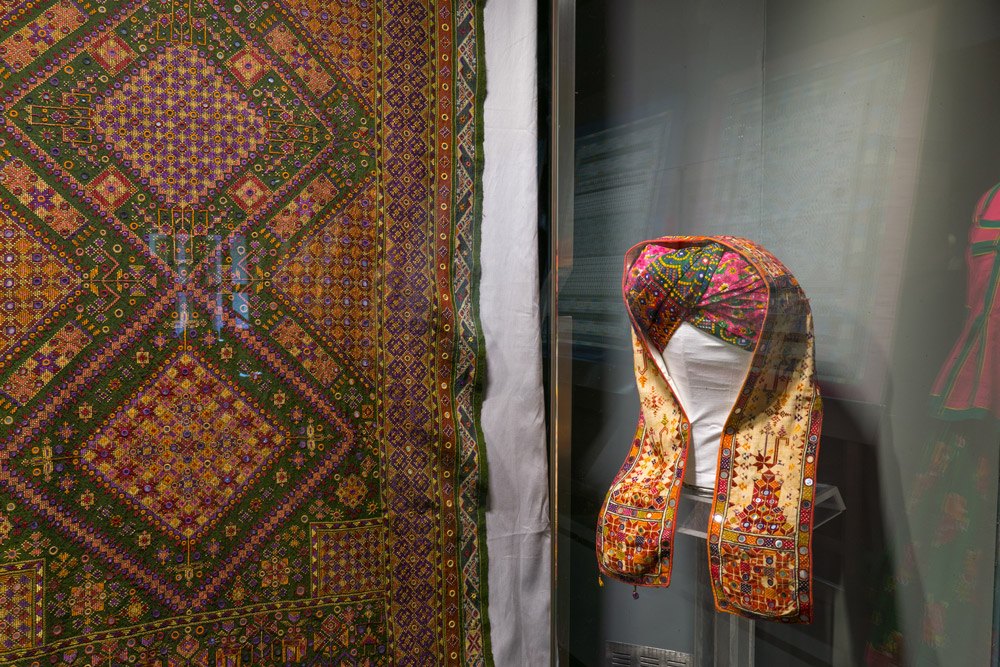
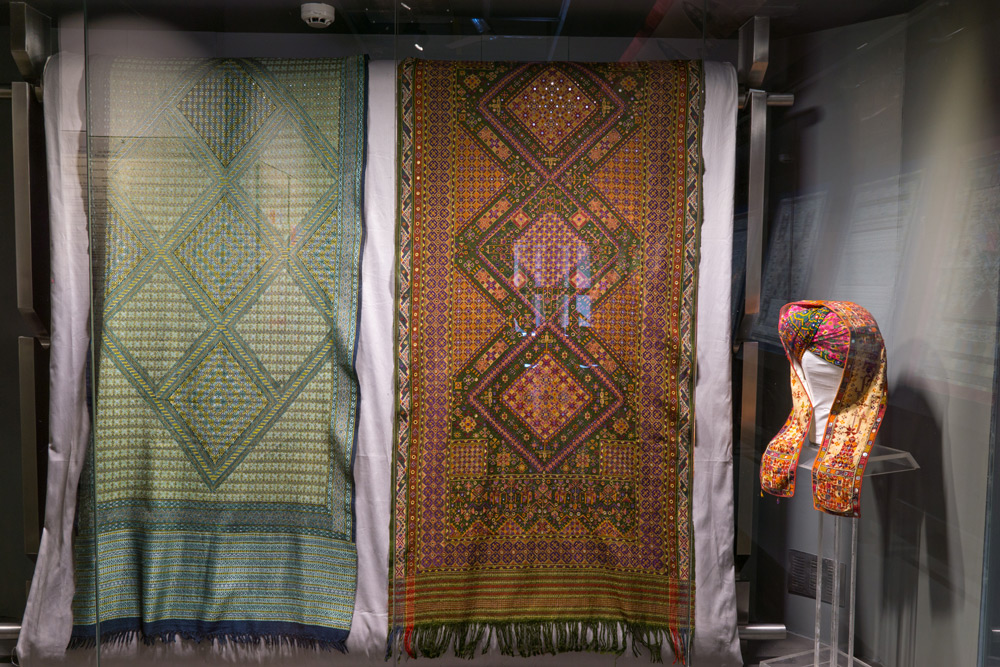
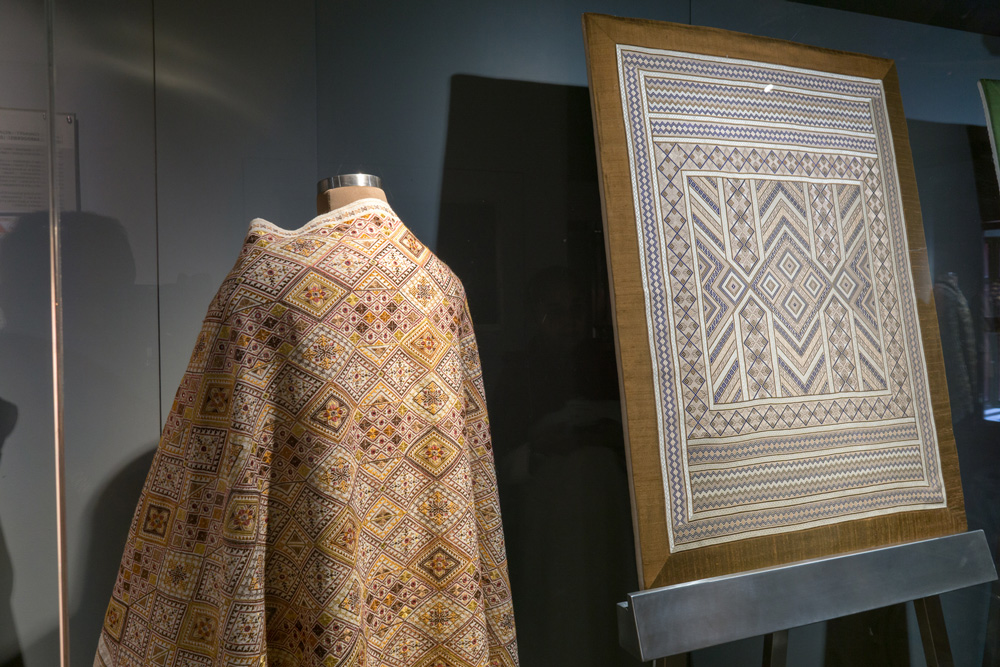
The Meghwaad Maaru community practises two embroidery styles — Soof and Khaarak.
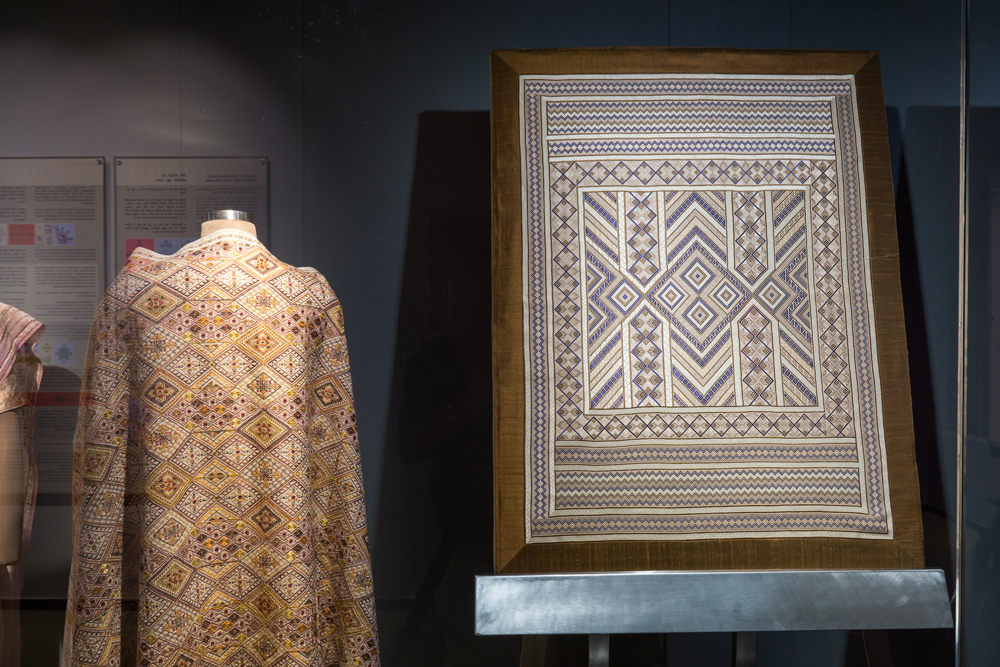
Soof embroidery is fine and delicate. It is a counted thread embroidery style: there is no outline or drawing done on the fabric to guide the craftswoman. Instead, the design is mentally conceptualized and plotted by counting the threads of the fabric. The craftswoman thus plays a dual role — she is the designer as well as the embroiderer.
Khaarak is also a counted thread embroidery style. As has been the tradition, craftswomen use Khaarak to create geometric forms as well as animal, bird and figurative motifs. The peacock is the favourite motif even in Khaarak.
Unlike Soof, this embroidery is rendered on the right side of the fabric. Craftswomen begin by plotting the squares and rectangles that constitute the grid of the geometric forms. A dark colour is used to outline the grid. Spaces within the grid are filled in with different colours. Mirrors provide the final flourish.
Mochi
In this section, we introduce you to the technical specifics of the embroidery of the Mochi community.
Aari embroidery is well known for its realistic, portraiture-like representations of flowers, birds, animals and other living beings.
Aari is the only embroidery that uses just one stitch — a very fine, flat and longish saankdi stitch. It is rendered with an awl — a thin, hooked needle.
The embroidery is rendered on leather as well as on coarse and fine fabrics. Threads of different materials and thicknesses are used. They include metallic as well as thin, glossy, twisted threads.
Jat
In this section, we introduce you to the technical specifics of the embroidery of the Jat community.
There are four major subgroups of the Jat community in Kutch, each with its own distinctive embroidery style.
Jat-Garaasiya embroidery resembles the mosaics found in Islamic tile work. This embroidery is rendered only on the yoke. Only one stitch — the cross — is used to create a fixed number of geometric designs. Colour is used in a very specific manner in these designs.
Jat-Fakiraani, Jat-Haajiyaani and Jat-Daaneta embroideries celebrate geometric and abstract motifs that have two distinctive features: a mirror at the centre of each motif; and, radiating lines within the motifs and all over the composition as well.
Paaghdi
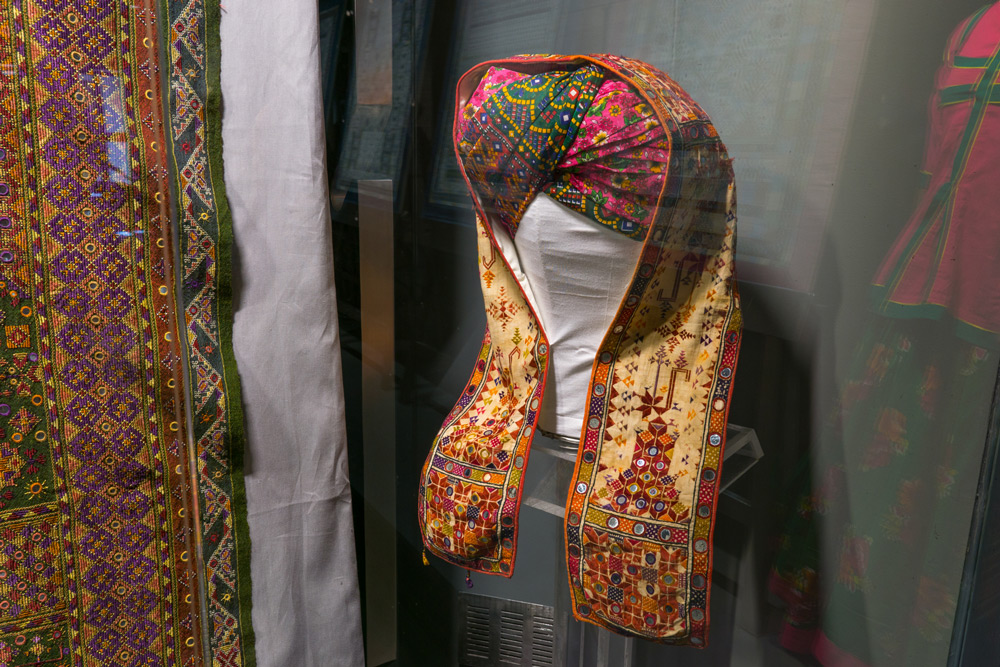
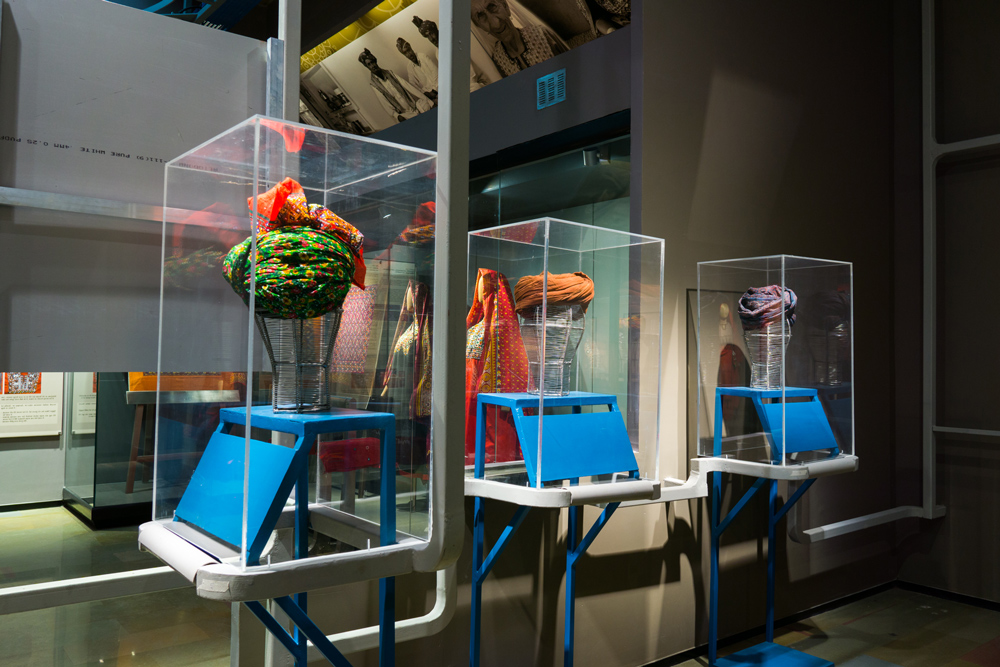
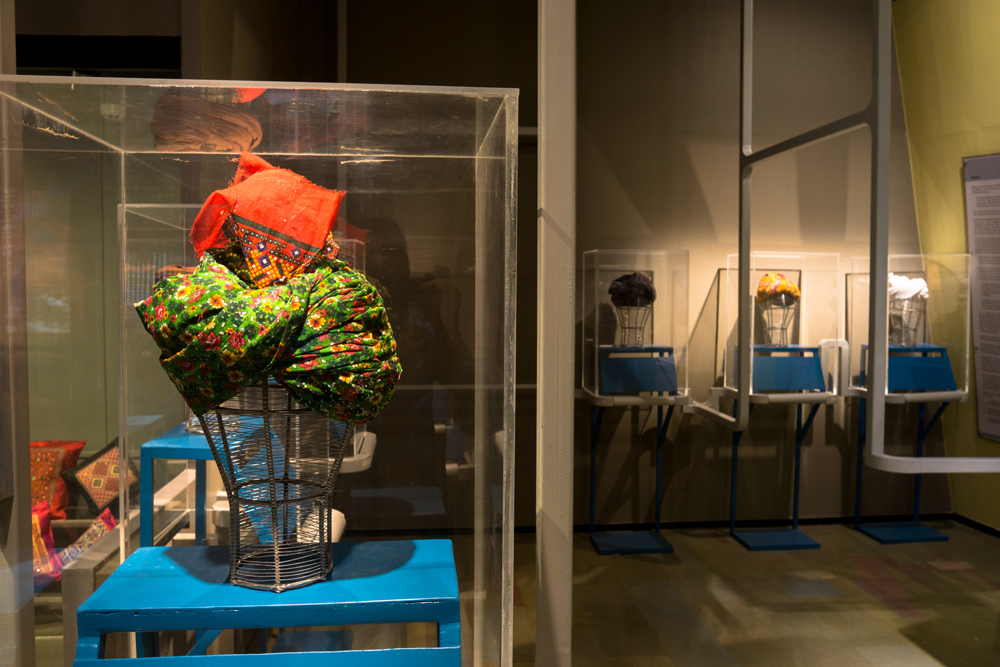
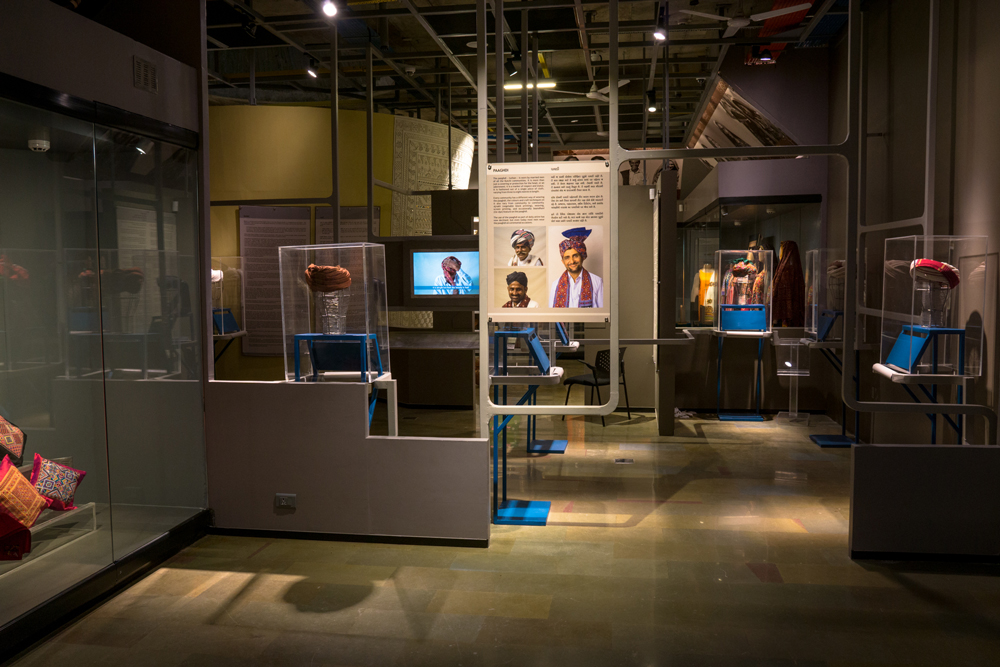
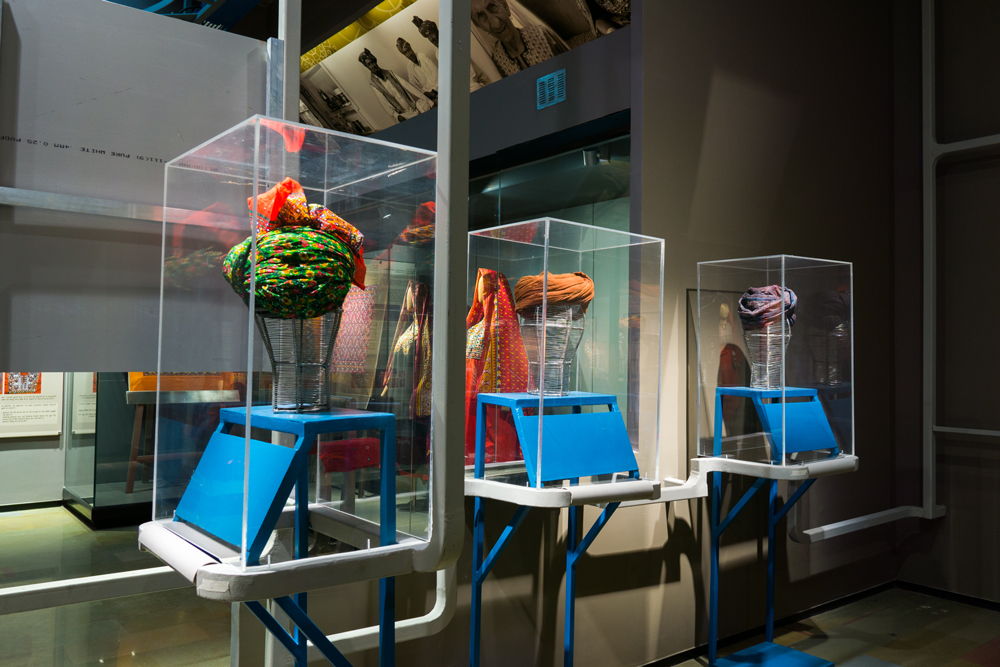
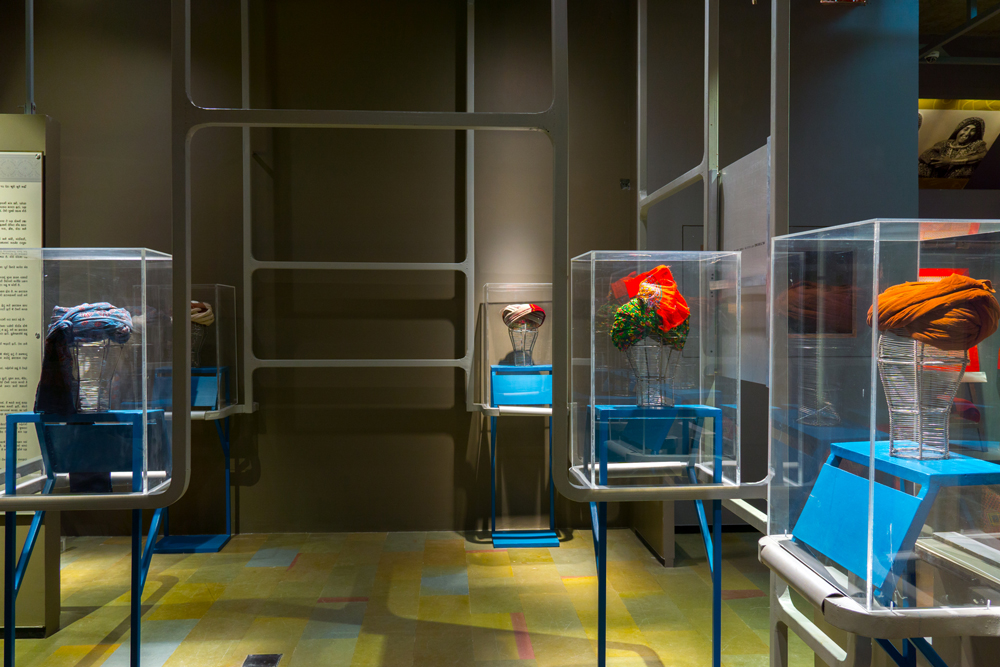
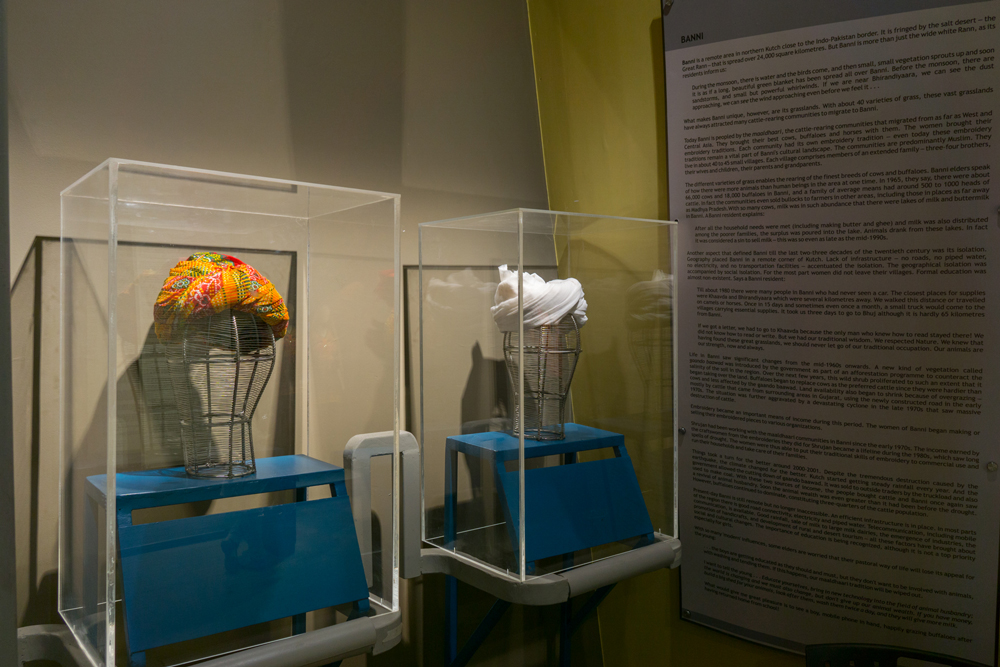
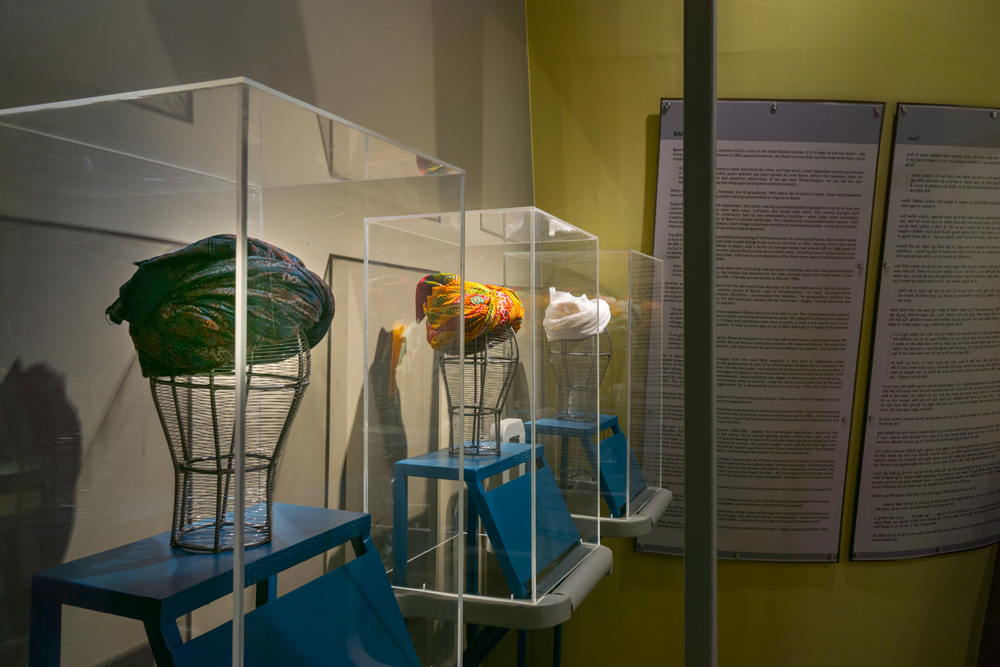
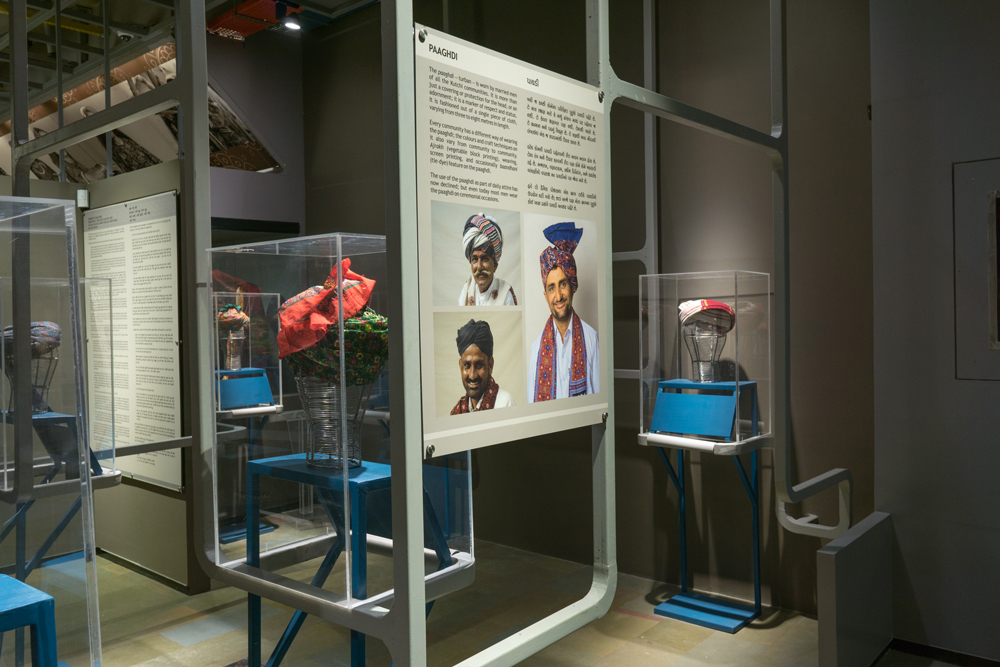
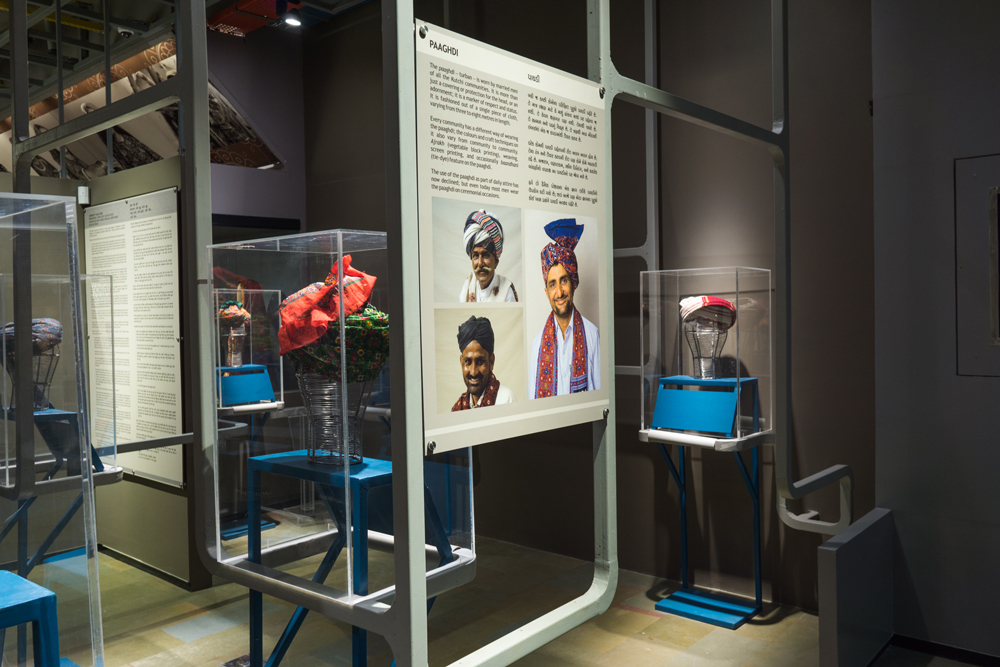
In this section you can see paaghdis of the different communities of Kutch.
The paaghdi-turban is worn by married men of all the Kutchi communities. It is more than just a covering or protection for the head, or an adornment; it is a maker of respect and status. It is fashioned out of a single piece of cloth, varying from three to eight meters in length.
Every community has a different way of wearing the paaghdi; the colours and craft techniques on it also vary from community to community.
Node
In this section, we introduce you to the technical specifics of the embroidery of the Raau Node community.
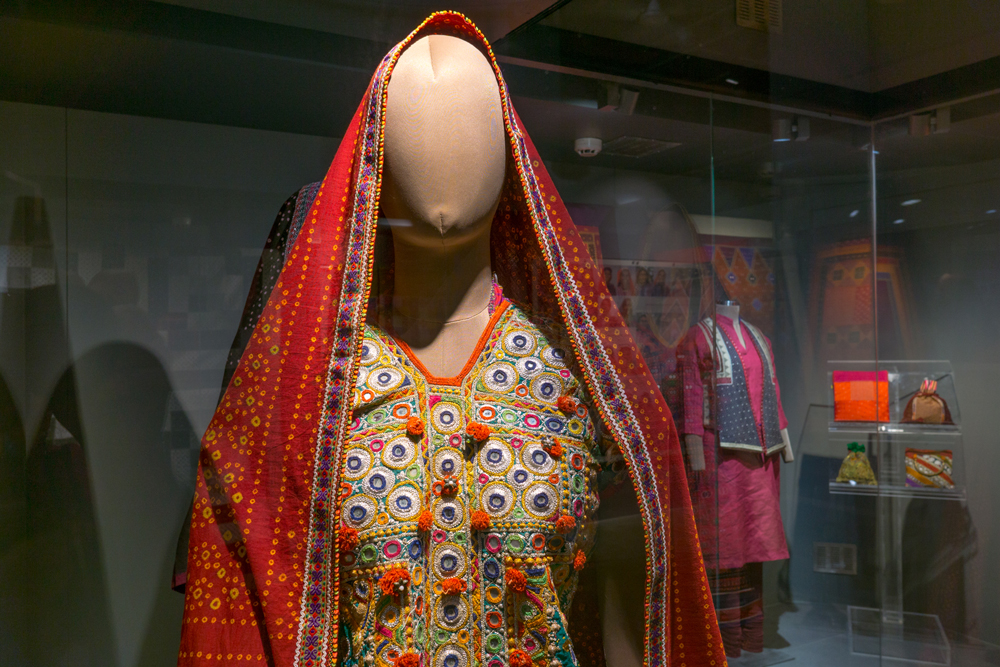
The world of Raau Node embroidery is a world of colourful flowers of varied shapes and sizes.
Node flowers are robust and have an embossed look and feel to them. Craftswomen create this effect by using layered stitches that are inherently strong and bold. Even when other stitches are used, they are rendered so close and tight that the base fabric does not show through. All this creates the embossed effect that is pure Raau Node.
Mutva
In this section, we introduce you to the technical specifics of the embroidery of the Mutva community.
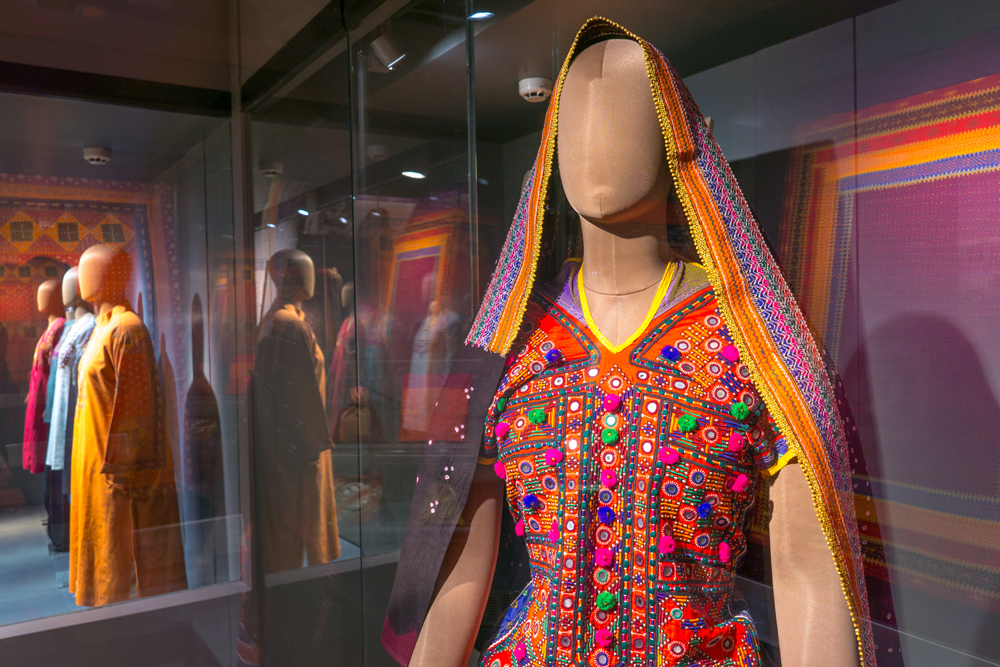
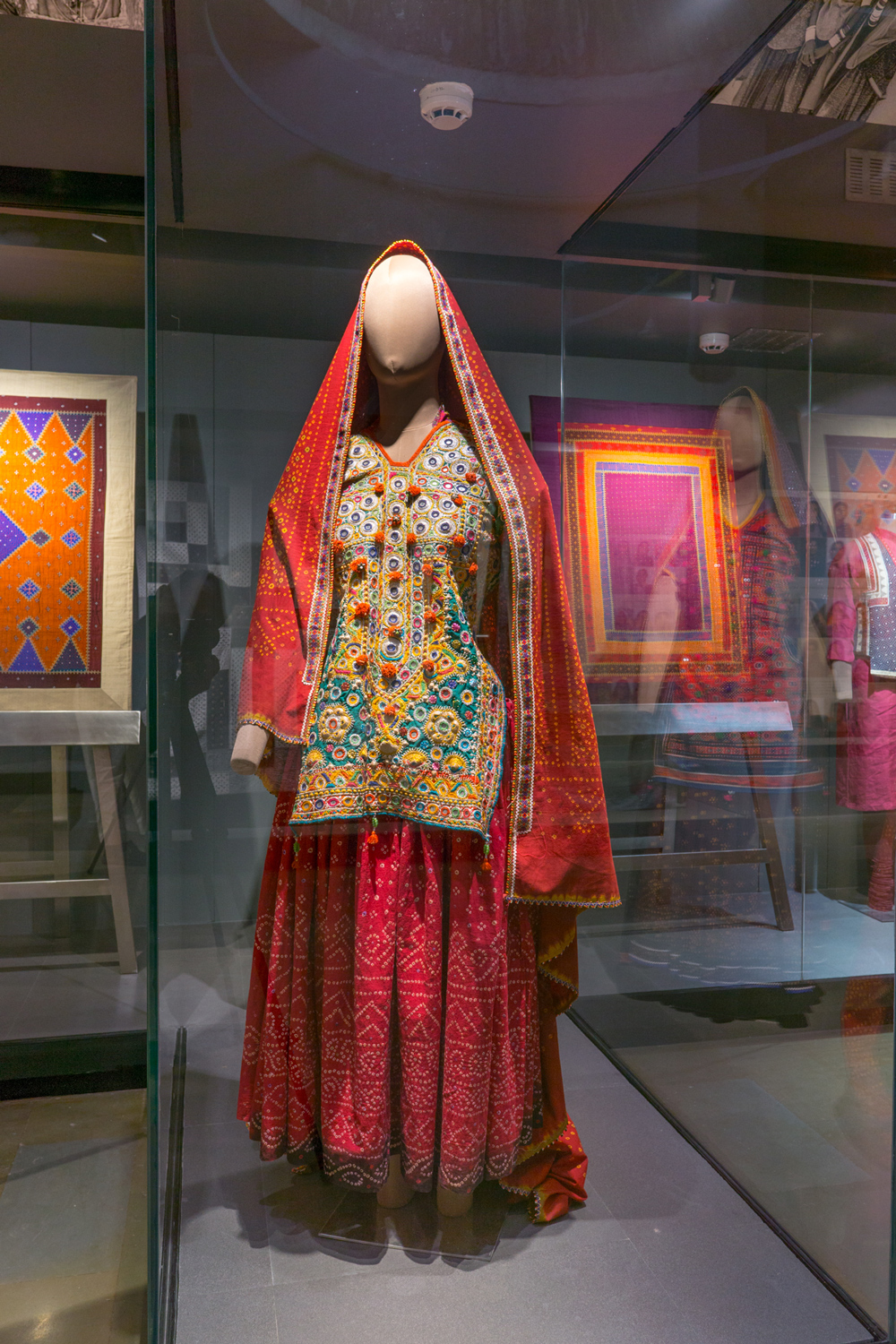
Mutva embroidery is known for its very tiny stitches and equally tiny mirrors. The craftswomen's skill in working in the realm of the miniature makes the embroidery look as if it is studded with diamonds.
We have identified 19 styles of Mutva embroidery so far — each with its own distinctive features. Craftswomen refer to these individual styles as Bharat. Each Bharat uses only one primary stitch to create either the entire Bharat or to create its main distinctive features.
Meghwaad Maarwaada - Haalepotra
In this section, we introduce you to the technical specifics of the embroidery of the Meghwaad Maarwaada & Haalepotra communities.
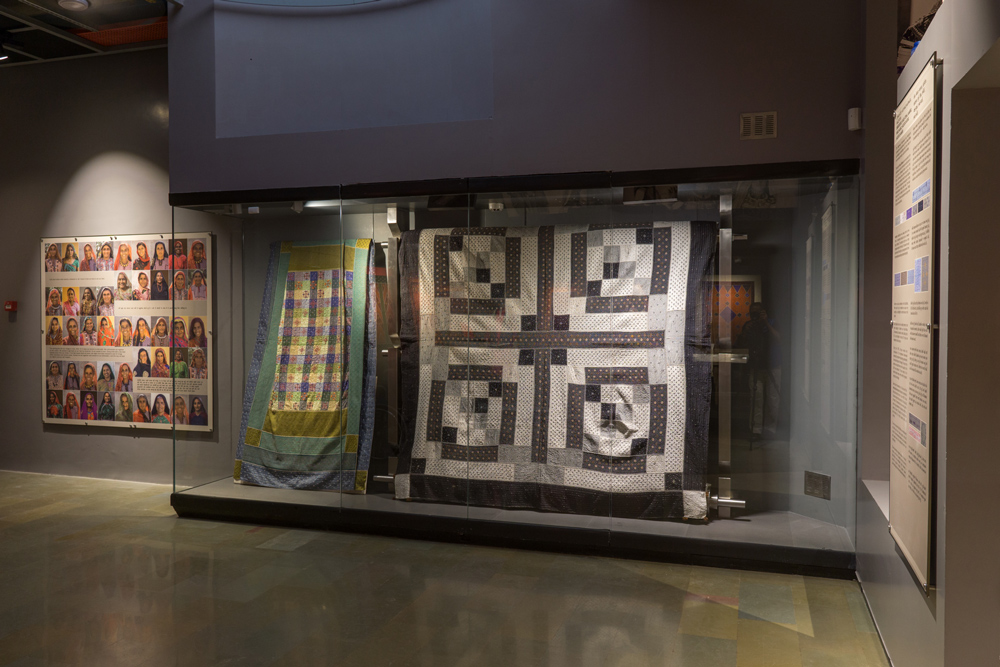
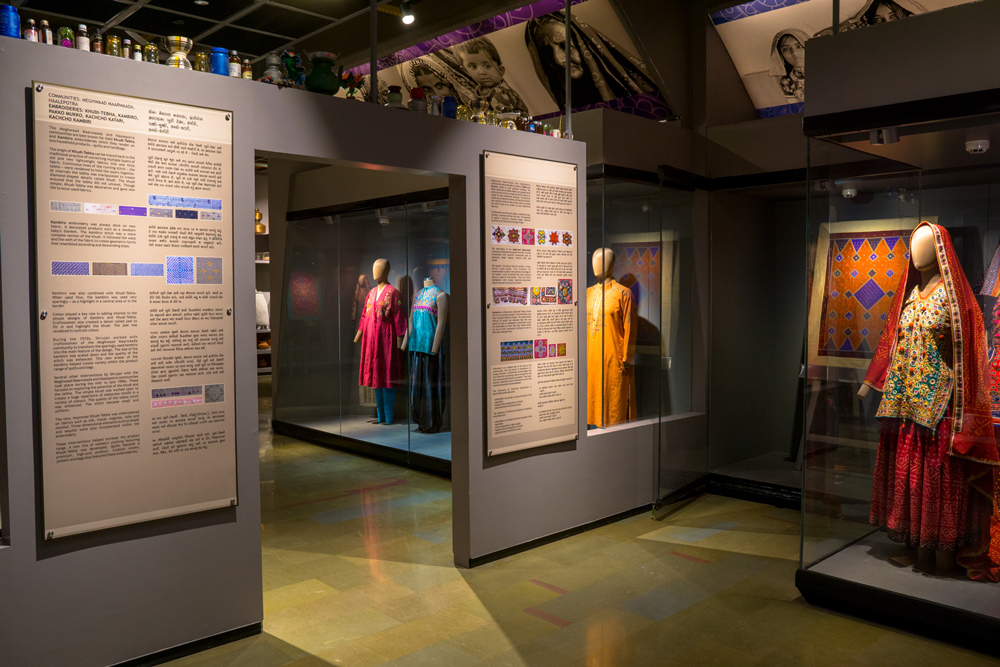
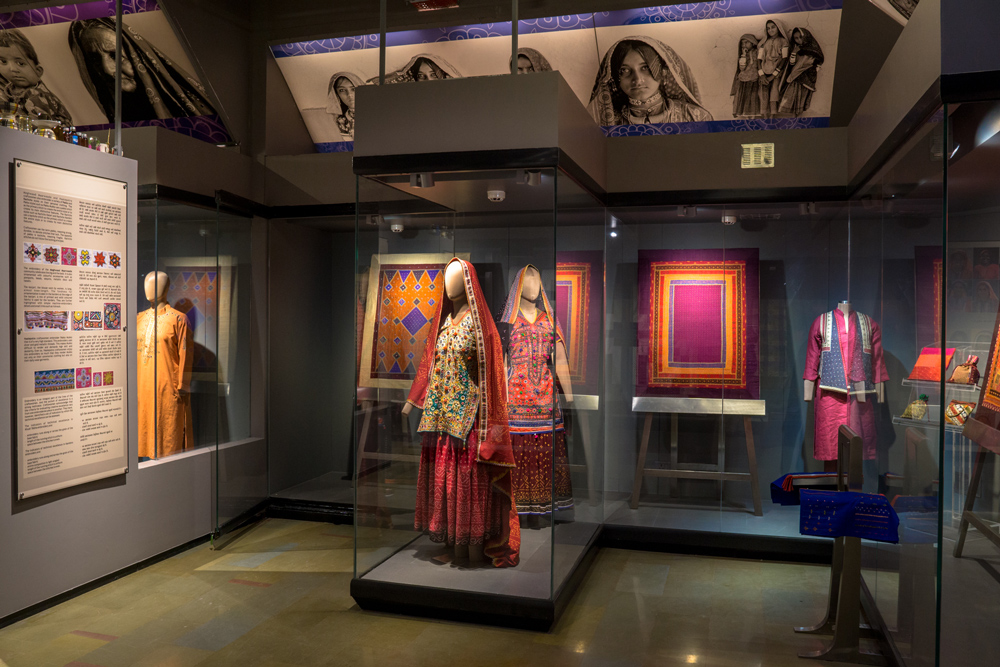
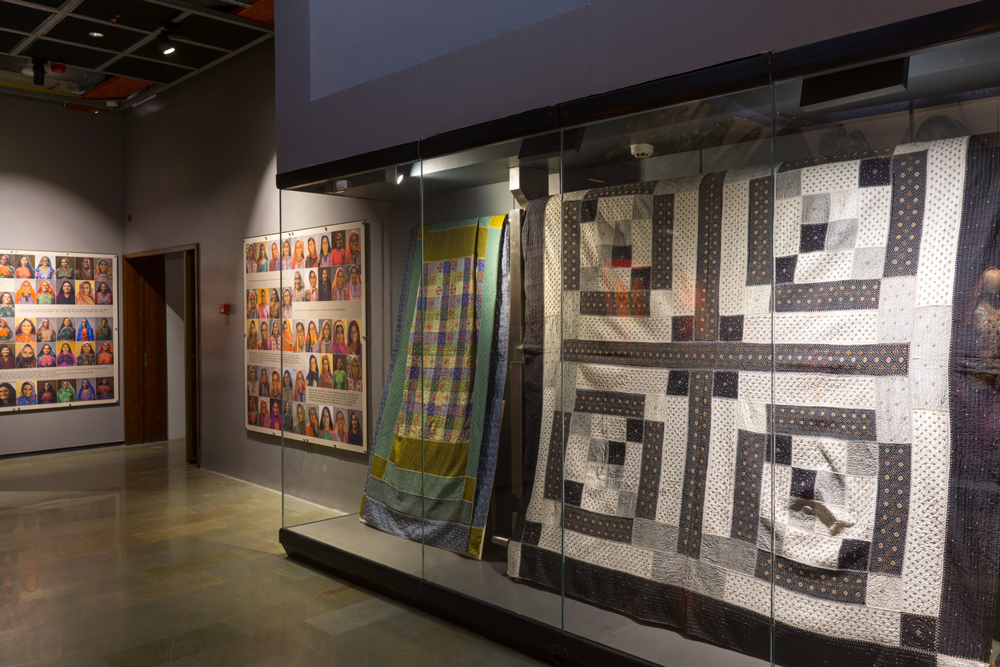
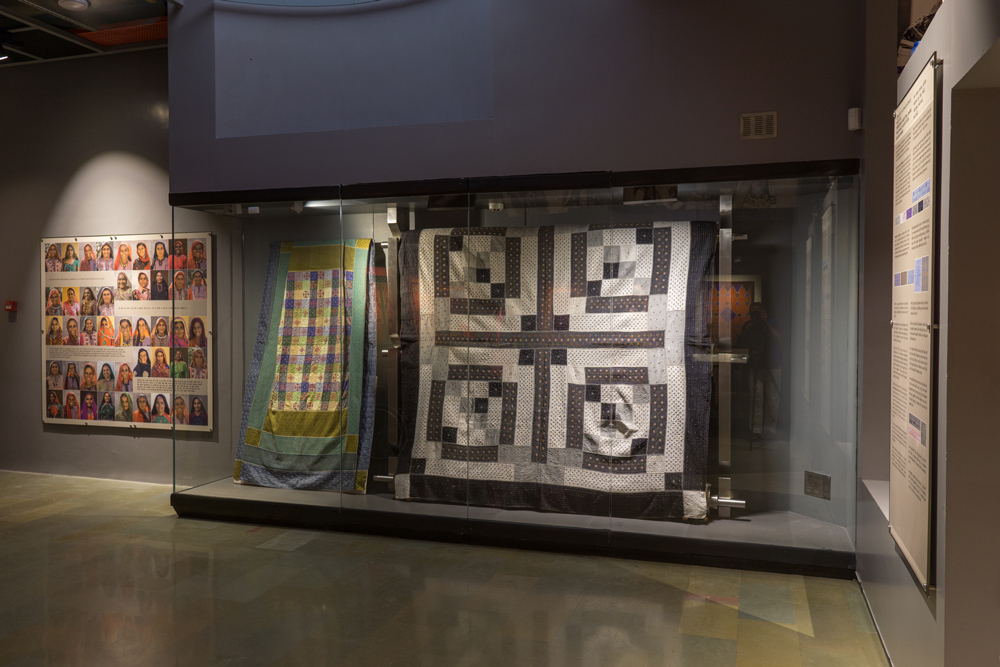
The Meghwaad Marwada and Haalepotra communities are best known for their Khudi-Tebha and Kambiro embroideries, which they render on two household products — quilts and handbags.
The origin of Khudi-Tebha can be traced back to the traditional practice of converting multiple layers of old and new lightweight fabrics into one thick fabric. Continuous lines of the running stitch — the tebha — were rendered to hold the layers together. At intervals, the tebha was manipulated to create diamond-shaped details called khudi. The khudi ensured that the tebha did not unravel. Though simple, Khudi-Tebha was decorative and gave new life to once-used fabrics.